
The journey from a fledgling startup to a thriving, large-scale enterprise marks a profound transformation, not just for the company, but for its leadership. What propels a small team forward with a founder’s singular vision often becomes an impediment as the organization scales. The intimate, hands-on approach that defines early success must evolve into a sophisticated system of distributed decision-making and strategic governance.
The Evolution of Leadership: Beyond Personal Drive
Many groundbreaking businesses are born from the sheer will and relentless determination of their founders. This potent personal energy can be the lifeblood of a company navigating resource scarcity and high uncertainty in its formative years. However, as growth accelerates, relying solely on an individual’s stamina and direct oversight becomes unsustainable. Personal drive, while crucial, is not a scalable management system.
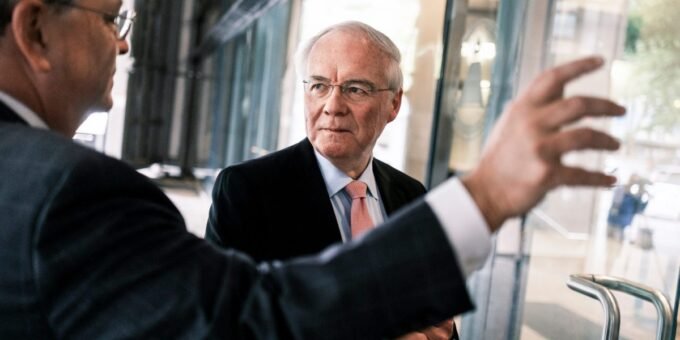
Consider the remarkable career of Frank VanderSloot, who founded Melaleuca in 1985. Starting with a modest product line, he steered the company as CEO for decades, transforming it into an international consumer-products giant boasting over $2 billion in annual revenue and operations across 20 countries. His eventual transition to executive chairman exemplifies the critical shift: the question isn’t whether another founder can replicate such a path, but rather how an organization moves from heavy reliance on one person’s effort to operating effectively through capable people, robust processes, clear standards, and well-defined management structures. This transition is the crucible that determines whether growth strengthens a company or ultimately overwhelms it.
Empowering Decision-Makers: The Art of Strategic Delegation
Founders, often inadvertently, become bottlenecks. Their deep institutional knowledge—understanding customers, product intricacies, historical decisions, and strong opinions on execution—naturally draws employees seeking guidance. While manageable with 15 employees, this central dependency becomes a significant hindrance at 500. Effective leaders at scale need managers who can exercise sound judgment, not merely relay instructions.
This necessitates meticulous hiring practices, coupled with providing sufficient context for independent decision-making. Employees must grasp the company’s core values, priority hierarchies, unacceptable risks, and their specific spheres of authority. True delegation doesn’t mean disappearing; leaders still require visibility into performance and major strategic choices. The fundamental difference lies in relinquishing the need for personal approval on every routine decision, fostering autonomy and accelerating operational flow.
Anchoring Growth: The Enduring Power of a Clear Mission
Mission statements, surprisingly quickly, can become mere decorative elements—displayed on websites and office walls, yet disconnected from daily operational realities. Growth mercilessly exposes this disconnect. A truly useful mission statement must actively inform practical questions:
- Which products align with our portfolio?
- Which customer challenges warrant significant investment?
- What behaviors should managers genuinely reward?
- Which opportunities, despite potential revenue, should the company strategically decline?
Leadership becomes increasingly complex when numerous attractive opportunities vie for attention. Without a crystal-clear sense of purpose, organizations risk expanding into unrelated areas simply because the opportunities exist. While a mission cannot dictate every strategic choice, it serves as an invaluable filter, guiding managers in discerning which opportunities genuinely fit the organization they are committed to building.
Building Foundations: Systems for Sustainable Operations
Small companies can astonishingly thrive on improvisation for extended periods. A personal connection to a supplier, a crucial spreadsheet maintained by one employee, a founder’s memory of a key agreement, or inconsistent handling of customer complaints—these informalities can work until growth demands more. When expansion hits, these once-flexible processes begin to generate errors, duplicated efforts, inconsistent customer experiences, and inter-departmental confusion.
Strong leaders recognize when a critical process can no longer reside solely within someone’s head. Documenting workflows, clearly assigning ownership, establishing measurable performance metrics, and integrating appropriate technology can dramatically enhance operational reliability without succumbing to stifling bureaucracy. The goal isn’t to create a rule for every conceivable scenario, but to ensure that essential work is repeatable and consistent, so quality doesn’t hinge on the availability or specific knowledge of a single employee.
Cultivating a Resilient Culture: More Than Just Slogans
Observing and maintaining company culture is relatively straightforward when everyone operates in close proximity to the founder. However, as an organization expands across multiple offices, regions, or even countries, this task becomes significantly more challenging. New employees primarily absorb culture through the behaviors that managers tolerate, reward, and exemplify. If leaders preach collaboration but consistently promote individuals who hoard information, employees will inevitably notice the discrepancy.
Similarly, if management publicly champions exceptional customer service but prioritizes aggressive sales targets over resolving customer issues, the true cultural values become apparent. A resilient culture is built on consistent actions, transparent expectations, and leadership that genuinely embodies the principles it espouses, ensuring that the company’s ethos remains vibrant and unified, regardless of its scale or geographic spread.
Conclusion: The Enduring Legacy of Scalable Leadership
The transition from founder-led dynamism to scalable organizational leadership is a demanding yet essential evolution. It requires a fundamental shift from personal oversight to empowering systems, clear missions, robust processes, and an authentically lived culture. By embracing these principles, leaders can ensure that growth is not just an expansion of operations, but a strengthening of the company’s very foundation, building a legacy that endures far beyond the initial spark of a single visionary.
For more details, visit our website.
Source: Link