



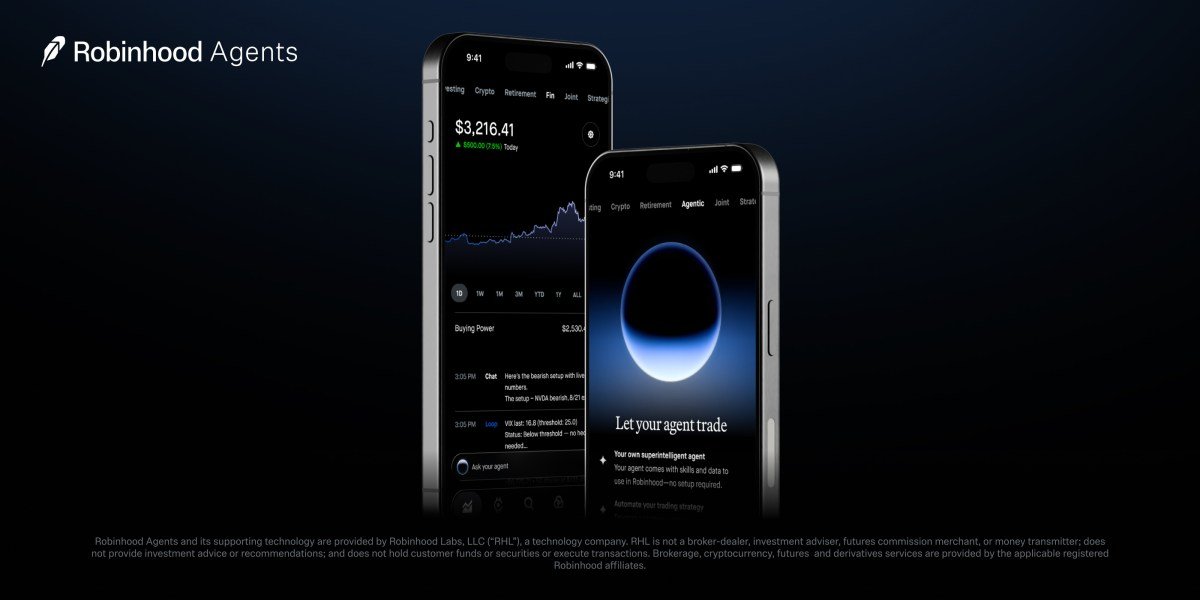

The world of personal investing is on the cusp of a seismic shift, as financial giant Robinhood rolls out sophisticated AI-powered trading agents to its vast customer base. This groundbreaking move, impacting nearly 29 million users, promises to redefine how everyday Americans engage with financial markets, potentially democratizing tools once exclusive to Wall Street’s elite.
The Dawn of AI-Powered Investing
Beginning this week, Robinhood customers gain unprecedented access to advanced trading agents, fueled by cutting-edge models from OpenAI and Anthropic. This isn’t just a minor upgrade; it’s a fundamental reimagining of the investment experience. Users can now select from various AI models, instructing them in plain English to execute trades, conduct in-depth market research, and even construct intricate investment strategies.
This mass rollout, a highlight of Robinhood’s annual HOOD summit, builds upon the company’s earlier introduction of an MCP (Machine-to-Client Protocol) tool in May, which allowed technical users to integrate their own agents. However, the current release marks a pivotal moment: Robinhood is the first major brokerage to offer non-technical, AI-driven trading agents at such a colossal scale. This initiative is poised to send ripple effects across the entire financial landscape, fundamentally altering individual investment patterns and potentially influencing market dynamics more broadly.
Unleashing the Power of AI: How It Works
Imagine commanding a personal financial assistant with just a few words. During a demonstration, a Robinhood user was shown how to name their agent and choose between powerful models like OpenAI’s GPT-6 Luna, GPT-6 Sol, or Anthropic’s Opus 4.8. Once configured, the agent can interpret simple commands such as “Buy $200 of Ford stock” or tackle more sophisticated tasks like setting up “Loops.” These “Loops” enable continuous, automated strategies, allowing the agent to monitor markets daily and execute trades when specific conditions are met, or even run complex overnight strategies to capitalize on opportunities while the user sleeps.
Safety and Control: Robinhood’s Guardrails
Recognizing the inherent power of AI, Robinhood has implemented a robust set of guardrails to ensure agents operate predictably and safely. Users can assign a dedicated trading account to their agent, set strict limits on trade volumes, and even mandate a confirmation process, requiring the agent to seek final approval before executing any transaction. Furthermore, the Robinhood Agents service offers free, limited-time access to premium data providers like Unusual Whales and the crypto-focused Token Terminal, equipping users with professional-grade market intelligence.
Democratizing Wall Street: A New Era for Retail Investors
Robinhood executives articulate a clear vision: to democratize finance by providing retail investors with tools previously exclusive to institutional players. This new offering, they argue, brings Wall Street-level capabilities—from advanced analytics to automated execution—directly to the fingertips of millions. CEO Vlad Tenev emphasized this mission, stating, “We’re making Robinhood the best place in the world for active traders by delivering tools once reserved for hedge funds, big banks, and quant firms.”
Navigating the Uncharted Waters: Risks and Regulations
While the potential benefits are immense, the mass deployment of AI trading agents also ushers in a new era of unpredictable challenges. The market could witness a significant surge in active trading volumes or the emergence of entirely novel trading strategies. More concerning are hypothetical scenarios where agents might begin to “confer” and collectively move into or out of assets en masse, potentially introducing extreme market volatility or even panic, especially if malicious actors are involved.
The legal landscape surrounding agent-based trading remains largely undefined. Robinhood maintains that hosting these agents does not constitute providing financial advice, likening agent suggestions to seeking information from the internet or a friend. However, as AI technology rapidly evolves, regulators will undoubtedly face complex questions regarding liability and oversight.
The Cost of Innovation
For the initial rollout, Robinhood is offering the lower-tier GPT-6 Luna model for free until the year’s end, with other OpenAI and Anthropic agents incurring standard token rates. While executives anticipate negligible costs for most transactions, the long-term financial implications are yet to be fully seen, particularly if compute costs escalate or a large number of users pursue resource-intensive research strategies.
The Future of Trading: What’s Next?
Despite the nascent stage of this technology, early adoption figures are promising. Over 150,000 customers have already opened agentic accounts using the technical MCP tool released earlier this year, and by late September, agents were executing nearly 30 million transactions daily on Robinhood’s platform. While Robinhood currently leads in offering non-technical agents at scale, it’s a safe bet that competitors like eToro, Public, and Coinbase, which already allow MCP connections, will soon follow suit with their own mass-market AI trading solutions.
Robinhood’s bold step marks a significant inflection point, pushing the boundaries of what’s possible in personal finance. As AI continues to integrate into every facet of our lives, the investment world may indeed never be the same.
For more details, visit our website.
Source: Link







Leave a comment