



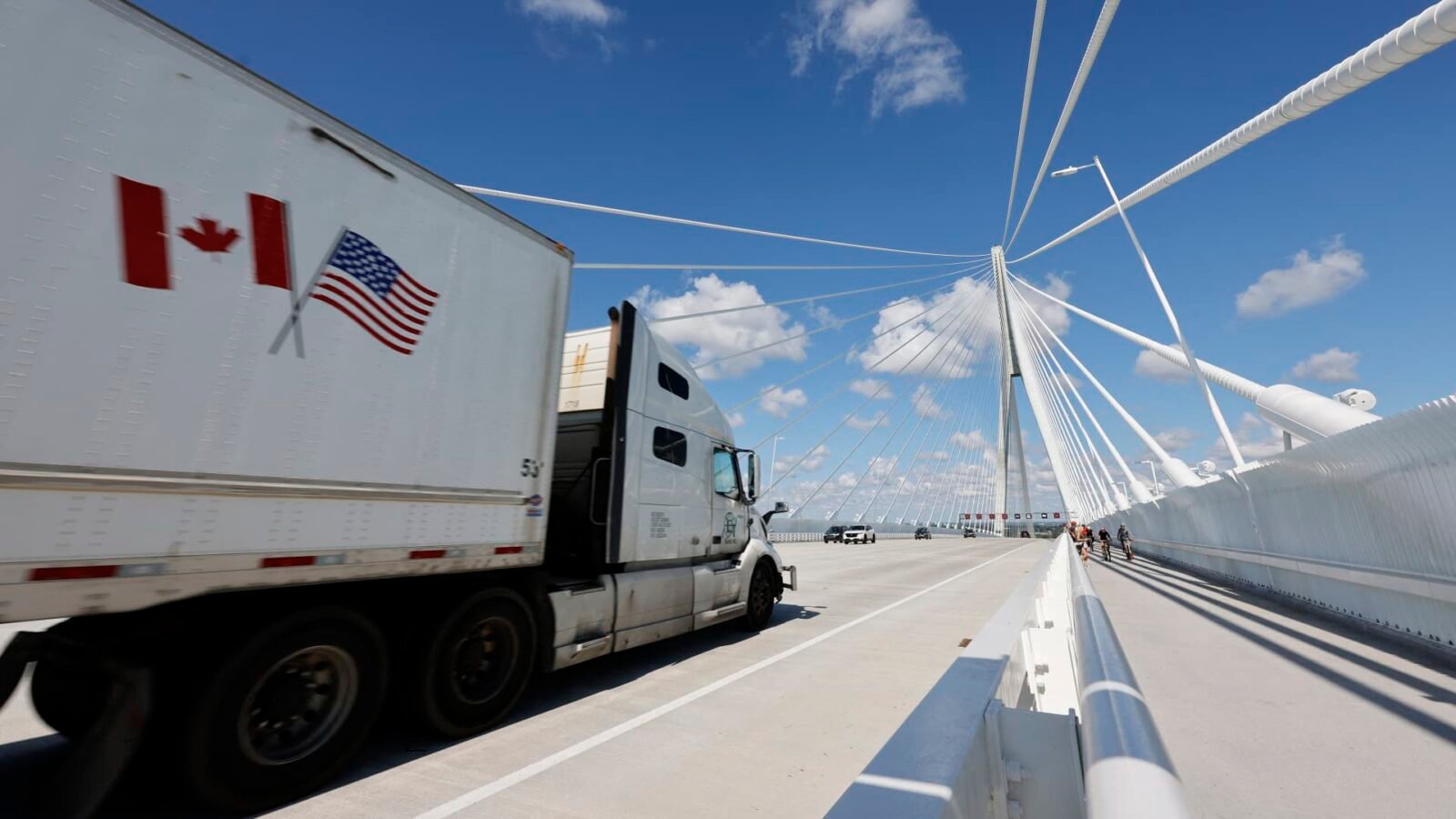

A significant escalation in the ongoing trade dispute between the United States and Canada unfolded this Tuesday, as a U.S. ban on various Canadian imports officially came into force. The sweeping restrictions target a diverse range of products, including popular alcoholic beverages and key dairy items, signaling a deepening rift between the two North American allies. While President Trump expresses confidence in Ottawa’s eventual capitulation, Canadian officials remain steadfast, vowing not to concede to a deal detrimental to their national interests. Despite ongoing discussions, the stalemate continues to inflict hardship on countless small businesses across the border.
The New Trade Barrier: What’s Banned?
The White House’s latest move targets an extensive list of Canadian goods, estimated by the American Action Forum to represent approximately $19.9 billion in annual imports. Among the most notable items now barred from entry are:
- Motorcycles and mopeds with petrol engines exceeding 800cc.
- Various dairy derivatives, including whey products and molasses.
- A broad spectrum of alcoholic beverages packaged for direct consumption, encompassing beer, cider, wine, whiskey, and vodka.
This import ban, initially announced earlier this month, marks the latest salvo in a protracted war of words and reciprocal tariffs that has strained the historically close U.S.-Canada relationship.
A Standoff at the Border: US and Canadian Perspectives
Trump’s Unyielding Stance
President Donald Trump, maintaining a combative tone, reiterated his expectation of a “fair deal” with Canada in the coming weeks. “They take advantage of us, they feel entitled … there’s nothing they have that we need,” Trump told reporters, projecting an imminent Canadian surrender. “I think what’s going to happen is over the next three to four weeks they’re going to come to us and they’re going to say, ‘We’re going to get rid of all the tariffs.’ We’re going to win everything.”
Echoing this sentiment of U.S. leverage, Trade Representative Jamieson Greer stated there was “no urgency on our side” to finalize an agreement, highlighting the continued robust trade in essential commodities like oil, gas, and potash. This suggests the U.S. feels it holds the stronger hand in negotiations.
Canada’s Firm Resolve: ‘We’re Not Waiting by the Phone’
Across the border, Canadian officials have met the U.S. actions with defiance. Trade Minister Dominic LeBlanc condemned the U.S. for “imposing illegal and unjustified tariffs on sectors of our economy that are causing considerable hardship to businesses and workers across the country.” While acknowledging ongoing talks to “find alternatives to the current circumstances,” LeBlanc firmly declared, “We are not going to sign a deal that’s bad for Canada.” He emphasized that Canada would only agree to terms that serve its sovereignty and economy, adding, “but we’re not waiting by the phone.”
In a strategic pivot, Canadian Prime Minister Mark Carney has actively sought to strengthen ties with the European Union, signaling a diversification of economic partnerships as relations with the U.S. falter. Carney recently criticized the White House’s approach, characterizing its economic policy as a “weaponizing” tool for “coercion” against other nations.
Economic Ripples and Future Uncertainty
The current U.S. import ban follows Canada’s earlier imposition of tariffs ranging from 15% to 50% on CA$27.6 billion worth of U.S. goods, including steel, dairy, agricultural equipment, and electronics. These were a direct “dollar for dollar” response to Washington’s August tariffs on items like cement, wine, and hockey sticks.
While these measures target a relatively small fraction of the annual $715.5 billion trade volume between the two nations, the prospect of continued escalation or a prolonged impasse looms large. Sectors such as metals and autos are particularly vulnerable, and small and medium-sized businesses on both sides of the border are already feeling the pinch. The Bank of Canada has issued a stark warning, noting that new tariffs have clouded the country’s growth prospects and heightened inflation risks, underscoring the significant economic stakes in this unfolding trade saga.
For more details, visit our website.
Source: Link







Leave a comment