




The cosmos is rapidly becoming the next frontier for data infrastructure, with tech giants like Google and ambitious ventures such as SpaceX eyeing orbital data centers. Yet, this grand vision hinges on a fundamental, often overlooked, challenge: power. Abundant, reliable power. Enter Star Catcher, a Jacksonville, Florida-based startup poised to redefine energy delivery in space.
Star Catcher: Illuminating the Orbital Frontier
Star Catcher’s innovative approach concentrates solar energy and beams it via lasers directly to satellites’ solar panels. This week marks a pivotal moment for the company as its prototype system prepares for launch aboard a SpaceX rocket. The mission? To transmit energy to another satellite already in orbit, a feat that, if successful, would represent the first-ever laser-based energy transfer between two untethered objects in space.
A Decades-Old Dream, Reimagined
The concept of space-based solar power isn’t new. It graced the pages of Isaac Asimov’s science fiction in 1941 and captivated NASA researchers in the 1970s. However, the prohibitive costs of launching hardware into orbit rendered such ambitious projects impractical. “Launching large amounts of hardware into orbit was extremely expensive, so generating power in space and transmitting it elsewhere rarely made practical sense,” explains Hanieh Fattahi, a researcher at the Max Planck Institute for the Science of Light. Today, a new era of dramatically reduced launch costs is making orbital industries, and the energy solutions they require, increasingly viable.
“There isn’t a power grid in space,” notes Andrew Rush, Star Catcher’s CEO and cofounder, likening current orbital operations to “little camping trips.” Star Catcher aims to change that.
How Star Catcher’s Power Nodes Work
At the heart of Star Catcher’s solution lies an array of “power nodes.” These satellites function as both sophisticated solar power plants and ethereal transmission lines. They meticulously gather sunlight using advanced lenses, then refine it into specific wavelengths. Star Catcher claims these optimized wavelengths can deliver up to ten times more power than diffuse sunlight. The energy is then emitted as a precisely directed laser beam—an invisible, high-capacity cable—to power-hungry satellites. This promises enhanced uptime and, crucially, increased profitability for satellite operators.
In an industry where every kilogram launched costs thousands of dollars, the ability to reduce battery size while accommodating more valuable instruments—or, for space data centers, more GPUs—offers significant economic advantages.
Gaining Momentum: Funding and Partnerships
Star Catcher’s vision has clearly resonated. The company recently secured a $65 million funding round and a $30 million award from the US Space Force. Furthermore, they’ve garnered 40 letters of intent from prospective buyers and, more impressively, 10 long-term power purchase agreements. The upcoming SpaceX mission itself is a testament to the burgeoning space industry, with Google’s inaugural space-based data center also making the journey.
Protostar: The Crucial Orbital Demonstration
The satellite launching this week, named Protostar, is a scaled-down version of Star Catcher’s future fleet. Andrew Rush anticipates these systems will provide “meaningful commercial power provisioning services in orbit before the end of the decade.” The Protostar mission will be the first time the entire system operates cohesively in space, employing proprietary tracking technology to beam energy to an untethered cubesat launched simultaneously.
“Part of this demonstration is testing how much power is received by the cubesat as it moves away from Protostar and comparing that against our models,” Rush elaborates, highlighting the meticulous data collection planned for the mission.
From Ground Tests to Galactic Ambition
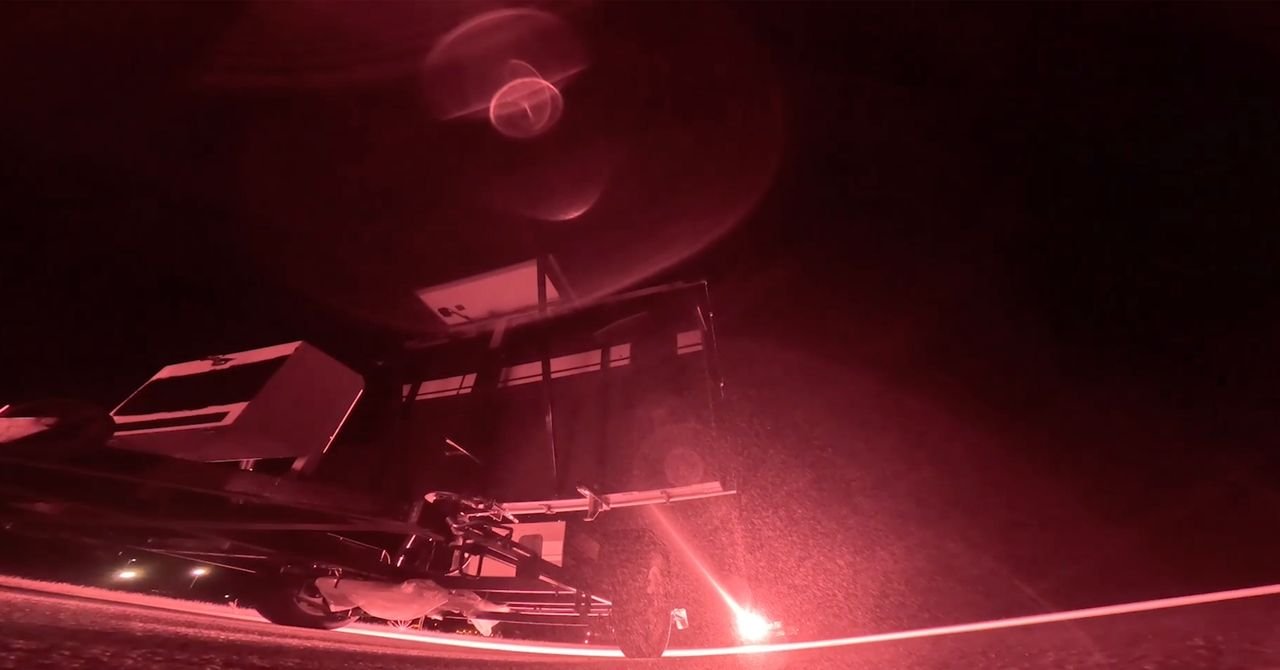
Star Catcher isn’t venturing into the unknown without preparation. The company has already conducted space-based tests of its tracking technology and, last year, set a ground-based record for beaming power, surpassing a benchmark previously held by DARPA. This involved delivering over 1 kilowatt of power to off-the-shelf solar panels—enough to power a microwave oven.
While 1kW is a far cry from the demands of telecommunications satellites or space data centers, Rush views this ground-based proof-of-concept as a vital confidence builder for orbital operations. He describes Star Catcher’s journey as currently in the “crawl” phase, steadily progressing towards walking, then running.
Navigating the Challenges of Space Power
Space lasers are not entirely new. The Naval Research Laboratory conducted an experiment in 2023, operating a space laser for 100 days. However, that system was a single unit, with the beam traveling less than five feet and operating at a mere 11 percent efficiency. Hanieh Fattahi emphasizes that efficiency, alongside robust tracking systems, thermal management, and equipment longevity in the harsh vacuum of space, are critical hurdles for economic viability.
Other space-based solar concepts exist, including successful tests by Caltech scientists transmitting solar power via microwaves back to Earth. While microwaves can transmit greater energy, they necessitate massive ground receivers. Lasers, conversely, offer the advantage of hitting much smaller, more precise targets.
Andrew Rush envisions Star Catcher’s satellites as foundational infrastructure. “As we grow the infrastructure in space,” he states, “we begin to make it more economical to put larger and more capable industry in space. I view what we’re building as transformational for the space sector, much like reusability has been for Earth-based launches.”
For more details, visit our website.
Source: Link








Leave a comment