



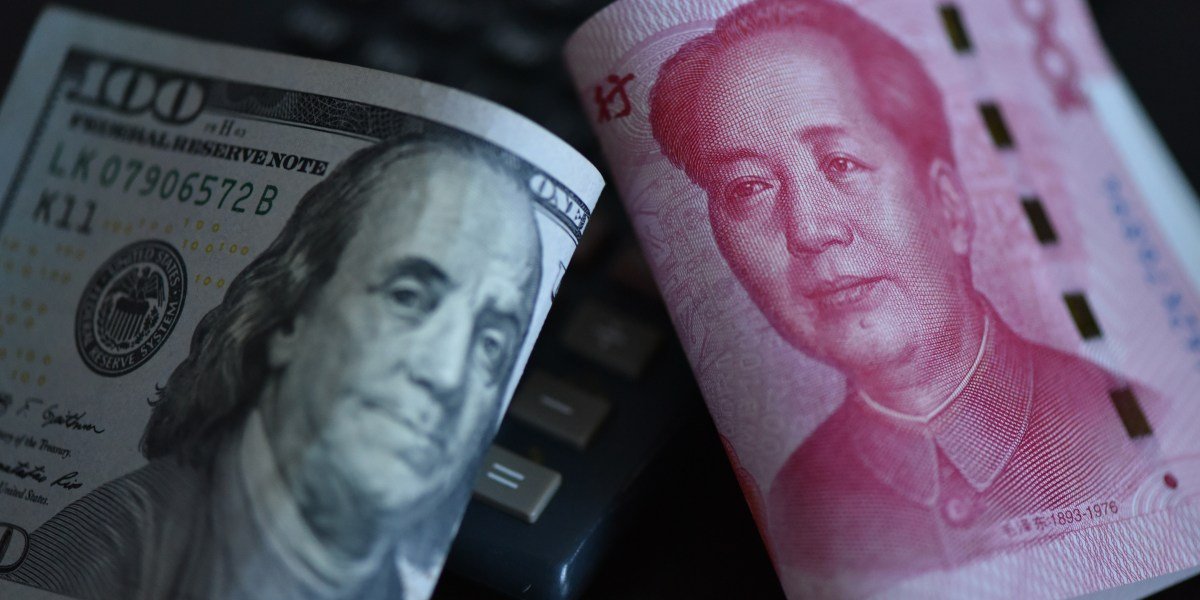

Despite significant strides in global trade and Beijing’s concerted efforts to promote its use, the Chinese yuan (RMB) is unlikely to usurp the U.S. dollar’s position as the world’s primary reserve currency anytime soon. This was the clear message from Jean Lu, Standard Chartered China CEO, during a recent media roundtable in Singapore.
The Dollar’s Unshakeable Grip
“There is no way—at least in my career—for the RMB to challenge the USD,” Lu stated unequivocally. Her sentiment underscores the formidable dominance of the U.S. dollar, which, according to the International Monetary Fund (IMF), still accounted for a robust 57% of global foreign exchange reserves in the first quarter of 2026. This figure even saw a slight increase from the previous quarter, largely due to the dollar’s mild appreciation against other major currencies.
While concerns persist among investors about the burgeoning U.S. government debt and governments fret over Washington’s strategic use of the dollar for sanctions, prompting some shifts towards alternatives like the Swiss franc, the euro, or gold, the dollar’s liquidity, stability, and widespread acceptance remain unparalleled. In stark contrast, the yuan constituted a mere 2% of global reserves, a modest rise from 1.95% in the preceding quarter.
Yuan’s Strategic Ascent: A Battle for Second Tier
While the yuan may not be ready for the top spot, Lu suggested it is poised to challenge other second-tier currencies. “Compared to the yen or pound, the RMB may have a chance,” she remarked. Beijing is actively working to elevate the yuan’s international relevance, a goal clearly articulated in its most recent five-year plan. This strategy includes expanding the currency’s role through mechanisms like “panda bonds” (RMB-denominated debt issued in mainland China) and “dim sum bonds” (issued in offshore markets).
Overcoming Liquidity Hurdles
A significant hurdle to the yuan’s internationalization remains China’s capital controls, which restrict the free flow of the currency into global markets. Lu highlighted the “limited liquidity in offshore markets,” noting, “We’re talking about less than 2 trillion yuan, with almost half of it being in Hong Kong.”
The People’s Bank of China (PBOC) is spearheading efforts to address this. This year alone, it has appointed major institutions like Deutsche Bank as offshore clearing banks to facilitate European access to the RMB and introduced new repo facilities to provide foreign central banks with yuan liquidity.
Regional Dominance and Geopolitical Tailwinds
The yuan’s influence is rapidly expanding, particularly in Southeast Asia, a key trading partner for China. Standard Chartered reported a staggering 50.7% surge in settlement volumes between China and Southeast Asia in 2025, reaching 8.9 trillion yuan ($1.3 trillion). ASEAN firms are increasingly leveraging RMB capital markets for hedging and fundraising, exemplified by Singapore Airlines’ debut 1.5 billion yuan dim sum bond in June.
Geopolitical tensions have also inadvertently bolstered the yuan’s standing. U.S. sanctions on Russia following the invasion of Ukraine compelled Moscow’s trading partners, including China and India, to adopt the yuan as an alternative trading currency. Similarly, after U.S. strikes on Iran, Tehran reportedly requested tolls for Strait of Hormuz crossings to be paid in yuan.
China’s Investment in ASEAN: Beyond Exports
Trade between Southeast Asia and China is experiencing historic growth, fueled by infrastructure projects like the Pinglu Canal, which significantly reduces logistics costs. Patrick Lee, Standard Chartered’s ASEAN and Singapore CEO, noted the region’s cultural proximity and shared heritage with China, making it an attractive destination for Chinese companies seeking to build supply-chain ecosystems amidst global shifts.
While some Southeast Asian manufacturers express concerns about Chinese overcapacity leading to factory closures (e.g., Thailand’s 2,000 closures in 2024 due to cheap Chinese goods), both Lee and Lu emphasized China’s commitment to long-term investment and manufacturing within ASEAN. Lu dismissed the notion of mere industrial overcapacity export, stating, “With the threat of a possible tariff and trade war, everyone is urging China to come to their markets to manufacture there, and help them build up their own industries and train their workers … It’s a golden opportunity for both China and ASEAN.” This strategic shift aims to foster mutual growth and strengthen regional economic ties.
For more details, visit our website.
Source: Link








Leave a comment