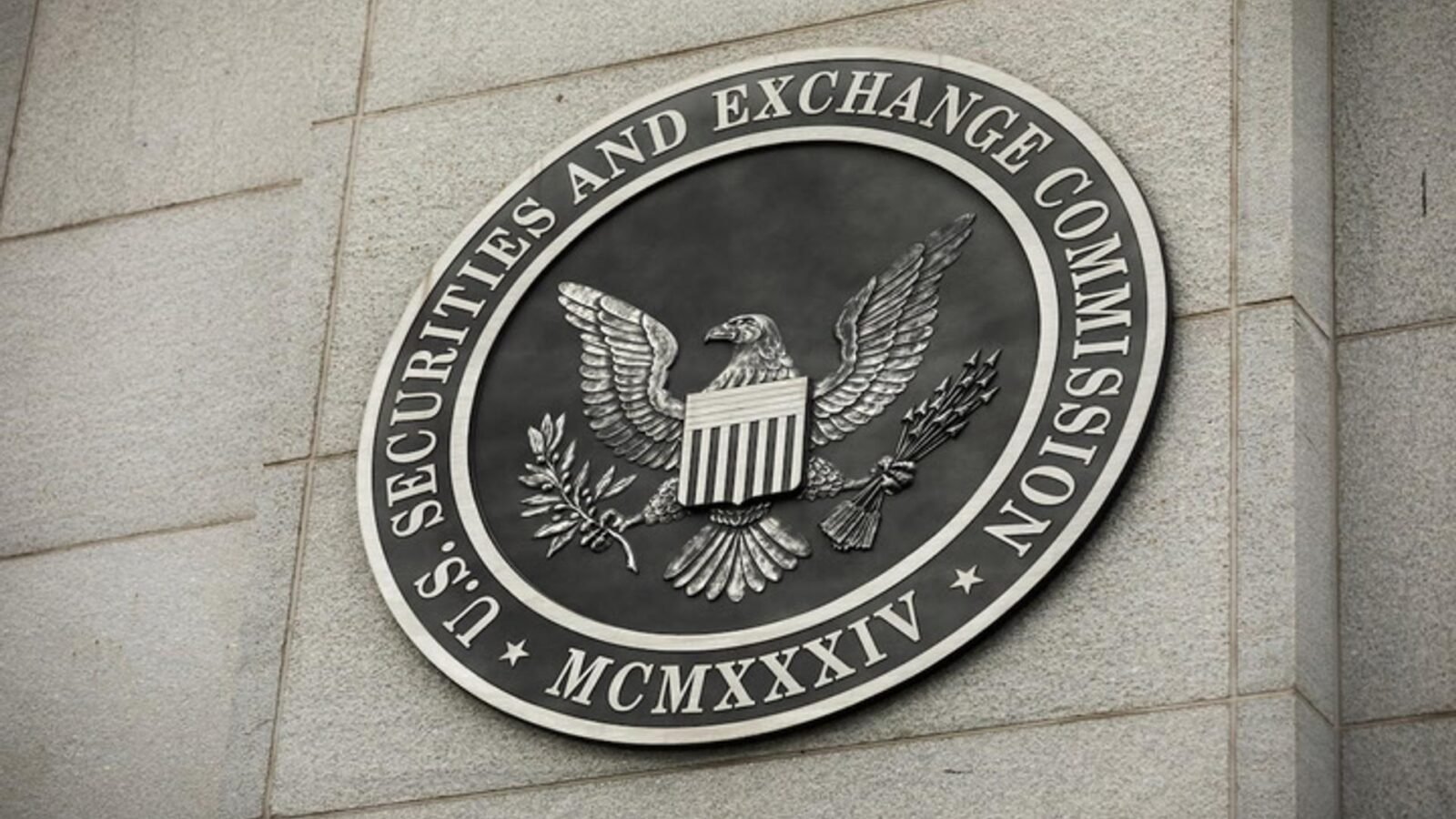

The U.S. Securities and Exchange Commission (SEC) has once again hit the brakes on its much-anticipated “innovation exemption” for tokenized securities. This latest delay, a significant setback for the burgeoning digital asset market, stems from a potent mix of concerns emanating from both the White House and influential Wall Street firms.
The Stalled Innovation: What’s Behind the Delay?
Originally poised for a partial release as early as this Friday, the exemption aimed to streamline regulatory processes for companies looking to issue and trade tokenized securities on blockchain platforms under existing securities laws. However, the SEC’s planned “Reg Crypto” open meeting, where details were expected, was abruptly canceled, signaling deeper issues.
White House Apprehensions
Sources close to the discussions reveal that the White House is wary of the exemption’s timing, fearing it could “kick a hornet’s nest” and complicate delicate congressional negotiations surrounding the Digital Asset Market Clarity Act. This broader legislative effort seeks to establish a comprehensive framework for crypto, and the administration appears keen to avoid any unilateral SEC moves that might derail it.
Furthermore, questions have been raised internally about the SEC’s legal authority to grant such a sweeping exemption. Concerns include whether adequate economic analysis has been performed and if all necessary procedural steps have been followed to justify the relief. Industry insiders have reportedly been advised that this initiative might need to await the outcome of the Clarity Act.
Wall Street’s Call for Due Process
Resistance isn’t solely political. Traditional financial powerhouses, spearheaded by the Wall Street trade group SIFMA (Securities Industry and Financial Markets Association), are also pushing back. SIFMA, representing major broker-dealers and investment banks, argues that fundamental market-structure changes should undergo a formal, transparent rulemaking process, rather than being introduced via exemptions or “no-action” relief.
A core concern for SIFMA revolves around integrating blockchain-based trading venues into existing equity-market rules. Specifically, the obligation for brokers to seek “best execution” for clients becomes complex when tokenized securities trade on decentralized platforms or through automated market makers (AMMs), where pricing and execution dynamics can differ significantly from conventional exchanges.
While the SEC did propose eliminating Rule 611 of Regulation NMS (the Order Protection Rule) in June—a move widely seen as clearing a major regulatory hurdle for tokenized securities—SIFMA maintains that such significant shifts demand a public notice, comment, and industry participation process, as articulated in their June 30 letter to the SEC.
Tokenization’s Untapped Potential
This regulatory quagmire unfolds against a backdrop of accelerating interest in tokenization across Wall Street. Exchanges and clearinghouses are actively piloting blockchain-based trading solutions, and analysts project a staggering multi-trillion-dollar market for tokenized assets by the decade’s end. The technology promises enhanced efficiency, liquidity, and accessibility for a wide range of assets, from real estate to private equity.
A History of Hesitation
This isn’t the first time the SEC has wavered on this front. The commission had previously indicated readiness to release the exemption in May, only to push back its self-imposed deadline. Earlier iterations of the proposal, which hinted at allowing security token issuers to offer assets without necessarily controlling the underlying security (synthetic security tokens), had already sparked apprehension among traditional securities issuers.
As the industry watches closely, the repeated delays underscore the intricate dance between fostering innovation and ensuring robust investor protection within the rapidly evolving landscape of digital finance. The path to a fully tokenized securities market appears paved with more regulatory deliberation than initially hoped.
For more details, visit our website.
Source: Link