

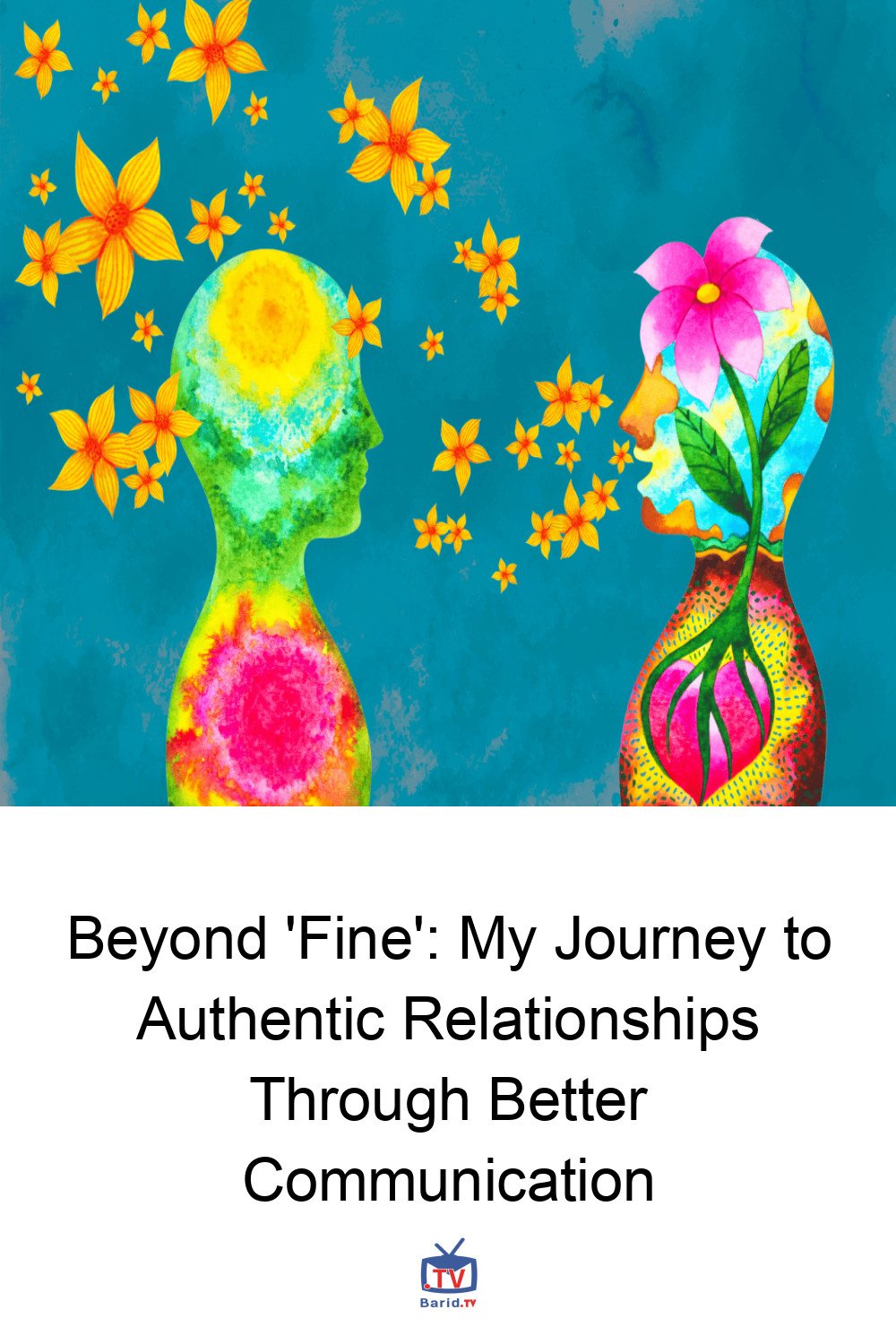
Beyond ‘Fine’: My Journey to Authentic Relationships Through Better Communication
“When we avoid difficult conversations, we trade short-term discomfort for long-term dysfunction.” ~Peter Bromberg
Have you ever observed others navigating life with an enviable grace—seemingly steady, deeply connected, and utterly at ease in their relationships? For years, I watched from the sidelines, convinced there was a secret club of confident, kind, and thoughtful individuals who simply ‘got it.’ They enjoyed their relationships, and by extension, they seemed to enjoy their lives. I, however, was not a member of that club.
The Illusion of the ‘Cool Girl’
My default setting was to be the “nice” one, which often translated into a masterful avoidance of any conversation that hinted at confrontation. I believed this made me easygoing, low-maintenance, and unbothered—the quintessential “cool girl.” The truth was far more complex. Beneath the surface, a torrent of unspoken frustrations simmered, inevitably leaking out in passive-aggressive ways. I recall a night when I told my boyfriend it was “fine” for him to go out with friends, only to seethe with silent resentment upon his return. My “I’m fine” was delivered without eye contact, punctuated by loudly shut drawers and muttered complaints like, “Must be nice to go out without me.” What I truly wanted to express was a simple desire to spend the evening together, but direct communication felt like an insurmountable hurdle. This pretense of unbothered ease created tension, distance, and defensiveness in my relationships, becoming a pattern I mistakenly believed was an intrinsic part of who I was.
A Catalyst for Change: Finding My Voice Amidst Loss
Then, the world as I knew it shattered. The unexpected passing of my first love plunged me into a profound grief that stripped away all previous notions of what mattered. The mundane concerns of daily life—work, meals, social obligations—faded into insignificance. Lying on my floor, surrounded by the remnants of tears, a stark realization dawned: no one could alleviate this pain for me. If I was to find a path forward, it had to come from within.
This realization ignited a fervent quest for understanding. I devoured books, attended seminars, and enrolled in classes, searching for answers. A consistent theme emerged from my explorations: the profound impact of communication on our lived experience. It became clear that the way we interact, both with ourselves and others, fundamentally shapes our reality.
Embracing ‘Right Speech’: A New Path to Authentic Connection
My journey led me to a writing and meditation workshop at a Shambhala center in New York. There, I discovered meditation—the first time I truly sat with myself without judgment—and was introduced to the Buddhist principles of “right speech”: speaking in ways that are truthful, kind, and helpful. This revelation was a turning point. I began to understand that my suffering wasn’t solely a consequence of external events, but also stemmed from my internal relationship with my thoughts, emotions, and interactions.
The relentless overthinking, the emotional reactivity, the persistent inner tension—these weren’t immutable aspects of my identity. They were patterns. And crucially, patterns can be changed. If I aspired to transform my life, I needed to fundamentally alter how I showed up in it—how I spoke, how I listened, and how I connected with myself and those around me.
The Experiment Begins: Navigating Honest Conversations
I decided to approach this transformation as an experiment. What would unfold if I committed to speaking honestly, kindly, and clearly? The first test arrived when a friend asked for my opinion on a new person she was dating. My old self would have offered a saccharine, non-committal response, masking my true feelings. This time, I paused, grounded myself in my intention to be truthful, kind, and helpful, and then shared my genuine perspective: “I think you deserve someone who truly treats you kindly and is supportive, and I haven’t seen that from him.” To my surprise, the conversation didn’t erupt into defensiveness. She simply absorbed my words, reflecting on them thoughtfully.
Daily Intentions: Cultivating Conscious Communication
Each morning became an opportunity to set an intention for how I wanted to engage with myself and others that day. This was a gentle practice, acknowledging that I would inevitably stray, but committing to notice those deviations, acknowledge them without judgment, and gently guide my attention back to my intention. It wasn’t always easy. It meant consciously choosing to express myself rather than shutting down or lashing out. It involved cultivating the pause—a crucial moment to prevent unhelpful reactions. It demanded telling the truth, even when it felt uncomfortable or scary. And perhaps most profoundly, it required noticing the unkind internal dialogue and actively choosing a gentler, more friendly approach to myself.
The Ripple Effect: A Life Transformed by Better Communication
Slowly, imperceptibly at first, then with increasing momentum, things began to shift. The grip of passive-aggression and judgment loosened. My chronic anxiety softened. My communication became clearer, more direct, and more authentic. Conversations that once felt daunting became manageable, and even confrontation—my ultimate nemesis—transformed into an unexpected opportunity for deeper connection. This journey taught me that true strength lies not in avoiding discomfort, but in embracing the vulnerability of honest communication, paving the way for richer relationships and a more fulfilling life.
For more details, visit our website.
Source: Link