

“When someone shows you who they are, believe them the first time.” ~Maya Angelou
The weekend began with the familiar warmth of a family gathering. Children’s laughter echoed, the aroma of chocolate chip muffins filled the air, and homemade ice cream promised sweet indulgence. It was the quintessential scene of joyful chaos, a tapestry woven with the threads of shared space and affection. Yet, beneath this idyllic surface, a subtle shift occurred, one that would eventually unravel a year-long saga and illuminate a profound truth about enduring relationship patterns.
The Seemingly Minor Catalyst
On the second day, a small detail emerged: a visiting child, enamored with our toddler, was affectionately rubbing her runny nose across our little one. While her love for babies was undeniable and cherished, any parent understands the domino effect of a common cold. Weeks of sleepless nights, fretful children, and an exhaustion that can make one question every life choice suddenly loomed large.
This wasn’t an isolated incident. Previous visits had brought similar ailments, once leading to a month-long illness for our entire family. My husband, typically hesitant to voice concerns within his family due to fear of their reactions, finally agreed with me: it was time to prioritize our family’s well-being over apprehension. We believed in open, honest communication, not confrontation, simply to take necessary precautions.
A Simple Question, A Complex Reaction
So, my husband took what felt like a radical step: he asked if the child was sick. It was a straightforward question, devoid of accusation, the kind functional adults engage in daily. What followed, however, was a painfully familiar dance. The conversation bypassed us entirely, circulating sideways and around, discussed by everyone except the one who had posed the initial query. This indirectness, I realized, had been the default mode since I married into the family.
A passive-aggressive text soon followed, its heavy energy palpable even before it was fully read. My husband calmly reiterated our stance: it was “no big deal,” merely a desire to practice extra hygiene and perhaps fewer hugs if someone was genuinely unwell. The visit concluded, and life resumed its rhythm.
Beyond the Incident: Unmasking the Deeper Pattern
What ensued was not a swift resolution, but a slow, agonizing unraveling that consumed the better part of a year. Accusations flew: I was “the problem,” my husband and I “always caused drama,” and there was a clear attempt to drive a wedge between us. My character was dissected, and even the sanctity of our marriage was questioned.
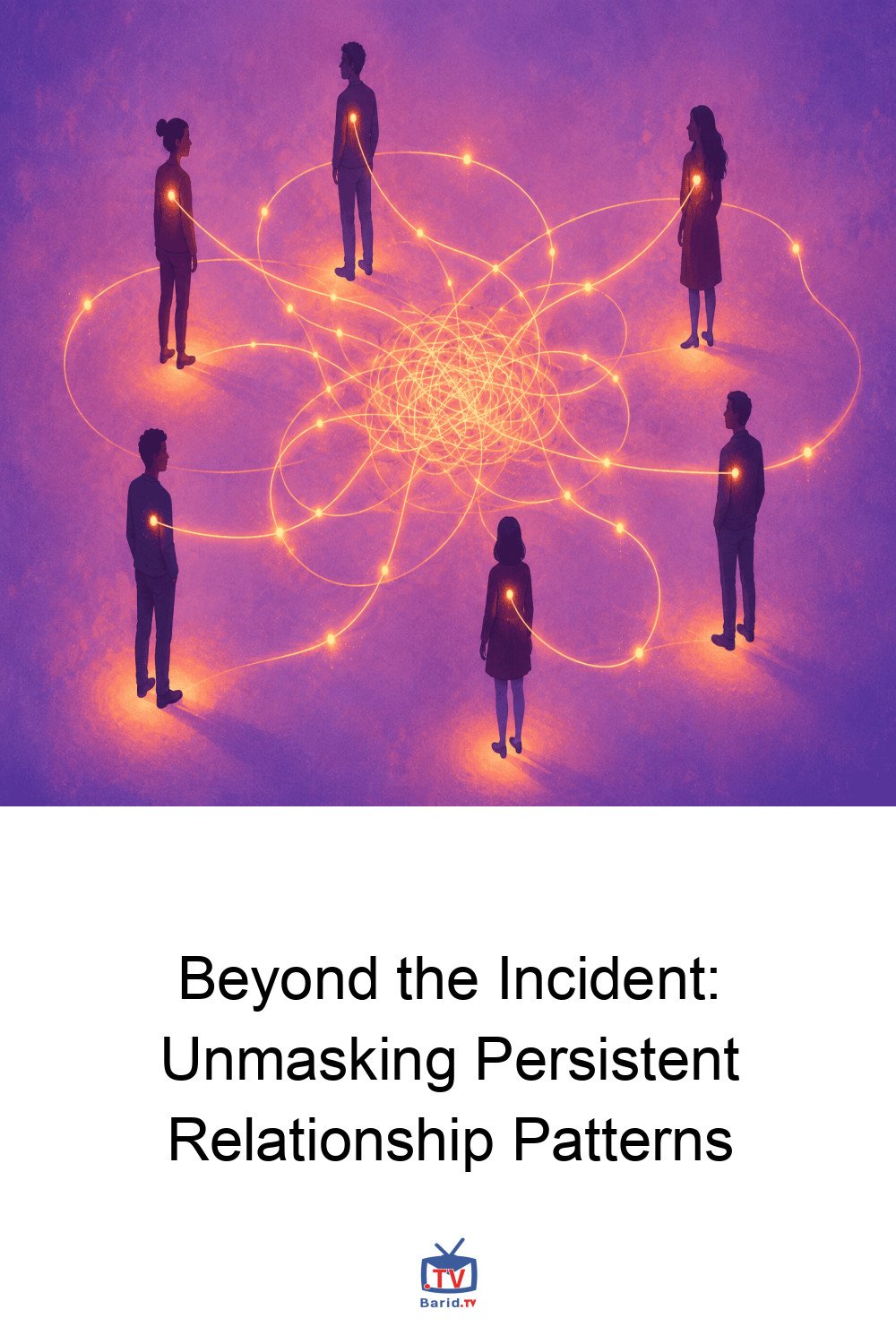
It was then that the profound realization struck me: the runny nose was never the actual issue. It was merely the latest prop in a long-running play, a fresh canvas upon which an entrenched dynamic could replay itself. This is the insidious nature of patterns: they latch onto available incidents, using them as vehicles to manifest the same underlying structure that has always existed.
The Structure Beneath the Surface
Whether it was our choice of wedding venue, a simple question about a cold, our need for naps during a vacation, an unannounced trip to the library, or the way we chose to share my pregnancy – the specific incident rarely mattered. What truly mattered was the invisible architecture beneath it all:
- Who communicates directly versus who resorts to gossip and avoidance.
Who takes accountability versus who deflects blame.
- Who seeks healthy resolution versus who thrives on drama.
Who demonstrates empathy versus who is dismissive.
- Who owns their feelings versus who manipulates with guilt.
In this particular family structure, the former set of behaviors was conspicuously absent.
The Unyielding Wall of Denial
For nearly a year, my husband and I earnestly attempted to articulate this unhealthy pattern, a dynamic that predated my arrival and, technically, shouldn’t have involved me at all. We penned heartfelt letters, engaged in difficult conversations, and even brought in a neutral therapist. We held onto hope, believing that those who loved us would be willing to undertake the uncomfortable work of honest self-reflection to mend these recurring issues. Our motivation was simple: to foster healthier, more fulfilling family relationships.
The efforts, to put it mildly, were met with profound resistance. While one party eventually offered an apology – largely at the therapist’s insistence – it was a perfunctory gesture, a box-ticking exercise devoid of genuine behavioral change. It was the verbal equivalent of sweeping debris under a rug and then praising the rug’s cleanliness. The primary party involved remains steadfast in their denial that any such pattern even exists.
That arduous year crystallized the most crucial lesson: you cannot change a pattern that the other person does not believe exists. You can approach it with gentleness, articulate your truth in the most honest terms, maintain composure, lead with compassion, and even enlist professional help. But if the other person is rigidly committed to a reality where they are perpetually blameless and accountability is a foreign concept, none of your efforts will ever resonate. It’s not for lack of trying; it’s because you are standing on fundamentally different ground, trying to build a bridge where the other side refuses to acknowledge the river.
For more details, visit our website.
Source: Link