



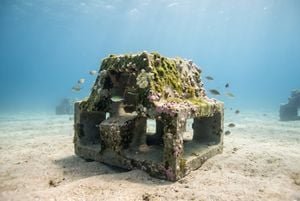

From Barren Structure to Thriving Ecosystem: The Journey of an Artificial Reef
A silent transformation unfolds beneath the waves when an artificial structure is introduced to the seafloor. What begins as an inert object—be it a sunken vessel, a cluster of concrete modules, or a pile of quarried rock—gradually evolves into a vibrant, living community. This remarkable process, known as ecological succession, sees one group of organisms pave the way for the next, fundamentally altering the environment. The question of how quickly an artificial reef “comes alive” is complex, with no single answer, as “alive” itself encompasses a spectrum of biological milestones, each arriving on its own unique timeline.
The pace and character of this underwater metamorphosis are dictated by a delicate interplay of factors, many of which are beyond human control. The very material of the reef, its depth, the surrounding water conditions, and its proximity to existing natural habitats all play critical roles. Understanding these stages and influences is vital for coastal managers, conservationists, anglers, and dive operators alike, as they seek to harness the potential of artificial reefs for habitat creation, recreational opportunities, and ecosystem enhancement.
The Invisible Genesis: Biofilm Formation
The first whisper of life on a newly submerged structure is entirely unseen by the naked eye: a microscopic biofilm. This thin, sticky film of bacteria and organic material begins to form almost immediately upon submersion, long before any visible algae or marine animals arrive. Yet, it is a foundational layer, fundamentally altering the surface for every subsequent settler.
Chemical Foundations
The process initiates not with biology, but with chemistry. Seawater is rich in dissolved organic matter, including proteins and polysaccharides. These molecules adhere to clean submerged surfaces, creating an initial “conditioning film.” This coating subtly modifies the surface’s charge and texture at a microscopic level, making it more amenable to microbial attachment.
Microbial Colonization
Following the conditioning film, free-floating bacteria drift against the now-altered surface. Some attach loosely, then anchor themselves more firmly. Once secured, they secrete a sticky matrix of extracellular polymeric substances (EPS), which binds the cells together, traps nutrients, and provides structural integrity to the growing film. As the biofilm thickens, other microorganisms join this nascent community, including diatoms (single-celled algae with silica shells), fungi, and protozoa, creating a complex, layered microbial ecosystem.
The Biofilm’s Crucial Role
Though invisible, this initial slime is profoundly important. To a diver, it might feel slippery or show a faint brownish tint—the same material that fouls ship hulls. Critically, the biofilm produces chemical cues that can either encourage or deter the settlement of invertebrate larvae, such as barnacles and tube worms. For instance, the tube worm Hydroides elegans is known to settle in response to specific marine bacteria within the film. Furthermore, the biofilm serves as the first food source for early grazers like snails and limpets, introducing the initial links in the reef’s food web.
The composition and growth rate of this microbial film are highly variable, influenced by water temperature, nutrient levels, light exposure, and the material of the artificial structure itself. This early variation can set different reefs on divergent ecological paths from their very inception.
The First Visible Signs: Algae and Seaweed
After the invisible biofilm, algae typically represent the first visible signs of life on a new artificial reef. Divers and underwater cameras will soon observe a fuzzy green or brown layer of turf and filamentous algae spreading across sunlit surfaces. These photosynthetic organisms are primary producers, converting sunlight into energy and forming the next critical layer of the reef’s developing food web.
Spreading Greenery
As algae colonize, they create a more substantial organic layer, providing shelter and food for a wider array of small invertebrates and herbivorous fish. The type and density of algal growth are heavily influenced by light penetration, making depth a significant factor in their establishment and proliferation.
Encrusting Life and Early Inhabitants
With the biofilm and algal layers established, the reef becomes increasingly attractive to a diverse range of marine life.
Sessile Settlers
The next wave of colonization involves encrusting animals whose larvae drift in the water column before settling onto suitable surfaces. These include barnacles, tube worms, bryozoans, and sponges. They attach themselves firmly, adding structural complexity and new food sources to the burgeoning ecosystem. Their presence further modifies the reef’s surface, creating microhabitats for smaller organisms.
Fish Find Shelter
Fish, often among the earliest visitors, are drawn to the new structure for immediate shelter and the way it disrupts currents, creating feeding opportunities. As the biofilm, algae, and encrusting invertebrates establish themselves, the reef provides an increasingly rich larder for various fish species, from grazers to predators, further integrating the structure into the local marine food web.
The Slow Bloom: Coral Establishment
Where environmental conditions permit, corals are among the slowest, yet most significant, major groups to establish on artificial reefs. Their growth is contingent on specific water temperatures, light levels, and water quality. Coral larvae, like those of other invertebrates, must find suitable surfaces for settlement, often aided by the presence of established biofilms and coralline algae.
Once settled, coral polyps begin to build their calcium carbonate skeletons, slowly contributing to the reef’s long-term structural integrity and biodiversity. Their presence signifies a mature and complex reef ecosystem, capable of supporting a vast array of marine life.
Key Factors Influencing Reef Development
The speed and success of an artificial reef’s development are not uniform; they are shaped by a confluence of environmental and structural factors.
Material and Texture
The composition and surface characteristics of the artificial reef material significantly influence what organisms can settle. Rough, porous surfaces often provide more attachment points and shelter than smooth ones. The chemical inertness or reactivity of the material can also encourage or deter specific microbial and larval settlement.
Depth and Light
Depth directly governs the amount of sunlight reaching the reef. This is a critical factor for photosynthetic organisms like algae and corals, which require adequate light for growth. Shallower reefs typically see faster and more prolific algal and coral growth, assuming other conditions are favorable.
Water Dynamics: Temperature & Currents
Water temperature directly impacts the metabolic rates and growth of most marine organisms. Warmer waters within optimal ranges generally accelerate growth. Ocean currents are equally vital, acting as delivery systems for larvae, plankton (food), and dissolved nutrients, while also dispersing waste products. Strong, consistent currents can bring a steady supply of new life and food, but excessively strong currents can also hinder delicate larval settlement.
Proximity to Natural Habitats
The distance of an artificial reef from existing natural reefs or healthy marine ecosystems is a major determinant of its colonization rate. Natural reefs serve as crucial sources of larvae for invertebrates and corals, as well as mobile animals like fish. A closer proximity generally translates to a faster influx of diverse species, accelerating the ecological succession process.
The Broader Impact: Why Artificial Reefs Matter
The creation of artificial reefs carries significant implications for various stakeholders and the marine environment.
Management and Recreation
Coastal managers strategically deploy artificial reefs to create new habitats, enhance fish stocks, and direct human activities like fishing and diving. These structures can alleviate pressure on natural reefs by providing alternative sites for recreation and harvesting, contributing to sustainable marine resource management.
Conservation Debates
While artificial reefs undeniably provide new structure, a fundamental question remains: do they genuinely produce new fish populations, or do they primarily concentrate existing fish from nearby areas? Conservation groups carefully weigh the ecological benefits of added habitat against potential changes to local ecosystems and the risk of simply aggregating fish for easier capture. The debate underscores the need for careful planning, monitoring, and scientific research to ensure artificial reefs contribute positively to marine biodiversity and health.
Conclusion
The journey of an artificial reef from an inert object to a vibrant underwater city is a testament to nature’s relentless capacity for life. It is a complex ballet of ecological succession, where microscopic films pave the way for visible algae, which in turn support encrusting animals, fish, and eventually, the slow majesty of corals. While the timeline is influenced by a myriad of factors—from the reef’s material to the ocean’s currents—each stage is a vital step in transforming a human-made structure into a thriving marine ecosystem. As we continue to deploy these underwater interventions, understanding this intricate process is paramount to maximizing their ecological benefits and ensuring their role as true contributors to ocean health.
For more details, visit our website.
Source: Link






Leave a comment