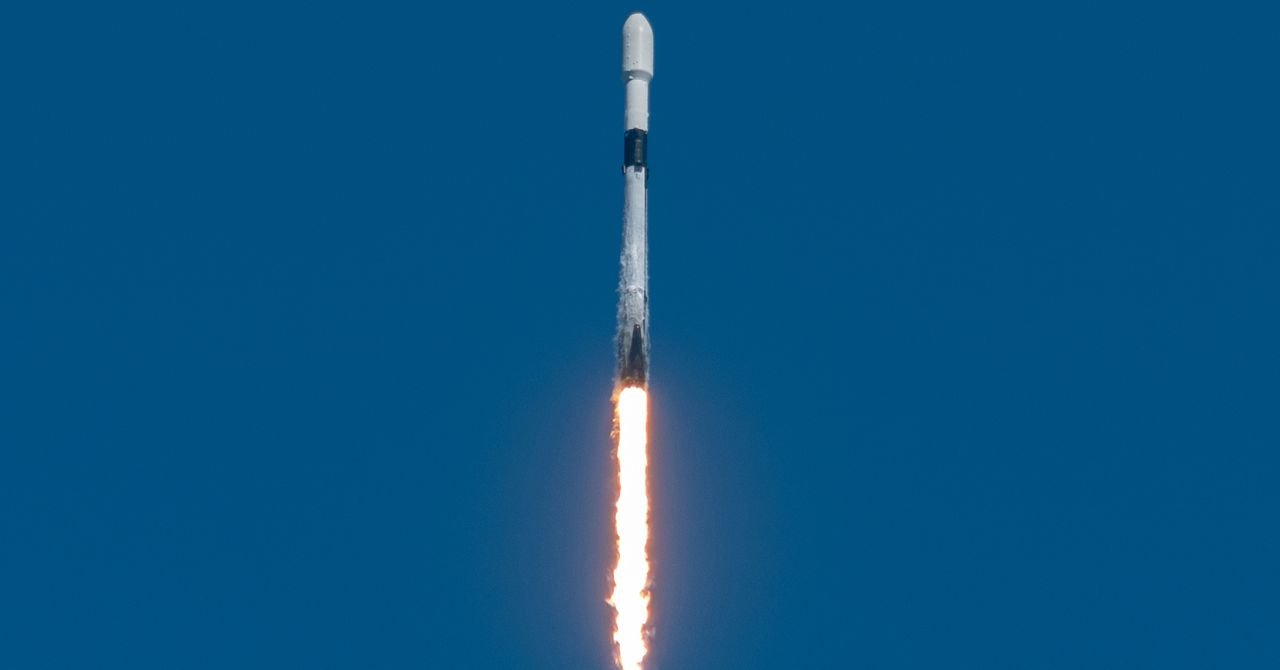

A celestial drama is set to unfold this Wednesday as a rogue SpaceX Falcon 9 rocket, adrift in space for over a year and a half, is slated for an uncontrolled collision with the Moon. While the spectacle of a visible debris cloud from Earth promises a unique astronomical event, the impending impact casts a long shadow over humanity’s ambitious plans for lunar exploration and the establishment of future moon bases.
The Unplanned Lunar Rendezvous
The rocket in question is the upper stage of a Falcon 9, which successfully deployed a pair of lunar landers before being left without sufficient fuel to either return to Earth or achieve a stable orbit. Now, this 4-metric-ton derelict is hurtling towards the lunar surface at an astonishing 5,400 mph – roughly seven times the speed of sound. Without an atmosphere to cushion its descent, the impact is predicted to unleash an explosion equivalent to 3 metric tons of TNT, carving out a crater up to 27 meters in diameter and 5 meters deep.
The dramatic event is expected around 6:34 am UTC on Wednesday, with the likely impact zone near the Einstein Crater on the western edge of the Moon’s near side. While not visible to the naked eye, observers in the Americas with powerful telescopes may catch a fleeting glimpse of the resulting debris plume.
A Skyrocketing Concern: Space Debris and Lunar Ambitions
This isn’t just an isolated incident; it’s a stark reminder of the escalating issue of space junk, particularly as numerous nations eye the Moon for future missions. The SpaceX Falcon 9 joins a growing list of unintended lunar impacts, including a Chinese Long March 3C rocket in March 2022, which left a 29-meter-wide crater. With both China and the US actively pursuing plans for permanent lunar bases within the next few decades, the accumulation of orbital and lunar debris presents a tangible threat.
Tracking the Trajectory and Understanding the Fallout
The trajectory of the Falcon 9 was first meticulously calculated by Bill Gray, the visionary behind the Project Pluto initiative, which develops tools for tracking celestial bodies and artificial satellites. Gray was also instrumental in a recent preprint study that delved into the specifics of this collision.
As the study highlights, this crash offers “an opportunity to test pipelines for measuring flash properties to locate impact events seismically, and to better understand the multi-modal hazards posed to future lunar infrastructure and astronauts from space debris impacting the Moon.”
Safeguarding Our Future on the Moon
While a sustained human presence on the Moon, complete with research centers and habitats, remains at least a decade away, NASA’s Artemis program is already laying the groundwork for the first facilities in the coming years. This accelerated timeline underscores the urgency of addressing potential hazards.
Benjamin Fernando, a researcher at Los Alamos National Laboratory and co-author of the preprint study, emphasized the increasing frequency of such events. “These sorts of things are going to happen more and more often. And as we have more astronauts on the lunar surface, more lunar infrastructure habitats, for example, we need to understand how much of a risk these impact events actually pose,” he told ABC News.
The threat from space debris is just one item on a comprehensive list of risks, which also includes natural meteorite strikes. However, the decade-long lead time before permanent bases are established provides a crucial window for researchers to thoroughly investigate these hazards and develop robust mitigation strategies.
Fernando elaborated on the dual nature of the risks: “This is an ideal way of studying both the direct risks, the risk of being hit by debris or being blinded by a flash of light, but also the indirect risk, the risk of being hit by a cloud of ejected material and having that disrupt or interfere with spacecraft functions in lunar orbit as well.”
The Falcon 9’s unplanned lunar swan dive serves as a potent, visible warning – a call to action for the international space community to prioritize the safety and sustainability of our future on the Moon.
For more details, visit our website.
Source: Link