

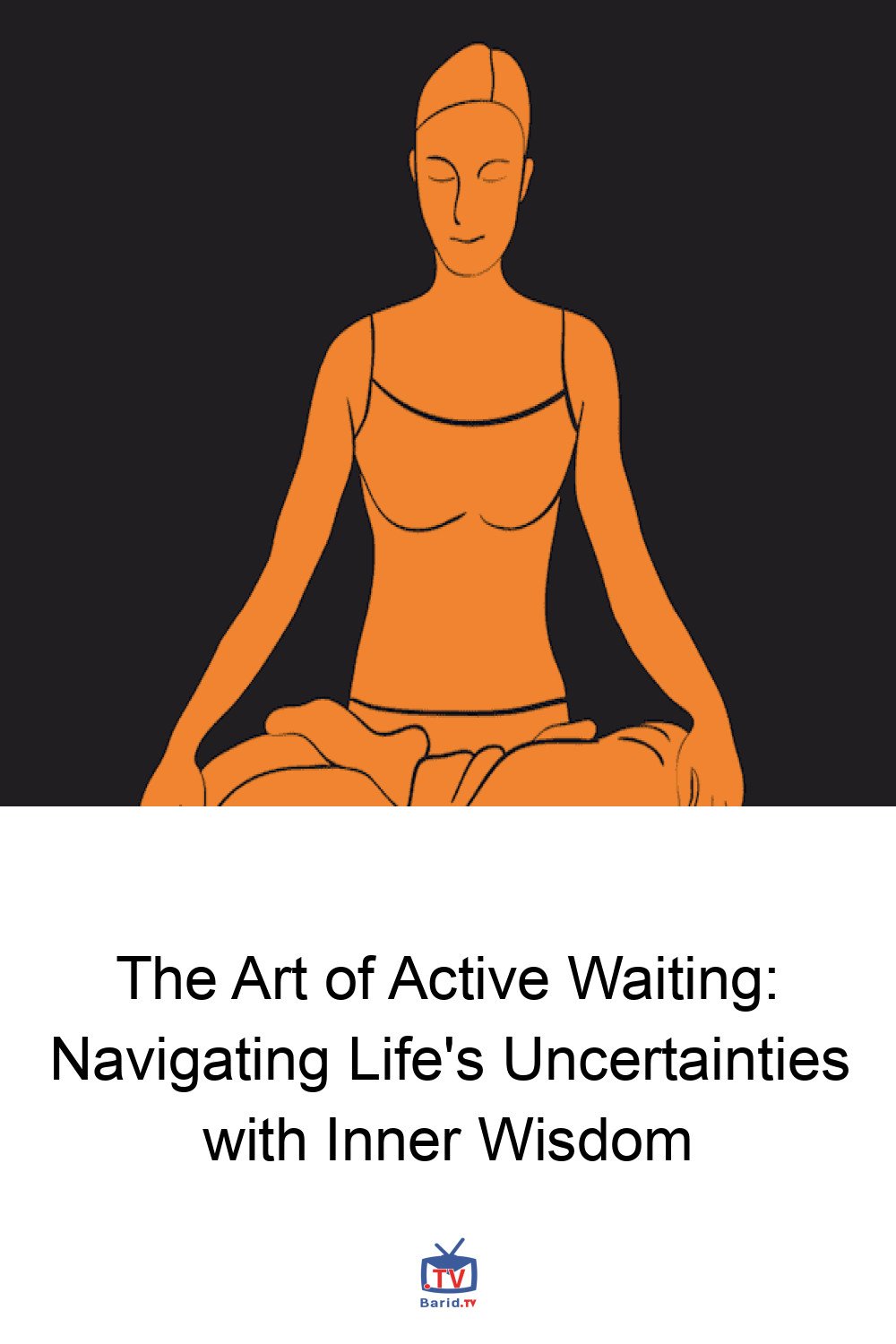
“Waiting is not mere empty hoping. It has the inner certainty of reaching the goal.” ~I Ching
In our fast-paced, ‘always-on’ world, the very notion of ‘waiting’ often carries a negative connotation. It’s seen as a sign of weakness, indecision, or worse, procrastination. We are constantly bombarded with messages to ‘seize the day,’ ‘make things happen,’ and ‘never stop moving.’ It’s no wonder that finding a profound quote about the power of waiting required a journey back to ancient wisdom, specifically the I Ching.
For much of my life, I embodied this societal impatience. My twenties were a blur of ticking off life’s milestones: college, career, marriage, family. I approached life’s big decisions with a checklist mentality, often forcing outcomes rather than allowing them to unfold. The idea of waiting felt alien, a passive surrender to fate, devoid of courage or conviction. Yet, with the benefit of hindsight and deeper understanding, I’ve come to realize that active waiting is, in fact, one of the most potent tools we possess for consciously shaping the life we truly desire.
The Modern Dilemma: Why We Resist the Pause
Our ego, or the analytical mind, is inherently uncomfortable with uncertainty. It thrives on control, predictability, and action, often screaming, “Do something! Anything is better than nothing!” This internal pressure is amplified by a society that champions relentless pursuit over patient observation. The mind abhors the void of ‘not knowing’ and would rather commit to a flawed path than linger in the fertile ground of potential.
Beyond the Ego’s Urge: Embracing Liminal Space
This state of ‘not knowing’ has a beautiful, descriptive term: liminal
. A liminal space is a threshold, a borderland between what was and what is yet to be. It’s a place of pure, unmanifested potential, where the path forward isn’t illuminated by obvious signs. While deeply uncomfortable for many, these liminal periods are crucial for genuine growth and revelation.
Understanding Liminality: The Threshold of Potential
Our natural inclination is to rush through these uncomfortable transitions. However, if we can resist the urge to force a resolution and instead slow down, the landscape gradually clarifies, much like our eyes adjusting to a darkened room. We begin to engage all our senses, perceiving nuances and subtle cues that were previously obscured by the ego’s frantic demand for a brightly lit superhighway to the future. Life, after all, is rarely a straight shot; it’s more akin to a maze, requiring us to take a few steps, observe, and then discern the next turning point. Navigating this maze demands a different skill set, and active waiting is paramount among them.
The Wisdom of Inaction: Tapping into Inner Knowing
There is an inherent, often unseen, timing to all things – a timing that frequently diverges from our impatient desires. Subconscious processes, both within ourselves and in the broader environment, are constantly at work, preparing us for the next crucial step. When the opportune moment for action finally arrives, it often carries an undeniable sense of inevitability, as if it were always meant to be.
Reflect on your own life. Consider decisions you forced, driven by anxiety or external pressure. How did those unfold? Now, recall moments when you simply ‘knew’ what to do, without conscious deliberation. The outcomes of these intuitive decisions often speak volumes. The key to this second kind of decision-making lies in patiently waiting for that profound sense of inner knowing to emerge.
Learning from Nature: The Migratory Bird Analogy
This isn’t about absolute certainty or the absence of fear, but rather a distinct, embodied ‘yes, now’s the time.’ It’s akin to the primal urge that guides migratory birds. They don’t consult maps, debate options, or second-guess their instinct; they simply depart when the time is right. As human beings, we too possess this innate, animalistic sensitivity – an inner compass that can guide us when cultivated. But to access it, we must learn to detach from the incessant chatter of the analytical mind.
Cultivating Active Waiting: A Practical Approach
While thinking is undeniably useful, we often extend it far beyond its point of efficacy. We endlessly cycle through options, attempting to predict the future based solely on hopes and fears. We seek external validation, hoping others hold the answers we crave. We weigh ‘shoulds’ based on a myriad of external metrics – common sense, morality, finances – and then, exhausted, take our ‘best shot.’
Stock-Taking and Intuitive Action
A more effective path involves taking honest stock of what you know (and, crucially, what you don’t know), and then… waiting. This isn’t passive idleness. Active waiting means keeping your inner senses finely tuned to subtle urges, intuitions, or even seemingly unrelated actions that call to you. Pursue those small nudges, and then wait again, expecting an answer to emerge. As the I Ching suggests, wait with an “inner certainty of reaching the goal.”
This powerful form of waiting is distinct from procrastination, which stems from fear of the unknown. If your intuition pulls you in a particular direction, and your mind screams caution, learn to discern the difference between genuine misgivings (an internal warning that a decision, however appealing, might be detrimental) and ego-driven fear (which holds you back from something you deeply long to do). Trust the subtle pull of your inner wisdom; it’s often the most reliable guide to your true path.
For more details, visit our website.
Source: Link