




Beneath the Waves: The Remarkable Transformation of Artificial Reefs
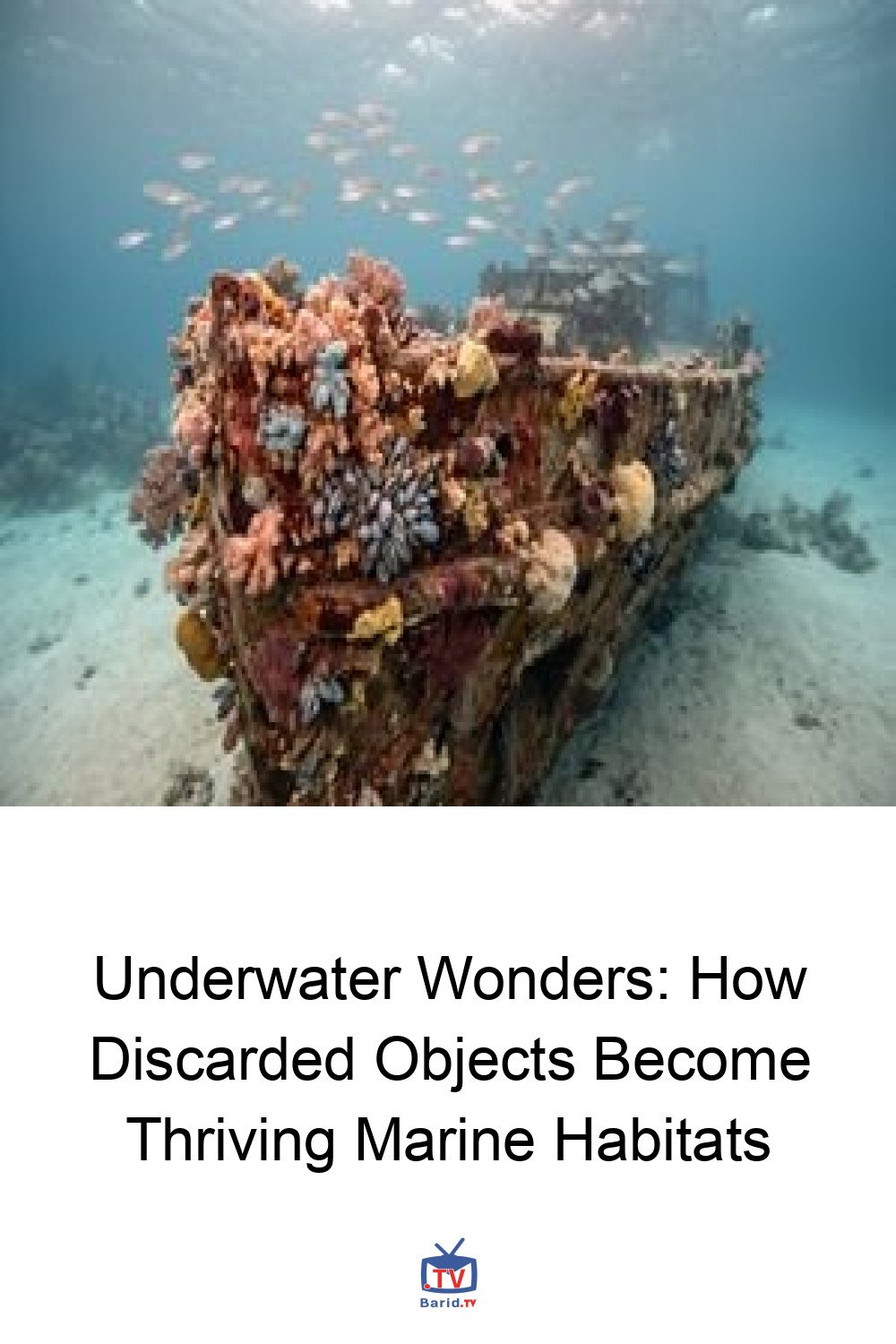
Imagine a retired New York City subway car, a formidable American M42 Duster tank, or even a decommissioned U.S. Navy aircraft carrier. These seemingly disparate objects now share a profound common purpose: to breathe new life into our oceans. Deliberately placed on the seafloor, they serve as vital foundations where corals, mussels, sponges, and a myriad of fish species can settle, thrive, and create vibrant new ecosystems.
Artificial reefs are ingeniously human-made structures submerged underwater to provide essential hard surfaces for marine organisms. Vast expanses of the ocean floor consist of flat mud or sand, offering little opportunity for the larvae of corals, oysters, and sponges to attach and grow. Similarly, smaller fish often lack the crucial crevices needed for shelter from predators. A strategically sunken hull, a purpose-built concrete module, or an artistic cement sculpture can address both these needs. Once algae and invertebrates establish themselves, larger fish are drawn to feed, transforming barren seabed into bustling, productive habitats.
More Than Marine Homes: Benefits for Both Wildlife and Humans
These ambitious projects offer dual benefits, serving both marine wildlife and human communities. Wreck sites and underwater sculpture parks have become popular attractions for recreational divers and snorkelers, drawing visitors to unique underwater landscapes. Some are even intentionally positioned to alleviate pressure on fragile natural reefs, redirecting tourist traffic to more resilient, man-made alternatives. It’s crucial to note that before any large structures, such as retired ships, are submerged, they undergo rigorous clearance of toxic substances, ensuring they pose no threat to the marine environment. The aircraft carrier mentioned in this context, for instance, received thorough vetting from the U.S. Environmental Protection Agency prior to its sinking.
A Deep Dive into Diverse Artificial Reefs
The world’s most unusual artificial reefs and reef-building methodologies can broadly be categorized into three fascinating groups:
Decommissioned Machines: From War to Wildlife
A significant number of artificial reefs are born from retired machinery. This category includes the aforementioned aircraft carrier, a World War II transport ship, and a military transport plane that once served the Turkish Air Force. Perhaps even more strikingly, an American M42 Duster tank now rests in Jordan’s Aqaba Marine Park, while hundreds of New York City subway cars have found a new purpose off the coast of Delaware. These relics of human industry are given a second life as havens for marine biodiversity.
Artistic Installations: Sculpting the Seabed
Beyond utility, some artificial reefs are true works of art. Notable examples include two captivating installations within an underwater museum near Cancun, Mexico, where sculptures provide both aesthetic wonder and ecological function.
Purpose-Built Structures: Designed for Life
The final category encompasses structures specifically designed and constructed for reef creation. One such example is a reef off Key Biscayne, Florida, meticulously crafted to evoke the mythical lost city of Atlantis. Elsewhere, hollow concrete modules are deployed globally, and cement pyramids are strategically placed alongside natural coral formations in Indonesia, all with the singular goal of fostering marine life.
Spotlight on Unique Reefs: The M42 Duster Tank and Neptune Memorial Reef
The M42 Duster Tank: A Desert Relic’s Underwater Legacy
In a remarkable ecological initiative, an American M42 Duster tank was deliberately sunk in 1999 within Jordan’s Aqaba Marine Park. This project, spearheaded by the Jordanian Royal Ecological Diving Society, aimed to provide a much-needed settlement surface for sea sponges and corals. Resting approximately 15 feet below the surface, the tank is easily accessible to both snorkelers and scuba divers, making it a popular and well-known site for underwater exploration.
The success of this ecological endeavor is evident in the vibrant life it now supports. Daniel Keller, who documented unique artificial reefs, notes that sea stars (echinoderms), lionfish (predatory fish), and various shrimp species (crustaceans) have made the wreck their home, showcasing the diverse marine communities that can flourish on these man-made structures.
Neptune Memorial Reef: Atlantis Reimagined
Off the coast of Key Biscayne, Florida, lies the Neptune Memorial Reef, a sprawling 16-acre artificial reef designed to stunningly resemble the fabled sunken city of Atlantis. Named after Neptune, the Roman god of the sea (the Greek counterpart, Poseidon, being Plato’s founder of Atlantis), this unique site utilizes metal and cement structures to offer robust surfaces for algae and coral growth.
Plato’s ancient dialogues, Timaeus and Critias, describe Atlantis as a powerful naval empire that vanished beneath the waves. The Neptune Memorial Reef meticulously recreates this drowned city with architectural details like statues of lions, decorative gates, and pillars, now beautifully adorned with marine growth, giving the site the evocative appearance of an ancient ruin. Arches and holes integrated into the structures provide stable habitats for small fish, while new coral colonies continuously add their calcium carbonate skeletons, further enhancing the reef’s complexity and ecological value. This reef also uniquely functions as an undersea burial ground, ingeniously combining memorialization with environmental support.
For more details, visit our website.
Source: Link








Leave a comment