




A Classroom of Subtraction: Kalamos Faces the Inevitable
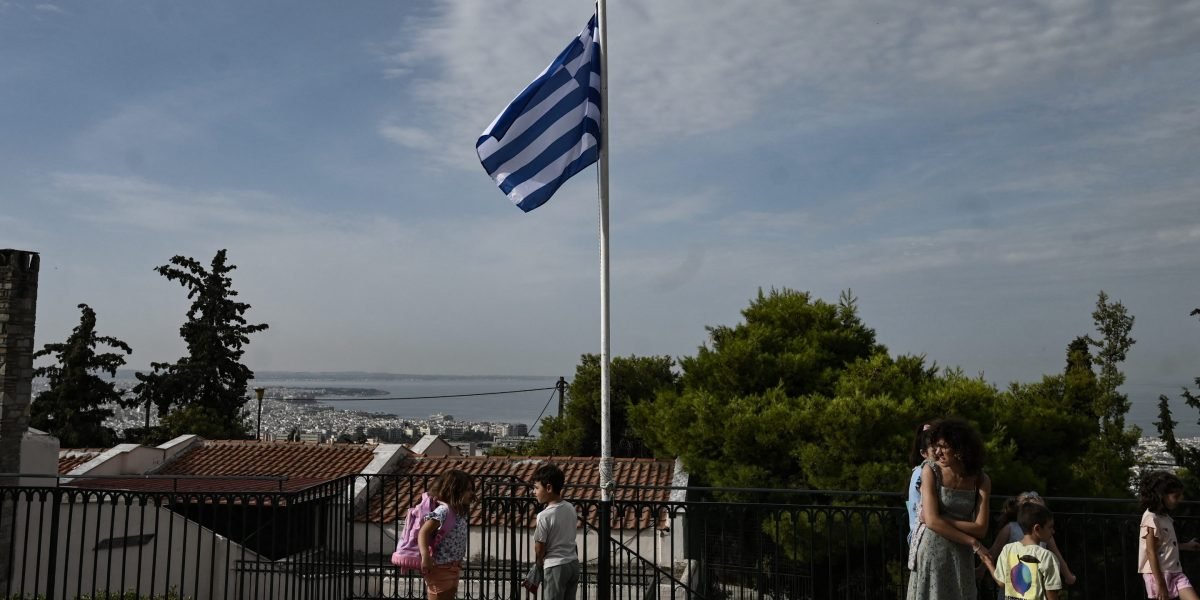
On the sun-drenched, idyllic Greek island of Kalamos, Chryssa Ntalaka’s classroom has become a stark, living lesson in demographic decline. As the sole teacher in the island’s last remaining school, Ntalaka has witnessed her student roster shrink with each passing autumn. This year, a poignant two sixth-graders sit at her table, surrounded by rows of silent, unused desks. Their departure for middle school on the mainland next year will mark the end of an era, as the school is set to be mothballed, following the kindergarten that closed its doors three years prior.
“Usually, teachers are placed on these islands against their wishes,” Ntalaka shared with The Associated Press, her voice tinged with a bittersweet irony. “Whereas for Kalamos there are teachers and kindergarten teachers, as far as I know, who want to come — but there are no children.”
Greece’s Wider Crisis: An Early Warning System for Europe
Kalamos is not an isolated case; its plight is a microcosm of a much larger crisis unfolding across Greece and, indeed, much of Europe. A national drop in enrollment this year led Greek authorities to close 75 schools and suspend classes at over 400 others. This trend is particularly pronounced in Southern Europe, home to 16 of the world’s 20 oldest nations, according to the World Population Review. Remote communities, like Kalamos, serve as an early warning system, where the disappearance of schools and essential services signals a deepening cycle of population decline.
With some 17 million people inhabiting over 4,000 islands across the European Union—Greece alone accounting for about 200—the implications are profound. Byron Kotzamanis, co-founder of the Institute of Demographic Research in Athens, paints a grim picture: “Closing schools leads to young people not staying and to them leaving. Leaving means fewer and fewer people — fewer and fewer births. It means depopulation and dead settlements that will become nursing homes.”
A Daily Odyssey for Education
Kalamos, with its year-round population of just 80, once thrived with 40 children in its local schools and daycare a decade ago. Antonis Aivaliotis, a high school senior, fondly recalls those days: “It was very nice. We played together every day. We went to (primary) school every morning.” Today, Antonis is one of seven teenagers who endure a choppy daily ferry crossing to attend school on the mainland, often missing classes when strong winds make the journey perilous.
Chryssa Ntalaka’s dedication to remote education spans two decades, half of which she has spent on Kalamos, an island not far from Odysseus’s legendary Ithaca. She fell in love with its unspoiled beaches and vibrant marine life, becoming an accomplished spearfisher. Yet, despite her deep connection, she faces the inevitability of leaving. The school’s survival hinges on the arrival of just two families—a desperate plea echoed by Ntalaka and town officials, but one that has, so far, gone unanswered. “We’re very welcoming and we’re trying. That’s what we want to do, even right now — for someone to hear us,” Ntalaka implores. “The sooner, the better.”
For Antonis, the future is clear, albeit heartbreaking. “Of course I would like to stay here,” he admits. “I love Kalamos. It is my home. But there’s no development at all.”
A Continent-Wide Battle Against Decline
The struggle to keep island schools open resonates far beyond Greece’s shores, from Croatia to Japan, as aging nations grapple with similar demographic challenges.
Croatia’s Investment in Island Life
Croatia has made significant strides, investing 4.6 billion euros ($5.1 billion) in its islands over the past decade. Prime Minister Andrej Plenkovic highlighted efforts including the construction or expansion of 20 kindergartens and the renovation of primary schools and sports facilities. The Sabor, Croatia’s parliament, passed an Islands Act in January, aiming to enhance the quality of life for islanders, though population decline rates on remote islands remain comparable to the mainland.
Japan’s Grimmer Demographic Reality
Japan faces an even more acute demographic crisis. In the decade leading up to 2023, the population of over 250 remote islands under a government support program plummeted by 19%, nearly double the national rate. From almost 1 million residents in 1955, the number dwindled to 340,000 by 2020. This decline has led to critical shortages in essential services like ferry operators, exacerbating economic contraction. Japan’s government views maintaining island populations as crucial for national security, offering subsidies to attract workers in tourism, fishing, and other industries.
Innovative Solutions and Small Victories
Despite the pervasive challenges, some islands are finding innovative ways to sustain their communities. On Japan’s remote Oki Islands, for instance, 74 of 132 students at a local fisheries high school were recruited through family relocation programs. And in a heartwarming tale from the Italian island of Stromboli, formed by the tip of an active volcano, a school reopened last month after a 20-year hiatus, welcoming a single student. While Italian elementary schools typically require at least 15 pupils, exceptions are granted to remote islands, recognizing that a school’s closure can accelerate the very depopulation they seek to combat.
The story of Kalamos and its dwindling classroom is a poignant reminder of the profound demographic shifts reshaping our world. It underscores the urgent need for comprehensive strategies to breathe new life into remote communities, ensuring that the vibrant cultures and unique heritage of these places do not fade into history.
For more details, visit our website.
Source: Link






Leave a comment