





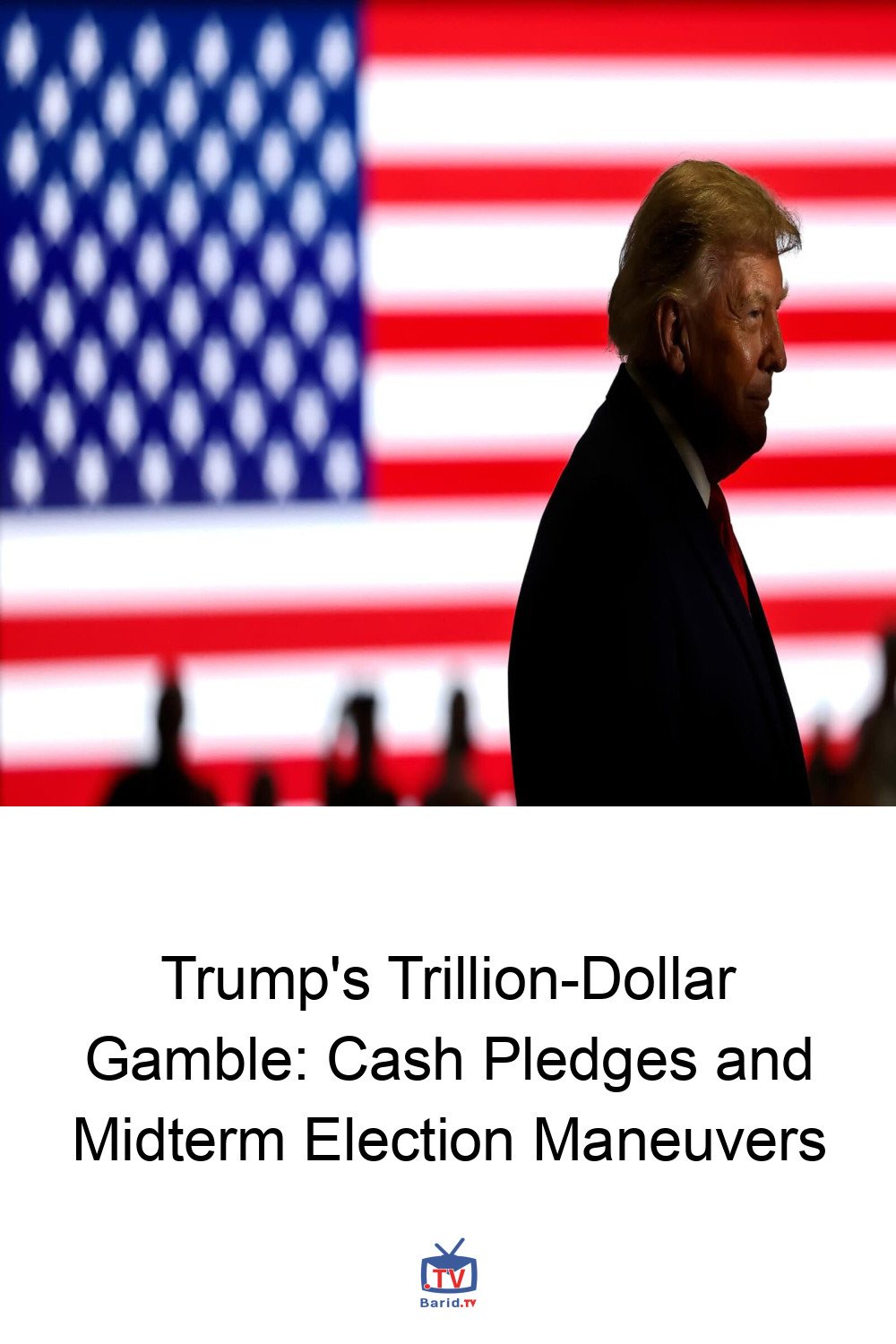
As the crucial midterm elections draw near, former President Donald Trump is once again making headlines with a series of direct cash payment promises, aiming to sway voters amidst widespread economic anxieties. While smaller federal disbursements are already underway, a much larger, conditional pledge of $5,000 per adult citizen hinges on a Republican victory in Congress, raising questions about feasibility, intent, and voter reception.
The Grand Promise: $5,000 for Every American?
In a bold move just weeks before Election Day, Trump reignited his promise to deliver a substantial $5,000 check to every adult U.S. citizen. The catch? This unprecedented payout, dubbed the “Trump dividend,” is explicitly contingent on Republicans securing control of both the House of Representatives and the Senate in the upcoming 2026 Midterm Elections. Announced via a Truth Social video post, this pledge echoes a similar declaration made at a recent Republican National Committee convention.
However, details regarding the authorization and funding of such a massive undertaking remain conspicuously absent. Sending $5,000 to every adult citizen is estimated to cost approximately $1.2 trillion, a sum that would undoubtedly require extensive congressional approval and could significantly impact the national deficit and inflation.
Immediate Relief: Smaller Payments Already in Motion
Alongside the grand $5,000 promise, the Trump administration is actively promoting two smaller, already-implemented federal cash payment programs:
Medicare Beneficiary Payments
Approximately 20.8 million Medicare beneficiaries are set to receive one-time payments of $90 this month. These funds are being distributed through the Medicare Improvement Fund, providing a tangible, albeit modest, financial boost to eligible Part B enrollees.
Obamacare “Refund” Checks
Roughly 950,000 individuals who purchased unsubsidized coverage through the federal marketplace are currently receiving $500 Obamacare “refund” checks. A Reuters analysis revealed that a significant portion—71%, or $339 million—of these funds are directed to residents in 13 states hosting some of the nation’s most competitive Senate and gubernatorial races, though eligibility is based on insurance status rather than voting demographics.
Political Strategy or Fiscal Folly?
These direct cash offers arrive as the Republican party navigates the final stretch of a midterm campaign heavily influenced by voter concerns over soaring prices and the broader economy. Critics, however, are quick to label the $5,000 promise as a “political bribe.”
Representative Jamie Raskin (D-Md.) voiced this sentiment in a CNN interview, emphasizing that Congress, not the President, controls federal spending. Even within Republican ranks, the proposal faces resistance. Rep. David Schweikert (R-Ariz.) reportedly vowed to “throw everything of my heart and soul” into stopping the plan, citing potential negative impacts on interest rates and the national debt.
A History of Unfulfilled Promises and Voter Skepticism
The efficacy of such last-minute financial appeals is questionable, particularly given Trump’s track record. Past promises of cash payments, such as a $5,000 “DOGE dividend” in 2025 and a tariff-funded dividend of at least $2,000 per person, never materialized. Similarly, a pledge of $200 prescription-drug cards for Medicare beneficiaries before the 2020 election also went unfulfilled.
Polling data reflects this skepticism. A Rasmussen Reports survey found voters nearly split on the $5,000 proposal, with only 15% indicating it would influence their vote. More tellingly, a Marquette Law School poll in Wisconsin showed 70% opposition, while an Economist/YouGov survey revealed 57% of registered voters doubted Trump would actually deliver on the promise, even if Republicans won Congress.
While the Trump administration did deliver a $1,776 “Warrior Dividend” to service members last year, and Congress approved pandemic stimulus, the pattern of grand, unfulfilled cash pledges casts a long shadow over the latest offer. As Election Day looms, the question remains whether these financial incentives will resonate with an electorate wary of past promises and grappling with present economic realities.
For more details, visit our website.
Source: Link








Leave a comment