



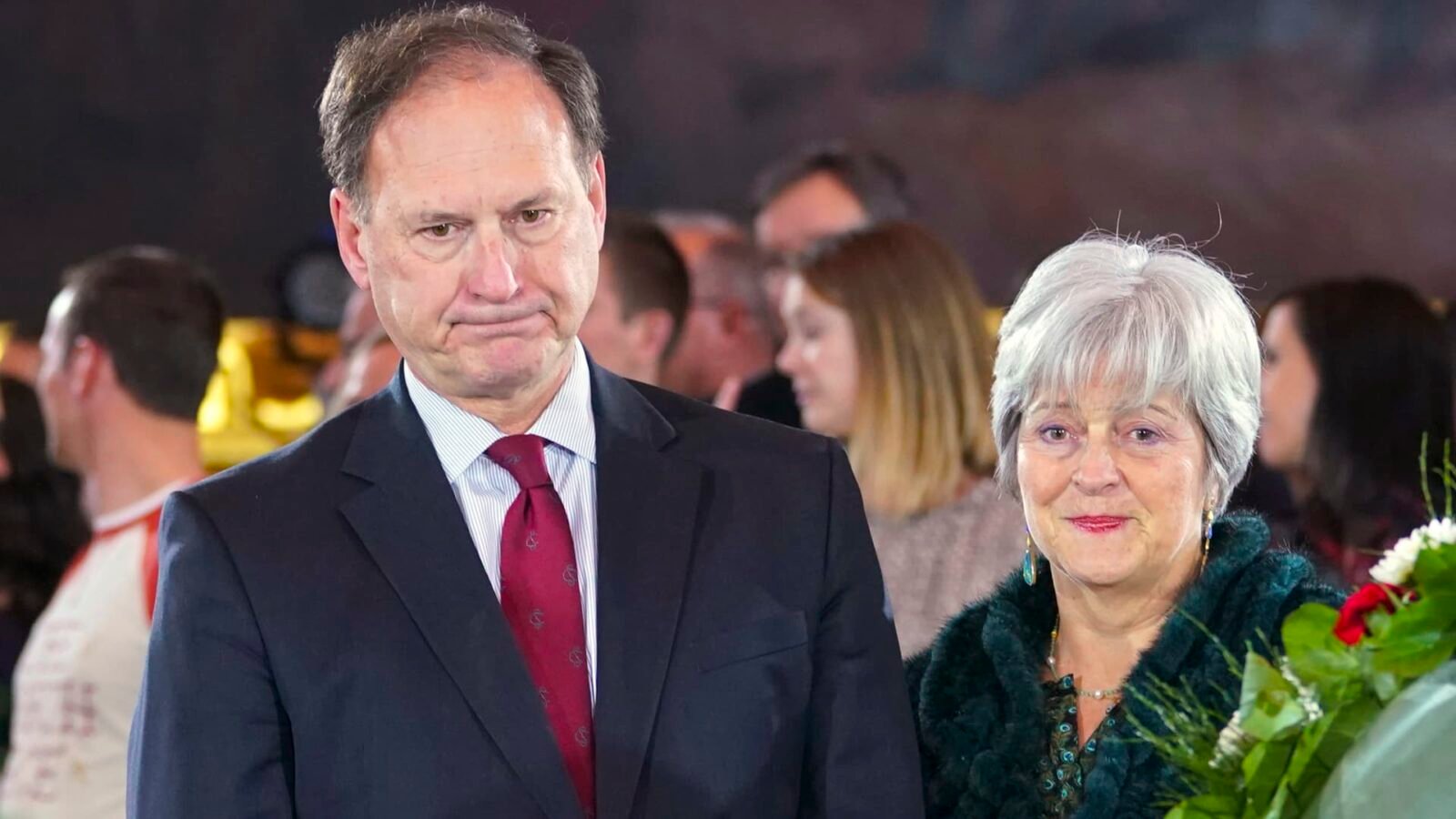

The hallowed halls of the U.S. Supreme Court are often seen as bastions of impartial justice, yet the political currents swirling around them are undeniable. Recently, Justice Samuel Alito, one of the Court’s most prominent conservative voices, revealed he had “thought about” stepping down after the last term but ultimately decided against it, believing he still had a “valuable contribution” to make. This candid admission offers a rare peek behind the curtain, highlighting the intense political calculations that often accompany judicial tenure.
The Speculation and the Stakes
At 76, Justice Alito is the second-oldest member of the bench, a fact that naturally fuels speculation about his future. For months, whispers of his potential retirement had circulated, particularly given the Republican control of both the Senate and the White House. Such a scenario would have presented a clear path for President Donald Trump to nominate, and for Republicans to swiftly confirm, a like-minded conservative successor, further solidifying the Court’s ideological leanings.
However, the political landscape is ever-shifting. With the November midterm elections looming, the prospect of Democrats potentially flipping the Senate has introduced a new layer of complexity. A Democratic-controlled Senate would wield significant power, potentially making the confirmation of any future Trump nominee considerably more challenging, if not outright impossible.
“Vultures Circling”: Alito’s Perspective
Justice Alito himself acknowledged the intense scrutiny, remarking in an interview with Fox News Sunday, “I’ve been bemused by the retirement speculation; it’s not too pleasant to look up and see the vultures circling.” He dismissed the idea of a calculated exit strategy, stating, “I don’t have a calculation for it… I think it would be foolhardy to make a calculation [that] I’m going to serve for a certain number of additional years.” His decision to remain underscores his commitment to his role, despite the external pressures and political machinations.
The Shadow of Past Vacancies
The political maneuvering surrounding Supreme Court vacancies has become a defining feature of modern American politics. The precedent set by two recent, high-profile vacancies casts a long shadow over any potential future departures:
- Justice Antonin Scalia (2016): Following Scalia’s death, then-Senate Majority Leader Mitch McConnell famously refused to consider President Barack Obama’s nominee, Merrick Garland, until after the 2016 presidential election. This strategic delay allowed President Trump to nominate and confirm Justice Neil Gorsuch, shifting the Court’s balance.
- Justice Ruth Bader Ginsburg (2020): Conversely, after Justice Ginsburg’s passing just weeks before the 2020 election, McConnell moved with unprecedented speed to confirm Trump’s nominee, Amy Coney Barrett, solidifying a 6-3 conservative majority on the Court.
These events highlight the immense power wielded by the party controlling the Senate during a vacancy, making Alito’s decision to stay, and the ongoing speculation around Justice Clarence Thomas (78, the Court’s oldest justice), particularly significant as the midterms approach.
The Road Ahead: Senate Control in Focus
With just 30 days until the midterm elections, the battle for Senate control is fiercely contested. Republicans find themselves in unexpectedly tight races nationwide, grappling with voter discontent over economic issues and rising prices. Democrats need to secure a net gain of at least four seats while defending their current holdings to achieve a Senate majority. The outcome of these elections will undoubtedly shape the political landscape for the remainder of President Trump’s term, and crucially, for any future Supreme Court nominations.
Justice Alito’s decision to defer retirement, for now, keeps the political chessboard in a delicate balance, reminding us that even the most esteemed judicial positions are inextricably linked to the ebb and flow of partisan power.
For more details, visit our website.
Source: Link






Leave a comment