





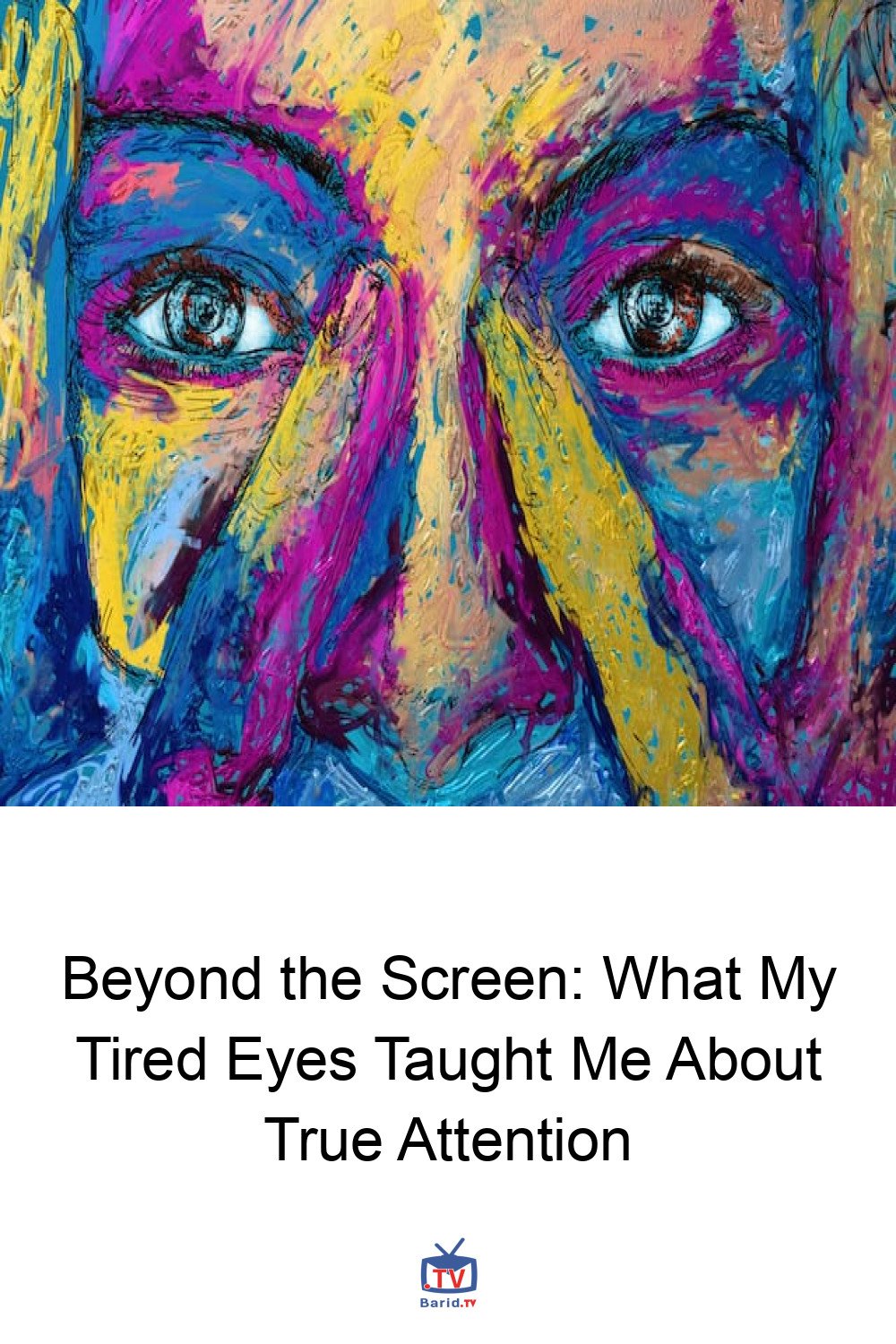
The Digital Abyss: When Education Becomes Eye Strain
During my second year of Ayurvedic medical school, a peculiar ritual began around 9 PM each night: an insistent burning sensation in my eyes. Like most students tethered to the digital age, my immediate response was a dismissive rub, a few hard blinks, and a swift return to the glowing screen. Exams loomed, and my entire curriculum – lecture slides, reference texts, practice questions – had migrated onto glass. For twelve to thirteen hours a day, my world was a pixelated rectangle, an irony that, in retrospect, took an embarrassingly long time to register.
The Paradox of Ancient Wisdom and Modern Habits
By day, I immersed myself in Shalakya Tantra, the Ayurvedic branch dedicated to the eyes and head. I could effortlessly recite the ancient wisdom detailing what aggravates ocular health: excessive close focus, insufficient rest, dryness, grief, and nocturnal vigilance. By night, however, I was a living embodiment of these very transgressions, my textbook open before me, its warnings unheeded. I perceived my eyes merely as tools, conduits for information, and their discomfort as mere ‘friction’ – an inconvenience to be powered through. Had you asked me, I would have confidently declared myself more focused than ever before, dedicating twelve hours a day to ‘total concentration.’ Yet, I wasn’t truly paying attention; I was narrowing it, constricting my world to the confines of a screen.
A Flicker of Darkness, A Flash of Insight
The Unseen World Beyond the Arm’s Length
One winter evening, a power flicker plunged my room into momentary darkness. When the light returned, a startling inability to focus on the far wall gripped me. Everything beyond arm’s length remained soft, blurred like a hastily taken photograph. While my vision quickly sharpened, the brief episode was profoundly unsettling. The fear wasn’t about my eyesight itself, but a chilling realization: I couldn’t recall the last time I had consciously looked at anything distant.
My desk sits by a window, offering a vista of a neem tree, a water tank, and rooftops that blush pink with the evening sunset. I hadn’t truly seen that view in weeks. The daily spectacle had unfolded at the periphery of my vision, mere feet from my chair, while my gaze was locked onto a forty-centimeter rectangle. The window was unobstructed; I had simply ceased to be a person who looked. This profound insight resonated deeply: attention isn’t stolen; it’s surrendered, incrementally, until a small, bright screen becomes the sole focus of our visual and mental landscape.
The Ripple Effect: Beyond the Eyes
This narrowing wasn’t confined to my studies. Meals became tasteless, consumed at my desk. Friends’ messages were skimmed, half-answered. Even during calls with my mother, a part of me would continue scrolling. My eyes were merely the first point where this pervasive constriction manifested as undeniable pain.
Ayurvedic Practices: Reclaiming Holistic Attention
Simple Remedies, Profound Revelations
Driven by discomfort, I turned to the simple, undramatic Ayurvedic eye practices my professors had described:
- Palming: Rubbing hands together to generate warmth, then cupping them over closed eyes, sitting in the self-created darkness for a minute.
- Distance Gazing: Lifting the gaze from close work to rest on the farthest available object, without rushing the process.
- Cool Water Splashes: Gently splashing plain cool water onto the eyes each morning.
- Full Blinks: Consciously closing eyes fully several times an hour, counteracting the shallow half-blinks induced by screens.
While I cannot claim these practices are scientifically proven therapies – some remain largely unstudied – their impact on me was undeniable, and surprisingly, extended far beyond my eyes.
The Deeper Message of My Tired Eyes
Palming, for instance, offered the first true darkness I had experienced while fully awake in months. A minute of nothingness felt remarkably long. In that stillness, I could feel my heartbeat, the rapid pace of my day, the clench in my jaw, the tension in my shoulders, and the shallow urgency of my breath. None of this was new; it had been constant, but I had been too engrossed in my screen to be present for it.
Distance gazing yielded an even more profound effect. As my eyes settled on the distant rooftops, my thoughts began to unravel, slowing and softening, much like a conversation quieting down after stepping out of a loud room. This isn’t mysticism; it suggests a fundamental connection: the eyes and mind often adopt the same posture – fixed, close, gripping. Offering one a horizon seems to liberate the other.
Slowly, I grasped the true message of my tired eyes: they weren’t an impediment to attention, but a vital signal about its nature. The strain wasn’t from seeing too much, but from fixating on one thing, too close, for too long, and mistakenly labeling it ‘focus.’ True attention, it seems, mirrors the needs of our eyes: it requires both distance and closeness, darkness and light, and the regular acknowledgment that a vast world continues to exist beyond the immediate canvas of our perception.
For more details, visit our website.
Source: Link







Leave a comment