
Dysphoria Botnet’s Blockchain Gambit: A New Era of IoT Threat Evasion
The landscape of cyber threats is constantly shifting, with malicious actors continually innovating to evade detection and disruption. A prime example of this evolution is the Dysphoria Internet of Things (IoT) botnet, which has recently adopted sophisticated blockchain-based name services and victim-device relays for its command-and-control (C2) infrastructure. This strategic pivot, observed after a significant law-enforcement crackdown on related botnets, marks a concerning leap in botnet resilience, making it considerably harder for defenders to dismantle.
The Aftermath of JackSkid: A Catalyst for Change
The lineage of Dysphoria is closely tied to JackSkid, one of four prominent IoT botnets targeted in a coordinated international law-enforcement operation on March 19. This multi-national effort, involving U.S., German, and Canadian authorities, aimed to cripple the infrastructure behind these digital scourges. JackSkid alone was implicated in over 90,000 Distributed Denial of Service (DDoS) commands, highlighting the scale of its destructive potential.
In the immediate wake of this disruption, threat intelligence firms like Nokia Deepfield and Comcast’s threat lab quickly documented the JackSkid operator’s rapid adaptation. They observed a fallback to an Ethereum Name Service (ENS) domain, m3rnbvs5d[.]eth
, for C2 operations. This move signaled a new frontier in botnet evasion, leveraging the decentralized nature of blockchain technology.
Anatomy of Evasion: Blockchain C2 and Victim Relays
Chinese threat intelligence labs CNCERT and XLab, who actively track Dysphoria, noted its emergence just six days after the JackSkid takedown, utilizing the same ENS domain. Their analysis reveals a multi-layered approach to obfuscation:
Decentralized Command and Control
- ENS and SNS Integration:
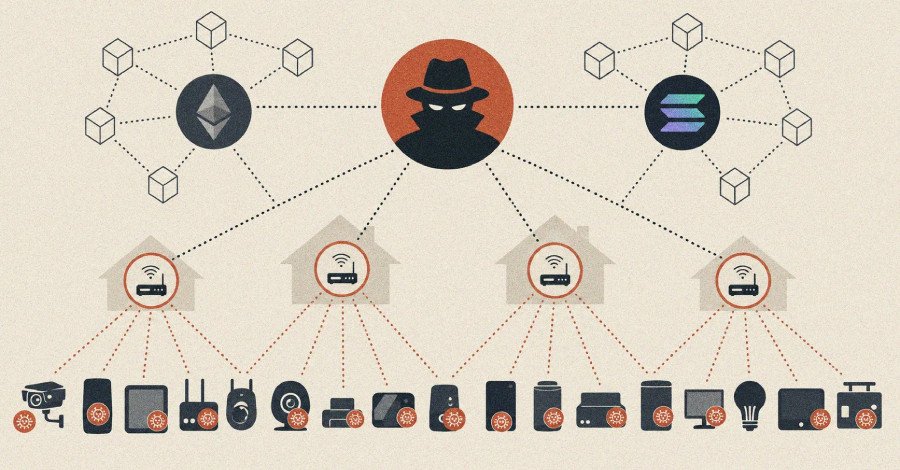
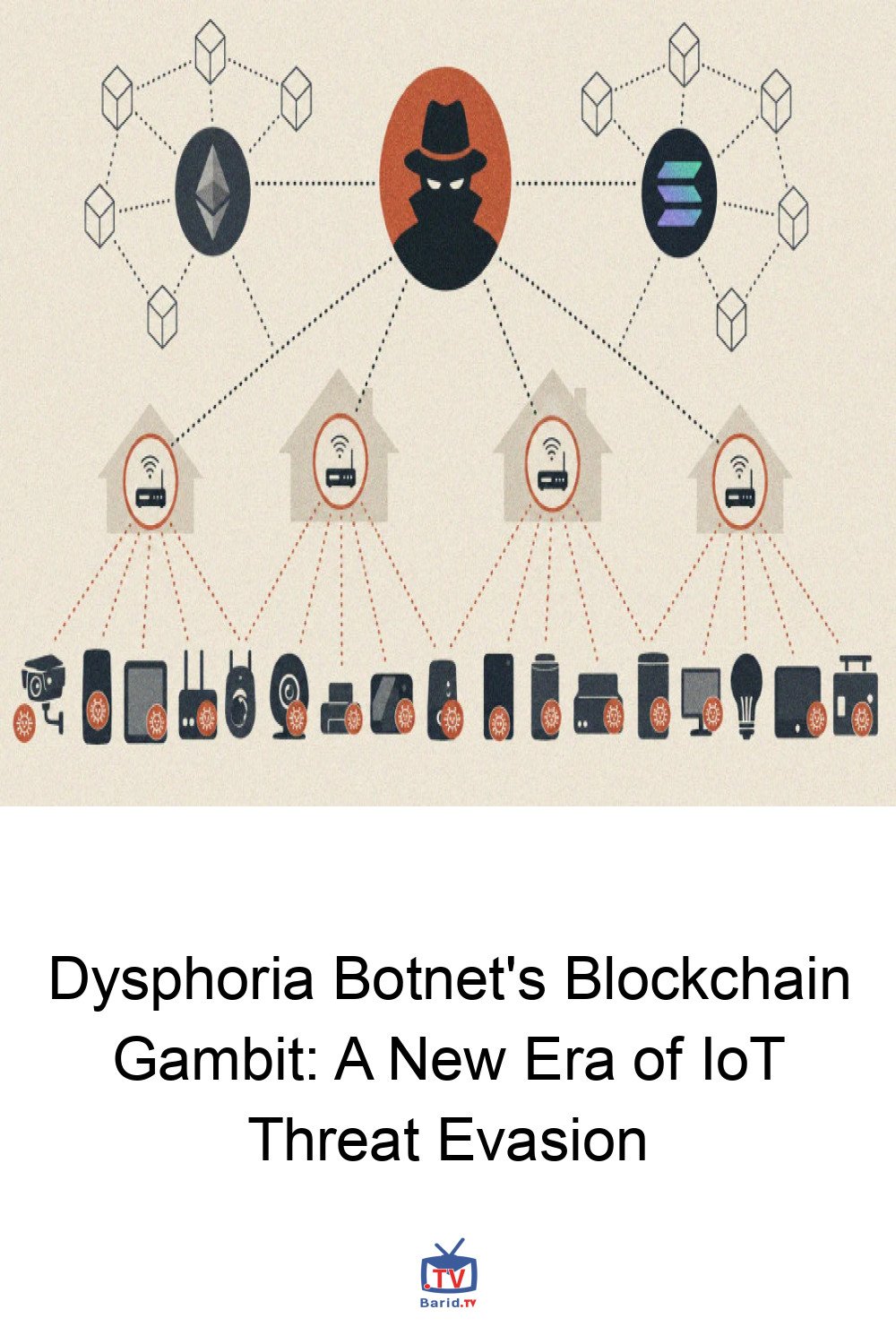
Dysphoria initially adopted ENS resolution by late April, quickly followed by Solana Name Service (SNS) resolution in early May. These blockchain-based name services replace traditional, centralized DNS, making C2 domains resistant to conventional takedown efforts.
- Layered Infrastructure: XLab identified specific blockchain records, such as
burrberry[.]ethencoding distribution-node IPv4 addresses, and24carnforth2merseyside[.]solsupplying other critical infrastructure details.
The Power of Victim Relays
Perhaps the most insidious development is Dysphoria’s use of compromised IoT devices as traffic relays. Instead of directly exposing their controllers, the botnet’s DDoS samples request a server list from a distribution node. The endpoints on this list are, in fact, infected machines that then shuttle traffic to the actual controllers. This design adds a crucial layer of indirection, placing the true orchestrators one step further from exposure.
A dedicated ‘relay-only’ variant, appearing in June, further refines this strategy. It sheds the DDoS modules, instead utilizing UPnP-based port mapping to traverse NAT gateways and Linux epoll to efficiently manage traffic flow between external connections and the remote C2 service. This innovative approach significantly complicates conventional server seizure tactics, as the botnet’s infrastructure is distributed across its own victims.
Scale, Scope, and Shared Tooling
CNCERT and XLab estimate Dysphoria’s population to exceed 200,000 bots globally, with telemetry logging thousands of active devices within China and hundreds of thousands abroad. While these figures are substantial, the researchers caution that they lack independent reproduction and a detailed methodology, urging them to be viewed as estimates rather than precise counts.
The shift to ENS/SNS has been independently corroborated by Japan’s NICT, which also noted shared code and strings with other botnet families, including the related Kimwolf botnet (known for ENS-based C2). This overlap suggests a landscape of shared tooling and tactics among cybercriminals, rather than necessarily pointing to a single operator.
Fortifying Your Defenses Against the Evolving Threat
Given Dysphoria’s advanced evasion techniques, robust defensive measures are more critical than ever:
Proactive IoT Security Measures
- Patch and Update: Regularly apply security patches to all exposed IoT devices. Replace older devices that no longer receive security updates.
- Strong Credentials: Eliminate default passwords and enforce strong, unique credentials for all IoT devices. Weak Telnet and SSH credentials remain a primary vector for infection.
- Disable Unnecessary Features: Disable remote management and UPnP functionalities where they are not strictly required.
Propagation Vectors
Dysphoria primarily propagates through brute-forcing Telnet and SSH credentials and exploiting known remote-code-execution flaws in routers, gateways, and cameras. While vulnerabilities like CVE-2025-9528 have been cited, the most consistent entry point remains weak authentication.
The Unseen Impact: Advertised Power vs. Measured Reality
Dysphoria is reported to target internet service and gaming entities almost daily. Its operators brazenly advertise DDoS attacks capable of up to 4 Tbps for a fee. However, these are operator claims, not independently verified attack measurements. For context, the related AISURU/Kimwolf botnet was responsible for a massive 31.4 Tbps attack measured by Cloudflare prior to the March disruption.
Despite extensive research, no independent source has confirmed Dysphoria’s reported 200,000-device scale or measured its peak attack capacity. The anonymity afforded by blockchain and victim relays makes precise attribution and measurement a continuous challenge for cybersecurity professionals.
As botnets like Dysphoria continue to leverage decentralized technologies, the cat-and-mouse game between cybercriminals and defenders grows increasingly complex. Staying informed and proactive in securing IoT ecosystems is paramount to mitigating these evolving threats.
Found this article interesting? Follow us on Google News, Twitter and LinkedIn to read more exclusive content we post.
For more details, visit our website.
Source: Link