
In an extraordinary feat of logistics, compassion, and international cooperation, four beluga whales — Acadia, Lillooet, Osiris, and Sierra — embarked on an unprecedented journey from the troubled waters of Marineland of Niagara Falls to a new sanctuary at Chicago’s Shedd Aquarium. This wasn’t merely a relocation; it was a high-stakes rescue mission, meticulously planned to ensure these magnificent marine mammals barely registered their hundreds of miles-long odyssey.
The Silent Journey: Minimizing Stress for Marine Giants
The core philosophy behind this colossal undertaking was simple yet profound: keep the whales calm. “The goal is that they notice as little as possible,” explains Karisa Tang, lead veterinarian and vice president of animal health at the Shedd Aquarium. This meant a carefully orchestrated sequence of events, designed to be as seamless and stress-free as possible for the thousand-plus-pound creatures.
Tang, alongside Charlie Jacobsma, the Shedd’s director of animal behavior and training, personally accompanied the quartet. Their journey began from their former enclosures in Niagara Falls, transitioning to Toronto’s Pearson Airport, and finally, a chartered Boeing 777 freighter bound for Chicago. Two additional belugas shared the flight before continuing to an aquarium in San Antonio, underscoring the scale of this multi-destination operation.
From Crisis to Compassion: Marineland’s Downfall and the Call for Rescue
The necessity for this mission arose from the tragic decline of Marineland of Niagara Falls. Once a prominent aquarium and amusement park, it faced bankruptcy and eventual closure in 2024 following the death of its owners. As financial resources dwindled, the park found itself unable to adequately care for its animal residents, even appealing to the Canadian government for aid. By 2025, Marineland issued a “devastating decision” — the grim prospect of euthanasia if suitable new homes couldn’t be found for its animals.
The plight of the Marineland belugas resonated deeply within the global marine biology community. By January 2026, a dedicated rescue team was already on the ground in Ontario, meticulously planning the complex logistics of transporting such large and sensitive animals. A landmark agreement was reached in June between Canada and Marineland, paving the way for this extensive rehoming process. This collaborative effort saw animals distributed among a consortium of aquariums, including institutions in Georgia, San Diego, and Spain, in addition to the Chicago and Texas facilities.
An Unprecedented Scale
“People have moved belugas before,” Tang notes, “But something of this scale had not been done.” This mission set a new benchmark for international animal relocation, demanding innovative solutions and unparalleled coordination.
A Logistical Marvel: Road, Air, and Border Crossings
The execution of the transport was, remarkably, a testament to meticulous planning. “Beautiful, nice, slow takeoff and a nice easy landing,” Jacobsma recounted to WIRED, describing the air leg of the journey. Throughout the flight, the team remained in constant proximity to the whales, diligently monitoring their vital signs and ensuring their comfort by continuously pouring water over their backs.
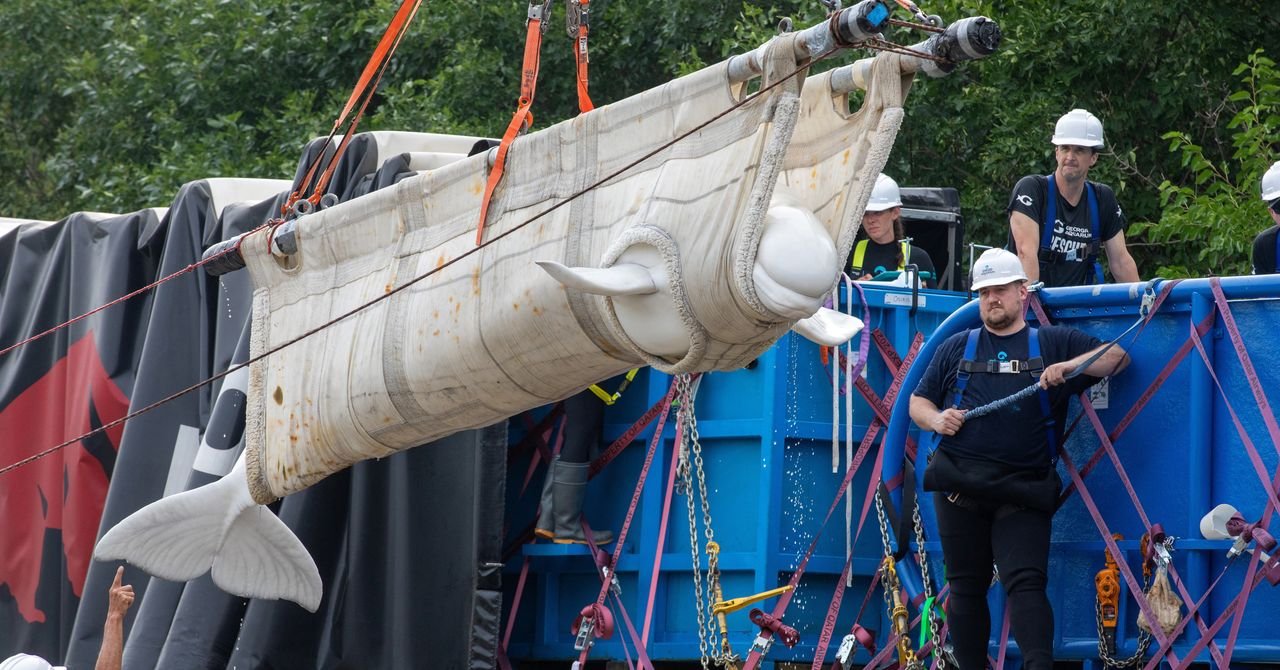
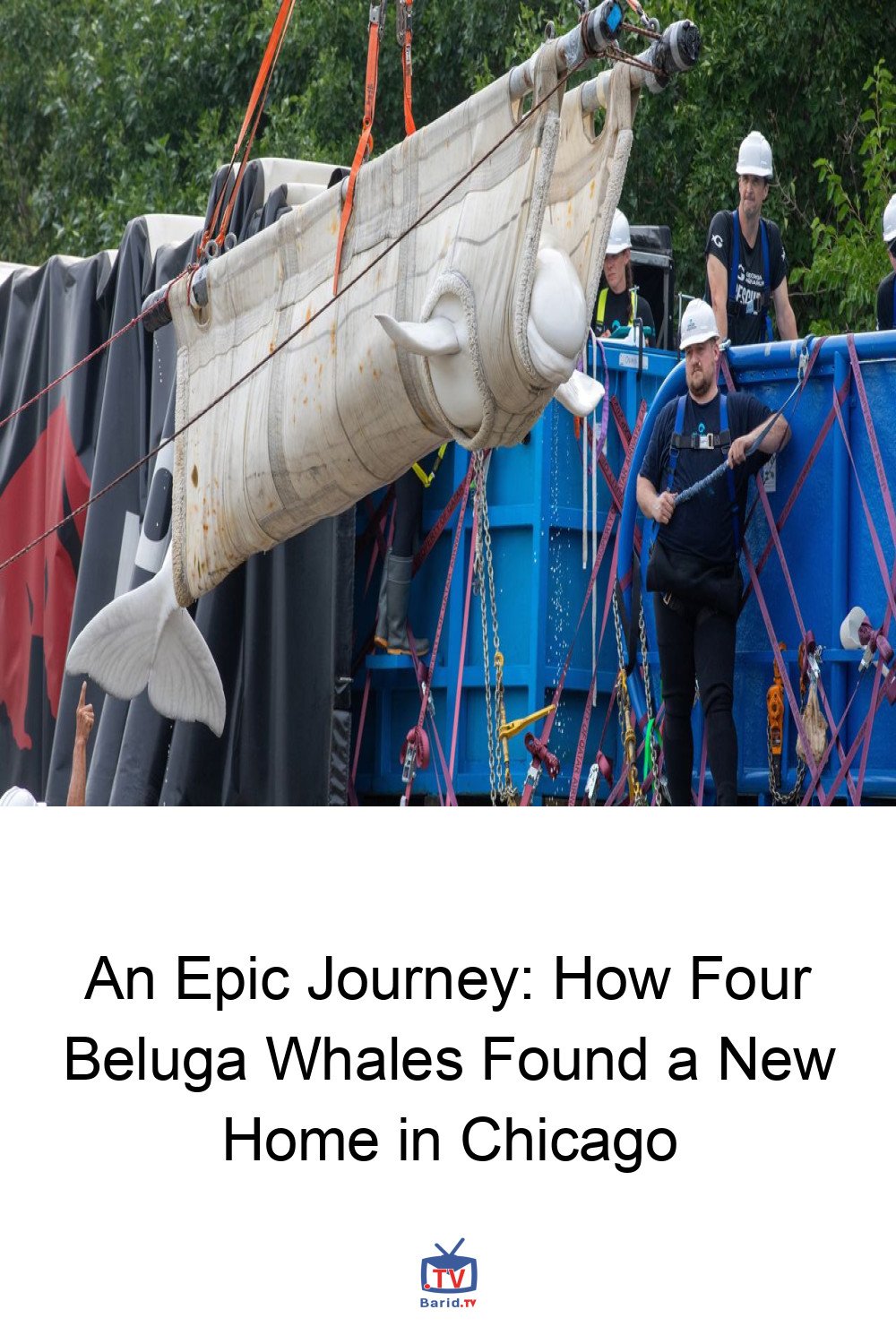
The journey itself was a multi-modal marvel. Each beluga, an adult female in her twenties, was gently hoisted into a custom stretcher, then carefully placed into individual, water-filled transport boxes on a truck bed. From there, they were driven to the airport, boarded onto the specialized freighter, and flown across international borders to their new home. The entire process, from their initial lift to their arrival in Chicago, spanned approximately 72 hours, yet the whales, observed days later, displayed no signs of distress, swimming gracefully in their new habitat.
Navigating International Waters
The international aspect added layers of complexity. “I can’t emphasize enough how the border crossing makes everything just that much harder,” Tang stressed. The mission necessitated close collaboration with numerous government agencies, including Fisheries and Oceans Canada and the United States Department of Agriculture, all while adhering to strict international treaties governing animal trade. This intricate dance of diplomacy and logistics was, as Tang aptly put it, “a logistical marvel.”
Settling In: A New Chapter at Shedd Aquarium
Just days after their arrival, the four belugas — Acadia, Lillooet, Osiris, and Sierra — were settling into a secluded habitat within the Shedd’s Oceanarium. Visitors are greeted with signs requesting quiet, a gentle reminder to “Help the rescued belugas acclimate to their new home.” Under round-the-clock surveillance by veterinarians and marine life experts, the quartet is being given the space and time needed to adjust, away from public view.
The relocation team also faced the delicate task of determining the best placement for each whale, considering their existing social dynamics at Marineland and how they would integrate with resident beluga populations at their new homes. The Shedd Aquarium, for instance, already housed eight belugas. “There’s sub-social groups within groups, right? It’s kind of like how you’ll have a friend group, but then you have one friend that you might be a little bit closer to than another,” Jacobsma explained, highlighting the granular level of detail involved in ensuring the whales’ social well-being.
The mission, while celebrated, has also drawn scrutiny from critics advocating for greater transparency and enforcement of animal welfare standards. Nevertheless, the overwhelming sentiment from those involved, from Marineland staff to O’Hare customs agents, was one of profound support and dedication to the whales’ welfare.
The safe arrival of Acadia, Lillooet, Osiris, and Sierra in Chicago marks a hopeful new chapter for these magnificent creatures, a testament to what can be achieved when expertise, empathy, and international collaboration converge for the sake of wildlife.
For more details, visit our website.
Source: Link