




Cyberattacks Threaten Global Cold Chains: Agencies Warn of Fires, Spoilage, and Critical Infrastructure Risks
A chilling new threat is emerging in the cybersecurity landscape, directly targeting the vital arteries of global commerce: industrial refrigeration and cold-chain monitoring systems. U.S. government agencies have issued a stark warning, revealing that malicious actors are actively exploiting vulnerabilities to cause widespread service disruptions, fire hazards, and catastrophic inventory losses across the globe.
The Alarming Advisory: A Joint Warning from U.S. Agencies
In a joint advisory, the U.S. Cybersecurity and Infrastructure Security Agency (CISA), Federal Bureau of Investigation (FBI), Health and Human Services (HHS), Department of Agriculture (USDA), and Department of Transportation (DOT) detailed the insidious tactics employed by these threat actors. They are reportedly exploiting weaknesses in unpatched or internet-accessible controllers to remotely manipulate settings, forcing refrigeration units into continuous heating and defrost cycles. This manipulation can lead to devastating consequences, including widespread inventory spoilage and severe equipment damage.
“Industrial refrigeration and cold-chain monitoring systems protect food, medicine, and other temperature-sensitive products, making them attractive targets for malicious cyber actors,” stated Brett Leatherman, FBI Cyber Branch Operations Director. “We are seeing these systems targeted across critical infrastructure sectors globally, putting inventory and equipment at risk.”
Tactics of Disruption: How Attackers Exploit Systems
The advisory highlights several common exploitation methods, including authentication bypasses, arbitrary code injection, and weak configurations. Once access is gained, attackers can:
- Alter Temperatures: Remotely changing temperature settings can compromise product integrity, shorten system service life, create fire hazards, cause massive inventory loss, and even endanger consumers who purchase unsafely stored goods.
- Cause Denial-of-Service: Disrupting visibility into current temperatures can lead to a denial-of-service, leaving operators blind to critical conditions.
Real-World Impact: Europe’s Cold Chain Under Siege
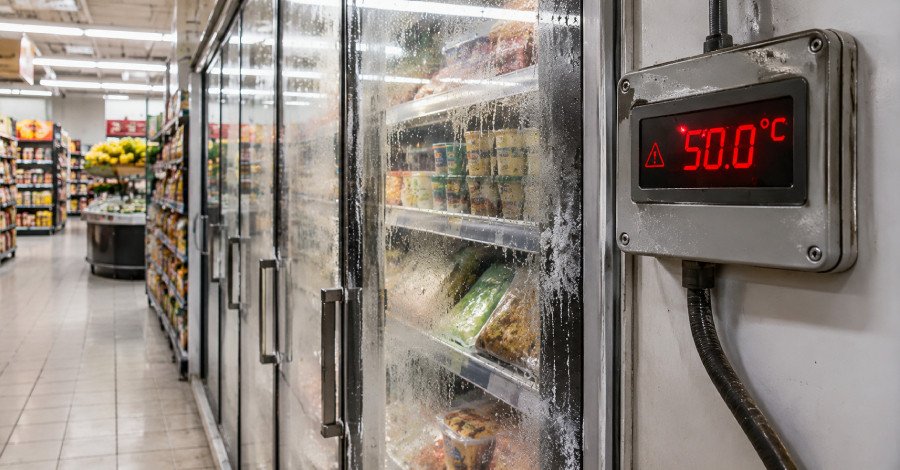
The warnings are not theoretical. Recent weeks have seen hundreds of supermarkets across Europe fall victim to these attacks. Threat actors exploited vulnerabilities in internet-accessible refrigeration controllers, raising temperatures to extreme levels – in some cases, as high as 50 degrees Celsius (122 degrees Fahrenheit) – or forcing cooling units into defrost mode. This resulted in significant food spoilage and substantial financial losses for retailers ranging from major chains to small grocers and butchers across Belgium, Estonia, Finland, France, Germany, Ireland, Italy, Luxembourg, the Netherlands, Portugal, Sweden, and the U.K.
Perhaps most concerning was the incident at the French Blood Establishment, where a cybersecurity breach affecting a refrigeration equipment provider led to “extremely high levels” for temperature and defrost settings at three facilities storing blood plasma. The identity of those behind this hacking spree remains unknown.
A Wider Vulnerability: The Pervasive Problem of Exposed ICS
Data from Censys, an attack surface management platform, underscores the scale of the problem. While the number of exposed Danfoss StoreView instances globally dropped from 3,004 to 708 between October 9 and November 5, 2026, and Copeland/Dixell XWEB exposure declined from 3,708 to 2,420, hundreds of these critical systems remain openly accessible, particularly in France.
Censys notes that these refrigeration attacks are part of a broader trend of targeting critical infrastructure, including gas station tank gauges, air raid systems, and water towers. North America accounts for approximately 38% of global Industrial Control Systems (ICS) exposure, with Asia’s share growing and Europe’s slightly declining, yet without an overall reduction in risk. “While exposure numbers are high, they’re hardly surprising: ICS exposure is a problem that’s been reported on and warned about for years. It poses a critical risk to the public as gatekeepers to the world’s critical infrastructure,” Censys concluded.
Fortifying Defenses: Recommendations for Operators
In response to this escalating threat, owners and operators of industrial refrigeration and cold-chain systems are urged to implement robust security measures:
- Strong Authentication: Employ multi-factor authentication and complex passwords.
- System Updates: Regularly patch and update all systems to address known vulnerabilities.
- Internet Exposure Assessment: Identify and minimize any systems accessible from the internet.
- OT Device Isolation: Isolate operational technology (OT) devices from enterprise networks.
- Default Password Changes: Replace all default passwords immediately.
- Legacy Device Management: Retire and replace outdated or unsupported legacy devices.
- Remote Access Control: Remove unnecessary remote access and secure all essential remote connections.
The Urgent Need for Action
The integrity of our food supply, medical resources, and other temperature-sensitive products hinges on the security of these cold-chain systems. As cyber threats evolve, proactive and comprehensive cybersecurity strategies are no longer optional but an absolute necessity to protect public safety and prevent economic devastation.
For more details, visit our website.
Source: Link







Leave a comment