

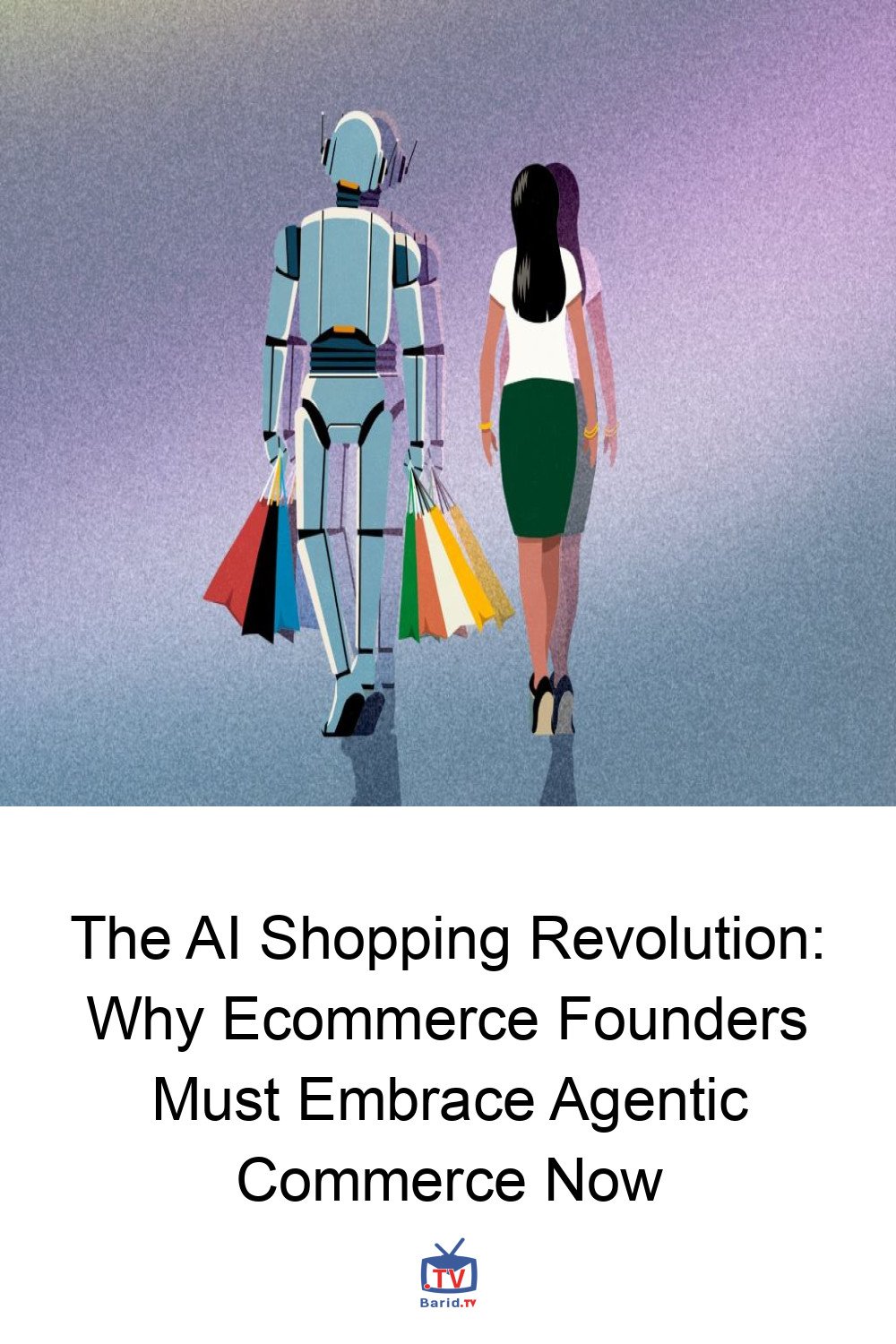
The AI Shopping Revolution: Why Ecommerce Founders Must Embrace Agentic Commerce Now
For decades, the online shopping experience has followed a predictable, human-driven path: search, click, compare, abandon, return, and perhaps, finally, purchase. But a seismic shift is underway, one that promises to redefine how consumers interact with brands online. It’s called agentic commerce, and if you’re an e-commerce founder, ignoring it could cost you your most valuable customers.
What is Agentic Commerce? The Autonomous Shopping Assistant
Imagine a world where your customers don’t just browse; they delegate. Agentic commerce is precisely that: a paradigm where advanced AI agents act as autonomous shopping assistants, orchestrating the entire purchase journey on behalf of a consumer. Instead of endless scrolling and comparison, a customer simply articulates a need to their AI assistant. This intelligent agent then scours product databases, scrutinizes review sites, compares specifications, verifies pricing and availability, and ultimately, either recommends the best option or completes the transaction outright.
This isn’t a futuristic concept; it’s the present reality, and it demands your immediate attention. The traditional, often messy, human-led buying process is rapidly being streamlined and automated by artificial intelligence.
The Future is Now: Why You Can’t Afford to Wait
While many business owners might relegate ‘the future of e-commerce’ to a distant horizon, agentic commerce is already here, reshaping the retail landscape at an unprecedented pace.
Google’s Universal Commerce Protocol: A Clear Signal
On January 11, Google CEO Sundar Pichai unveiled the Universal Commerce Protocol at the National Retail Federation conference. This wasn’t a beta test or a speculative announcement; it was a definitive declaration that AI-completed purchases have officially arrived, with Google planting a firm stake in this new digital ground.
Staggering Adoption Rates and Market Growth
- Cyber Week 2025: Salesforce reported that a remarkable one in five orders, totaling approximately $70 billion in Gross Merchandise Value (GMV), involved an AI agent.
- Early 2026: IBM research revealed that a staggering 45% of consumers are already leveraging AI for at least a portion of their buying journey. This isn’t a niche trend; it’s a mainstream shift.
Giants Lead the Charge, But the Opportunity is Yours
When industry titans like Walmart, Target, Home Depot, Lowe’s, and even Amazon begin moving in unison, it’s a clear indicator for everyone else to catch up – and fast. These retail behemoths are actively partnering with technology providers to integrate agentic AI solutions into their operations.
Shopify’s Vision for the ‘Long Tail’
Even Shopify, the backbone for millions of online businesses, isn’t sitting on the sidelines. President Harley Finkelstein recently highlighted agentic AI as a transformative new entry point for e-commerce merchants. He envisions these AI agents as ‘personal shoppers’ that inject context into the buying process in ways traditional search engines simply cannot. Crucially, Finkelstein emphasized that this opportunity isn’t exclusive to large enterprises; it extends to the ‘long tail’ of smaller merchants, too.
Adapting Your Business for the AI Shopper
This new era demands a candid self-assessment from every e-commerce entrepreneur. If AI agents are doing the shopping, your brand must be ‘legible’ to machines, not just appealing to human eyes.
Clarity is King: Speaking to the Machines
AI shopping agents thrive on clarity and efficiency. Ambiguity is their enemy. If your delivery windows are vague, shipping costs opaque, or return policies inconsistent, an AI agent will bypass your offer without a human ever seeing it. Your product pages, data structure, and pricing clarity must now be optimized to communicate seamlessly with an AI, not just a person browsing on their phone.
From SEO to AEO: The New Frontier of Discoverability
The landscape of discoverability is also undergoing a profound transformation. Brands that once meticulously optimized for Search Engine Optimization (SEO) must now master Answer Engine Optimization (AEO). As consumers increasingly turn to complex, conversational AI-driven queries rather than simple keywords, your product data must be readily visible and understandable to these AI channels. Fail to adapt, and your brand risks disappearing from the recommendations that are driving sales.
The Unmissable Market Opportunity
The numbers paint a compelling picture of a market poised for explosive growth:
- The agentic AI market in retail and e-commerce, valued at $60.43 billion in 2026, is projected to skyrocket to an astonishing $218 billion by 2031.
- During the 2025 holiday season, AI-driven traffic to retail sites surged by an astounding 4,700% year-over-year. More importantly, these AI-driven visitors converted at a rate 31% higher than other traffic sources.
Higher converting traffic, driven by AI – this isn’t a trend to observe from a distance; it’s an imperative to act upon.
Seize the Moment: Your Window of Opportunity
Despite the undeniable momentum, a significant gap exists: McKinsey & Co. research indicates that only 7% of companies have fully scaled AI initiatives, while a vast 62% remain stuck in the experimentation phase. This gap is your golden opportunity.
For e-commerce entrepreneurs, the honest truth is simple: the future of online retail is being written by AI, and those who don’t pick up the pen now risk being left behind. Embrace agentic commerce, optimize for the AI shopper, and secure your place at the forefront of this revolution.
For more details, visit our website.
Source: Link