
“The most common form of despair is not being who you are.” ~Søren Kierkegaard
A few years ago, I found myself adrift in a new professional landscape, struggling to reconcile my identity as a compassionate counselor with the demanding realities of a director. The transition was jarring: budgets replaced empathetic listening, evaluations supplanted connection, and accountability became a constant, uncomfortable companion. “I don’t know what I’m doing,” I confessed to Ray, a trusted, silver-haired mentor, over coffee. “And I feel like I’m bothering people every time I ask for help.”
Ray, a man known for listening with his whole heart, nodded. “Sounds tough,” he acknowledged. “It makes sense that you’re struggling.” Emboldened, I continued to build my case, listing the criticisms I faced: “Too nice,” “not strong enough on policy,” “doesn’t hold firm enough on limits.” Yet, paradoxically, the same voices also demanded freedom. “I’m not sure how much longer I can do this,” I admitted, feeling the weight of the conflicting expectations.
A Pivotal Truth: The Mirror of Victimhood
Ray let me finish, then leaned forward. “Can I tell you something I’m noticing?” he asked gently. “You’re seeing yourself as a victim. Like life is just happening to you, and you’re waiting for it to stop.”
His words hung in the air. I craved advice, a solution, but Ray, true to form, offered only the unvarnished truth, trusting me to navigate my own path. I drove home with a throbbing headache, my mind racing with justifications. It wasn’t fair, he hadn’t heard the full story, my feelings were valid. Yet, the word – victim – had burrowed itself deep. It haunted my sleep, echoing in the quiet hours of two in the morning as I stared at the ceiling.
I turned the word over and over, examining it from every angle, much like one might inspect a strange stone. Despite my fierce resistance, a painful truth began to emerge. I had been silently collecting grievances, nurturing a sense of being wronged without ever voicing my concerns or attempting to instigate change. This quiet accumulation had a name, and as much as it stung, it was the label Ray had given me.
Shedding the Label: The Quest for a New Identity
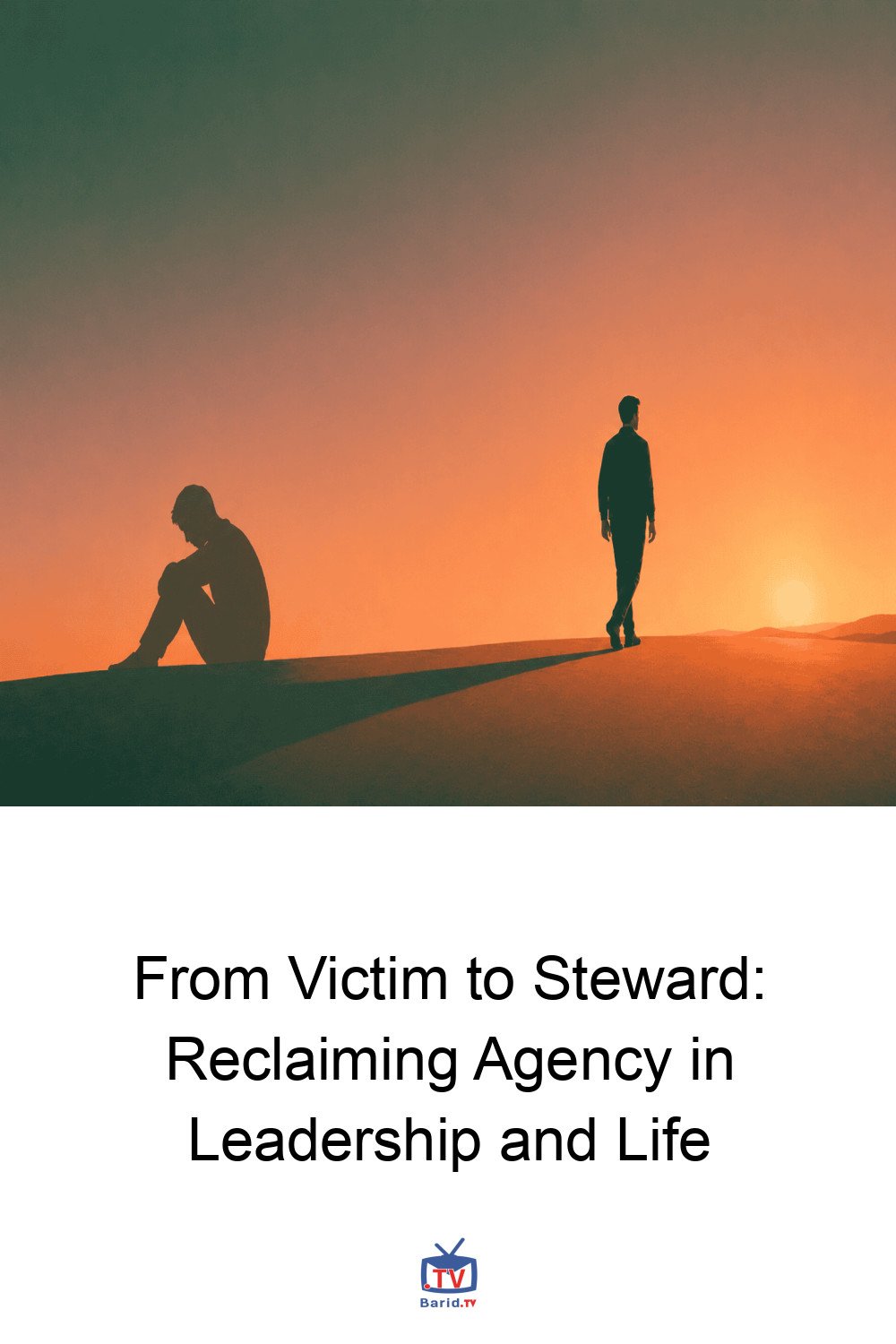
In the darkness, an image formed: myself, adorned with a wooden sign around my neck, like a relic from an old photograph. The word emblazoned upon it: “Victim.” The most unsettling realization was that no one else had placed it there; a part of me was actively choosing to wear it.
This stark image became a catalyst. It spurred a more productive question than self-pity: If “victim” was the word I desperately wanted to shed, what word did I wish to embody? What would it mean to occupy the opposite space?
I cycled through possibilities: hero, victor, agent, creator, survivor, overcomer. Each offered a sliver of insight, but none fully resonated. Then, from a deeper, unexpected place, a word surfaced that caught me completely off guard: “Steward.”
Embracing Stewardship: An Antidote to Despair
That night, I delved into the meaning of “steward.” Rooted in ancient history, it signified the keeper of a house, someone entrusted with the care of something larger than themselves. Its unsolicited arrival felt profoundly significant, prompting me to ponder its message, its purpose.
I learned that a steward is one who meticulously cares for what has been given, who remains present with intention, and who recognizes the inherent worth in all they’ve been entrusted with – even the challenging aspects. It wasn’t a direct antonym to victim, but it was, for me, the perfect antidote. A victim is defined by what happens to them; a steward is defined by what they choose to do with what has been given.
Leadership Reimagined: The Steward in Action
Years have passed, and the complexities of leadership persist. Criticism still stings, especially when I feel I’m giving my utmost. But the fundamental difference now lies in perspective. The victim narrative no longer dictates my response.
Recently, a strong staff member requested a meeting. Composed and direct, she articulated how my flexibility with others was inadvertently burdening her. “When people don’t follow through and there are no consequences,” she explained, “the ones who do the work end up carrying more than their share. It doesn’t feel fair.”
My old self would have immediately formulated a defense: I was trying to alleviate pressure, to give everyone room to breathe. This was true, but it was also the victim’s voice, whispering, “What about me?”
A steward, however, doesn’t protect themselves from uncomfortable truths or difficult conversations. Instead, a steward engages, listens, and takes responsibility for the well-being of the whole. In that moment, I chose to be a steward, to truly hear her, and to find a way forward that honored both compassion and accountability. The journey from victim to steward is not about eliminating challenges, but about transforming how we meet them, empowering us to author a story of agency and purpose.
For more details, visit our website.
Source: Link