
Rivian’s High Stakes: RJ Scaringe on the R2, Cybertruck, and the Future of EVs
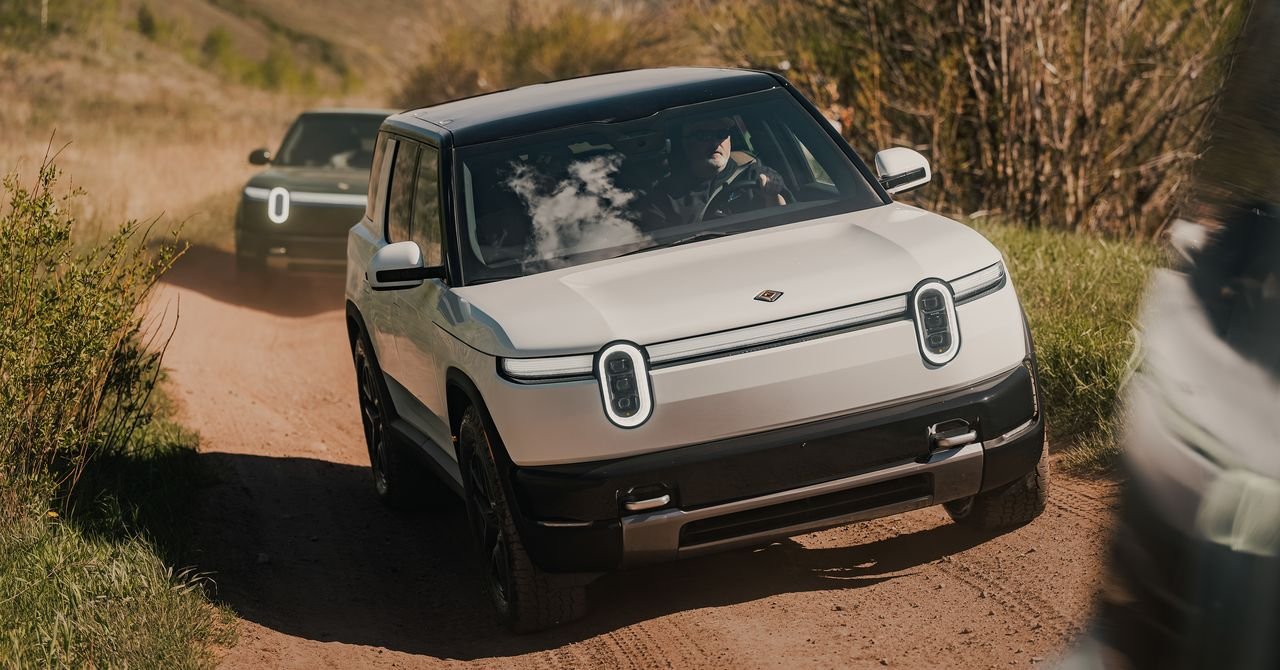
From the hallowed halls of MIT, where he earned a PhD studying internal combustion engines, RJ Scaringe embarked on an audacious mission: to render his own academic specialty obsolete. In 2009, fresh from graduate school, he founded what would evolve into Rivian, an electric vehicle company that spent nearly a decade operating in stealth before making a dramatic entrance at the 2018 LA Auto Show with two groundbreaking electric vehicles.
A Bumpy Road to Electrification
Rivian’s journey has been anything but smooth. Despite a monumental IPO in 2021 that briefly valued the company at over $100 billion—one of the largest in US history—its financial path has been challenging. The company reported a $3.6 billion loss in 2025 and has burned through nearly $25 billion in the past eight years, outspending most pure EV competitors. Its stock has plummeted from a high of $130 to approximately $16. While Rivian has sold 175,000 R1 vehicles since 2021, this pales in comparison to Tesla’s 8 million units sold in the same period.
Yet, recent developments signal a potential turning point. In 2024, Volkswagen Group committed up to $5.8 billion to a joint venture with Rivian, focusing on co-developing software and electrical architecture. This year, Uber announced a significant investment of up to $1.25 billion, aiming to build and deploy up to 50,000 fully autonomous robotaxis with Rivian. These partnerships underscore a growing industry confidence in Rivian’s technological prowess, but the company’s future hinges critically on the success of its upcoming R2 SUV.
Scaringe’s Candid Takes on the EV Landscape
In a wide-ranging discussion, Scaringe offered insights into the competitive and rapidly evolving EV market, touching on everything from design philosophy to market strategy.
Ferrari’s Luce and the Need for EV Diversity
When asked about Ferrari’s polarizing Luce, Scaringe acknowledged the intentionality behind its design, a hallmark of Jony Ive and Marc Newson’s work. While not a Ferrari owner himself, he expressed admiration for elements like the interior’s haptics and physical buttons—a subtle nod to his own design preferences. More broadly, Scaringe highlighted the critical need for greater EV choice in the US market, where Tesla’s Model 3 and Model Y dominate 50-60% of sales. “If we want to electrify, we need to have a lot more choice than just those two,” he asserted.
The Cybertruck: A Niche, Not a Mass Market
Scaringe wasn’t surprised by the Cybertruck’s limited appeal. He described it as a “very big swing” that, while courageous, was clearly designed for a niche audience from the outset. Unlike the broadly appealing Model 3 and Model Y, the Cybertruck’s design decisions and product trade-offs inherently push many consumers away. He applauded the boldness but confirmed its niche destiny.
Polestar’s Struggle for Scale
Addressing Polestar’s challenges, Scaringe outlined the essential ingredients for an at-scale EV player: the right price, solid technology integration, and a compelling package that appeals to a broad audience, encompassing acceleration, efficiency, and packaging. Beyond these tangibles, he emphasized the “intangible” — a design that draws people in while remaining inviting. Polestar, he believes, hasn’t quite hit this combination, despite attractive designs. The market’s heavy reliance on Tesla, he argued, isn’t a sign of health but rather a reflection of a severely underserved demand.
The R2: Rivian’s Bet on the Future
The R2 SUV is positioned as Rivian’s accessible model, the “Rivian for the masses,” and its success is paramount. Scaringe detailed the company’s deep vertical integration strategy: building software, electronics, silicon, motors, gearboxes, and power electronics entirely in-house. This comprehensive approach, along with investments in sales, service networks, parts distribution, and vehicle prep centers, represents billions of dollars poured into infrastructure designed to support the R2’s anticipated volume. “If Rivian stayed a 50,000-unit-a-year company, that would be an extraordinarily expensive way to do that,” Scaringe explained. This massive investment, he clarified, is not accidental but intentional—it’s the premise for scaling the company.
Conclusion
Rivian stands at a pivotal juncture. With significant financial backing from strategic partners and a deeply integrated operational model, the company is poised to launch the R2, a vehicle critical to its long-term viability. Scaringe’s vision is clear: to diversify the EV market and scale Rivian into a major player, a future that rides squarely on the R2’s ability to connect with a broad consumer base.
For more details, visit our website.
Source: Link