
“The fuel of life is feeling. If we’re not filled up in childhood, we must fill ourselves as adults.” ~Jonice Webb, author of Running on Empty
At the tender age of nine, a pivotal day etched itself into my memory, marking the precise moment I learned to sever ties with my own emotions. It began with a whispered secret, a schoolyard betrayal, and a mother whose emotional reserves were utterly depleted when I needed her most. By the day’s end, an unspoken family decree had become chillingly clear: feelings were permissible only if they posed no inconvenience to anyone else.
The Day the World Turned Upside Down
That fateful day unfolded with the innocent gravity of childhood. My best friend, brimming with the thrill of a first crush, entrusted me with a secret: a boy from our class had kissed her in the YMCA coat closet and declared his love. I swore an oath of silence, a promise I, in my nine-year-old naiveté, broke within hours. A secret, to a child, can often feel like a story waiting to be told. By lunchtime, the playground buzzed with the news. By the final bell, my best friend, alongside the class’s most popular girl – a manipulative architect of social dynamics – had orchestrated a complete ostracization. I retreated to my teacher’s office, convinced my world had irrevocably ended.
The True Breaking Point
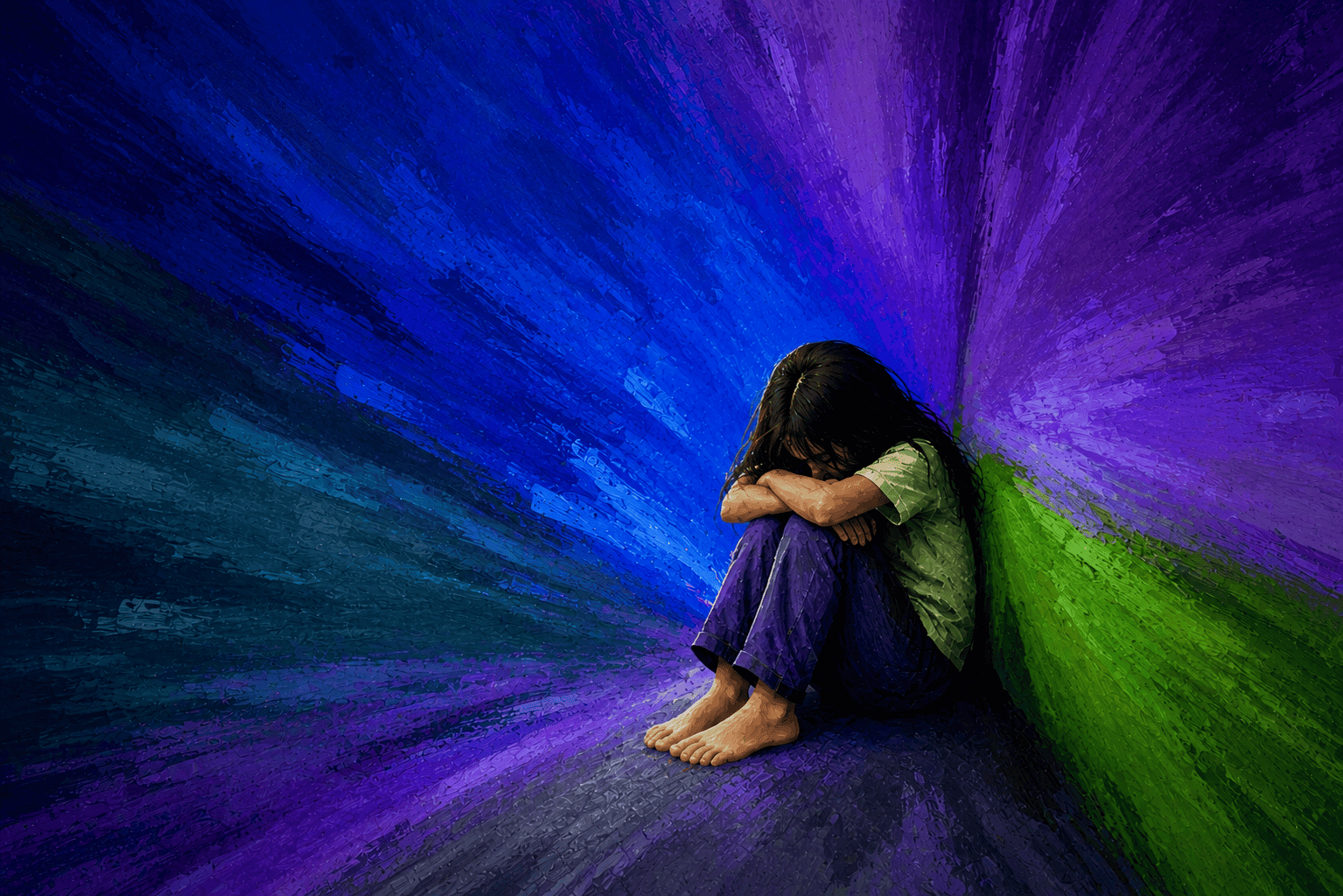
Yet, the true fracture within me wasn’t the sting of playground betrayal or the collective rejection of my peers. It was the crushing weight of what transpired hours later. A latchkey child, I returned home to an empty house, left to wrestle with an overwhelming tide of emotion in solitude. When my mother finally arrived, I instinctively reached for the comfort and solace a child craves. I desperately needed her to validate my pain, to simply be there for what felt like the darkest day of my young life. Her response was swift and sharp: a dismissive declaration that she had “no time for this shit” and that I needed to “get over myself.” That brutal sentence, not the schoolyard drama, was the catalyst for my internal collapse. It was her.
In the aftermath, I retreated to the bathroom, closing the door against the world. On a small step stool, I cradled my head, rocking back and forth, lost in a timeless void. I distinctly remember reaching inward, seeking a quiet, empty space, and pulling it forward until the torrent of tears ceased. Something shifted, something took over. I believe that was the inaugural moment I learned to dissociate, to exit my own body when emotions became too vast, too overwhelming for my small frame to contain. It was a coping mechanism I would revisit countless times.
The Burden of Deep Feeling: A Highly Sensitive Soul
For a soul wired to feel with such profound intensity, this emotional abandonment was almost unbearable. The language to articulate the sheer depth of my emotional pain eluded me for decades, until I discovered the concept of being a Highly Sensitive Person (HSP). This isn’t a fleeting mood or a chosen preference; it’s a fundamental aspect of my neurological makeup, meaning my nervous system processes information and emotions with significantly greater depth than most. Consequently, I experienced life at an amplified volume, a frequency my family seemed ill-equipped to manage.
This inherent sensitivity, coupled with an environment that viewed emotions as weaknesses or problems to be swiftly eradicated, didn’t merely bruise me; it fundamentally reshaped my existence. It dictated the boundaries of intimacy, the meager crumbs of affection I accepted, and the extent to which I would diminish myself to maintain a fragile peace.
Echoes in Adulthood: The Legacy of Unsafe Emotions
It took decades of introspection to trace this intricate thread back to that bathroom floor. Beneath layers of people-pleasing tendencies and a persistent, low hum of inadequacy that infiltrated every relationship, lay a core of shame and an unwavering belief in my own unworthiness. My adult life reflected this deep-seated pattern; I never married, and for years, I conflated familiarity with love, simply because it was the only emotional blueprint I had ever received.
The true architects of my adult self weren’t the fourth-grade rejection or the cruelty of schoolmates, nor even that singular afternoon of despair. It was the cumulative effect of every subsequent instance where my nervous system, perpetually on high alert, remained trapped in a survival mode that persisted long after any immediate danger had vanished—a state of being that endured for years.
Unveiling a Generational Legacy
For a long time, I compartmentalized my family’s emotional landscape, viewing it simply as a group of individuals incapable of holding space for another’s feelings. It was a limited perspective. Then, an afternoon conversation with an uncle shattered my understanding of my extended family’s history. He revealed, with quiet candor, that he and his wife had chosen adoption over biological children due to a “long-running streak of mental illness” on his side of the family—my family—a legacy he refused to risk perpetuating. He gently, yet gravely, suggested I consider the same path for myself.
This revelation offered a profound shift in perspective. It wasn’t merely about my immediate parents and sister. It was about an entire family’s deeply ingrained operating system, a pattern of emotional suppression and unaddressed vulnerability quietly passed down through generations. This broader understanding illuminated the systemic nature of the emotional environment that had shaped me, offering both a painful validation and a path towards breaking the cycle.
For more details, visit our website.
Source: Link