
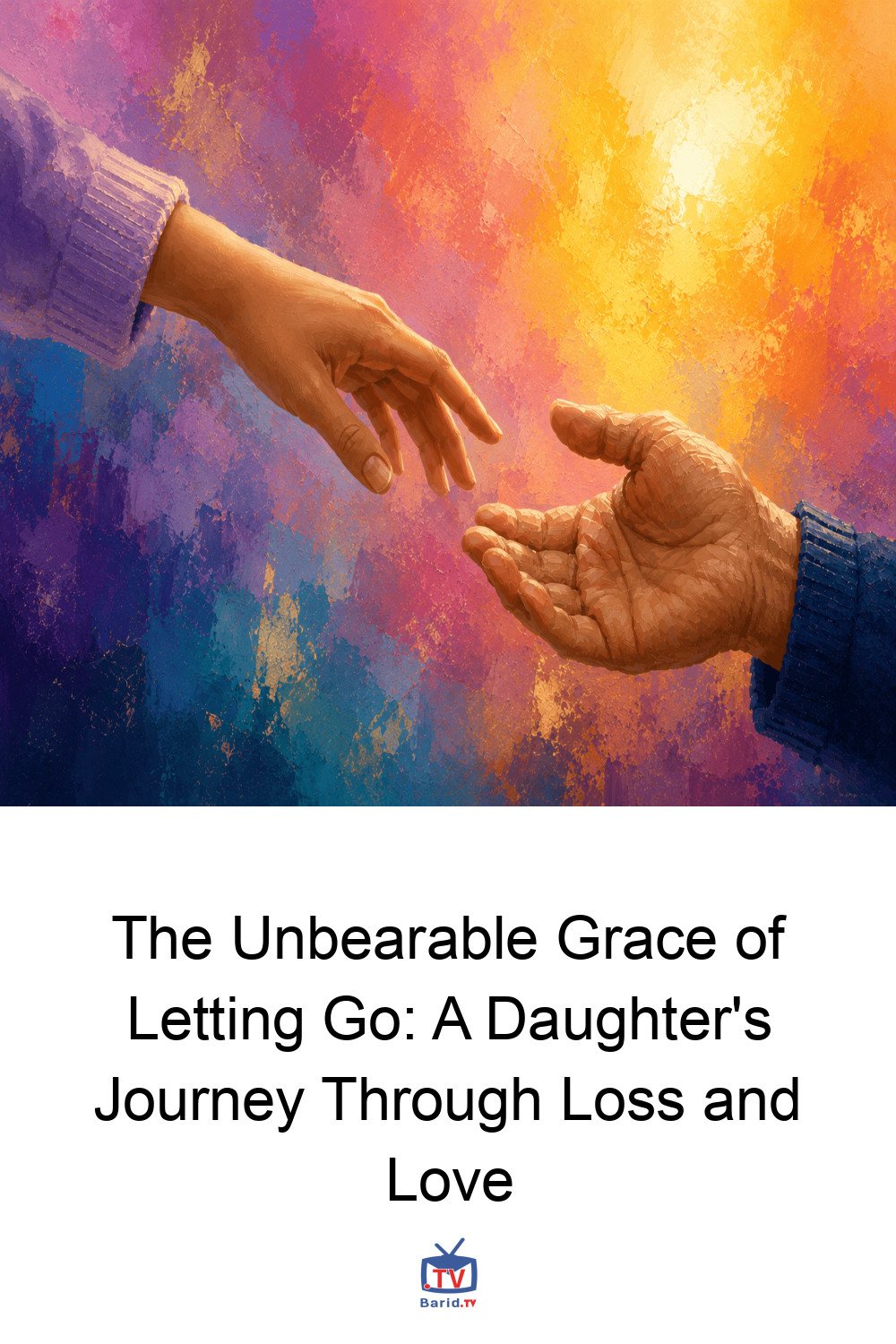
“Some of us think holding on makes us strong, but sometimes it is letting go.” ~Hermann Hesse
The sterile hum of the ICU was a stark contrast to the vibrant life my father had always embodied. Intubated, he couldn’t speak, but his eyes, ever so slightly widened, and a gentle nod confirmed what I desperately needed to hear: “You love me too?” That silent exchange, a fragile beacon in a room where everything else was slipping away, became my anchor. It was our last conscious moment before the tide of illness pulled him under, mostly out of reach.
The Battle for Time: A Daughter’s Plea
In those initial days, my pleas were primal: “Fight, Dad, fight!” Part of it was knowing his indomitable spirit, his unfinished chapters. But a larger part was my own profound unreadiness. I clung to medical statistics, consulting a doctor friend, searching for any flicker of hope. Each day, however, dimmed the light. Promising signs receded, replaced by the grim reality of a body growing weary, a spirit fading. To witness the man who had always been my fortress, my safest haven, diminish bit by bit was an agony that left me feeling untethered, my world crumbling.
The Unthinkable Decision
I yearned for more of his steady presence, his warm, safe hugs. More time. But not like this. Direct conversations with the medical team painted an undeniable truth: he wouldn’t wake up. Life support offered only prolonged pain, a cruel extension I couldn’t justify to spare myself the inevitable. The decision to remove it was, without doubt, the hardest I’ve ever faced. Yet, his peace, his dignity, eclipsed my desperate need to keep him tethered to a life that was no longer his. “I know you tried,” I whispered into his ear, my voice breaking. “It’s okay. We’ll be okay. You can go.”
Navigating the Surreal Landscape of Grief
That day passed in a dreamlike haze. The ordinary rhythm of the subway, the mundane chatter of commuters, coffee runs, and dinner plans felt like a cruel joke. How could the world continue its indifferent spin when the very foundation of my own had shattered? Grief, at first, was a raw, immediate wound, a sharp ache of absence, a disorienting shock that someone so central to my existence could simply cease to be.
The Evolving Nature of Loss
Over the years, grief hasn’t vanished, but it has transformed. What once felt like a suffocating, all-consuming presence, laced with the terrifying question of “How do I live without him?”, has mellowed into a quiet, familiar ache. It’s a whisper of gratitude for the love shared, intertwined with a persistent longing: Thank you for the love. I still wish you were here.
The Profound Wisdom of Letting Go
It was within this shift that a profound truth began to emerge, one obscured by the initial storm: letting go is not always an act of surrender or weakness. Sometimes, it is the most profound expression of love. Before his passing, I mistakenly equated love with relentless holding on, with fighting harder, with an unyielding grip. To loosen that grip felt like betrayal, as if my refusal to accept the inevitable could somehow alter its course. But the deeper truth revealed itself: much of my pain wasn’t just about losing him, but about my fierce, futile resistance to what already was.
Beyond the Battle: Embracing Reality
Grief, in its relentless honesty, exposes where we continue to fight battles already lost. I craved more time, a different ending, a kinder narrative. Life, however, unfolded on its own terms, and that too was a heartbreak. This resistance to letting go isn’t unique to death; it permeates many facets of life. We cling not just to people, but to hopes, plans, identities, expectations, and versions of our lives we believed would endure. We hold on because these things mattered, because we aren’t ready, because letting go forces us to confront change and our inherent lack of control. The fear of uncertainty looms large: Who am I without this? How do I move forward?
Yet, often, what we truly cling to isn’t the thing itself, but the fading hope that it can still be different, the wish that the ending can be rewritten, the refusal to meet reality because the pain is too immense. Letting go doesn’t diminish what mattered. It doesn’t imply indifference or that circumstances are suddenly fair. It is not a capitulation of self, or dreams, or relationships. Instead, it is the courageous act of loosening our grip on how something must unfold, allowing us to finally meet life as it is, in all its raw, beautiful, and sometimes devastating truth. That understanding has been transformative.
For more details, visit our website.
Source: Link