
Stepping into a Timeless Craft: The Enigmatic World of Kawai Kanjirō
In the labyrinthine quiet of Kyoto’s side streets, an unassuming machiya townhouse holds more than just history; it cradles the very soul of Japanese folk art. This is the former home and studio of Kawai Kanjirō, an influential potter whose legacy, much like his dwelling, reveals its profound beauty only to those who seek it with intention. My own journey to its threshold involved a double-take, the building’s understated elegance blending seamlessly with its surroundings – a testament to the mingei philosophy it embodies.
Beyond a discreet plaque and a beautifully carved wooden sign (a masterpiece by Living National Treasure Kuroda Tatsuaki), the entrance beckons. Slipping off my shoes and stepping inside, the transition from the bustling modern world to Kanjirō’s timeless realm was immediate. A carved wooden hand, index finger pointing skyward, greeted me – a silent oracle foreshadowing the mystical depth that permeates every corner of this remarkable space and, indeed, all of Kanjirō’s oeuvre.
Kanjirō’s Kyoto Home: A Living Manifesto of Mingei
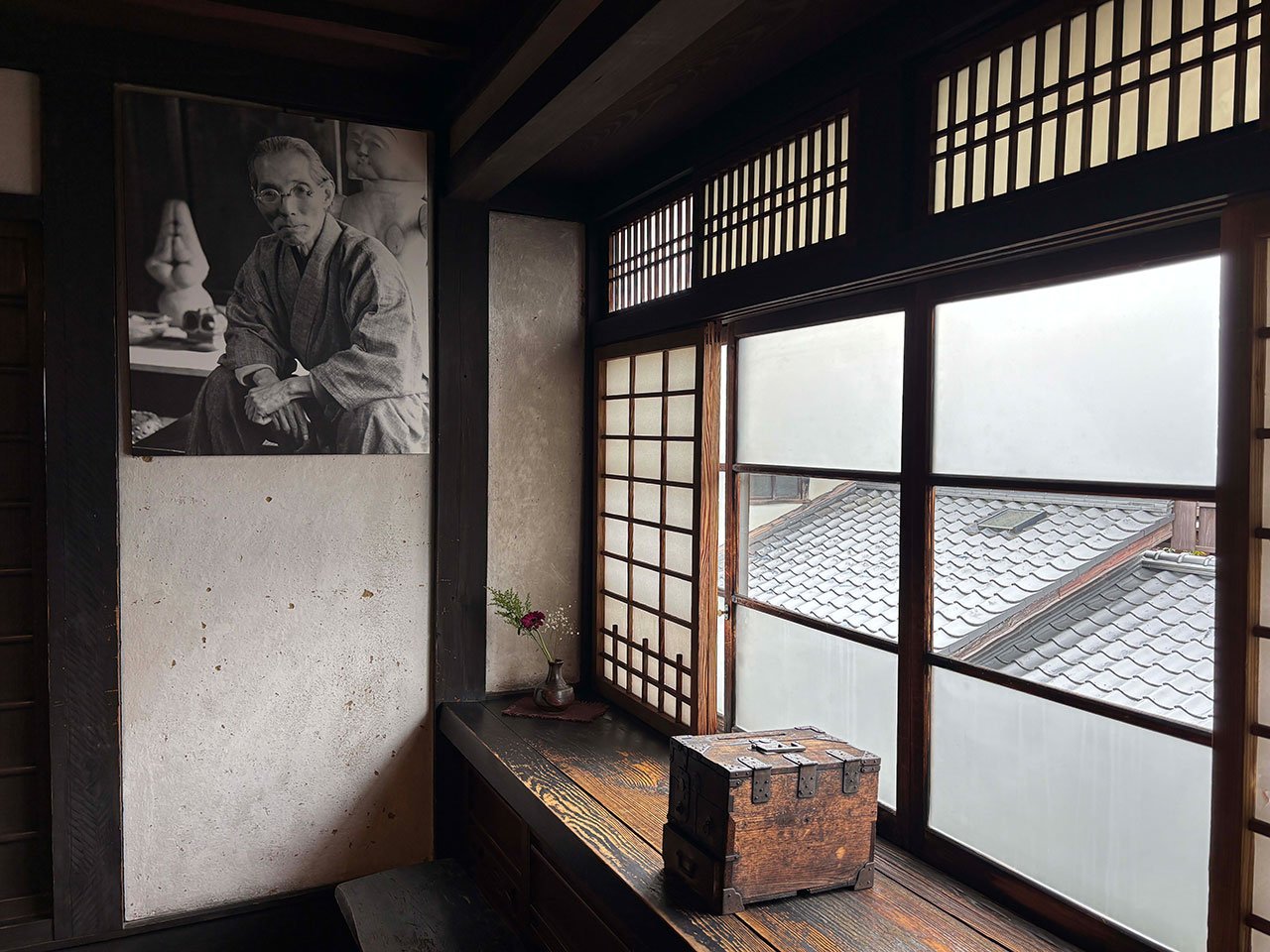
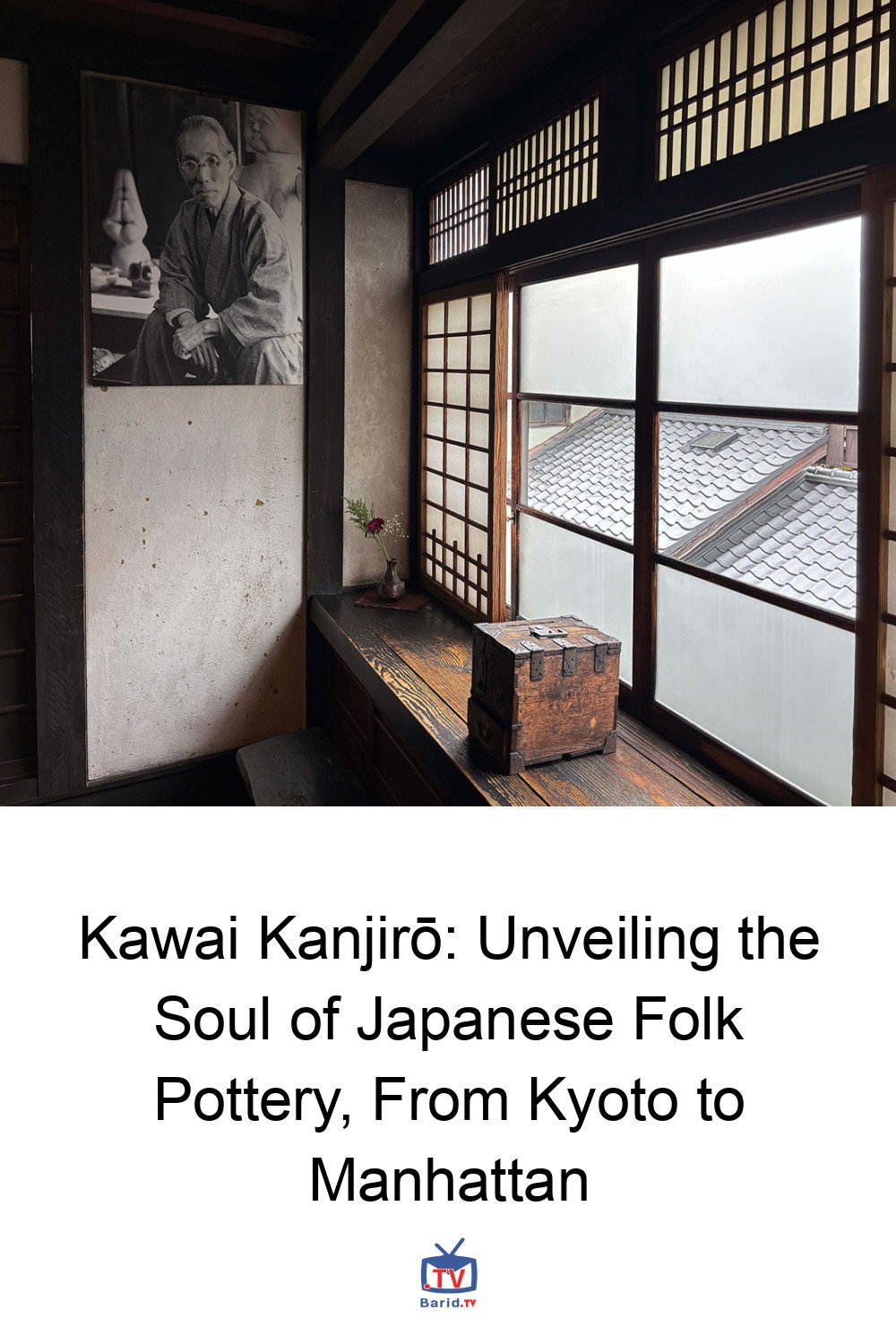
The interior of Kanjirō’s house offers an experience as unadorned and authentic as its exterior. True to the folk tradition’s embrace of anonymity and the unknown, explicit labels are few. Visitors are invited not merely to observe, but to immerse themselves in the artist’s world. One can almost feel the echoes of Kanjirō’s life and work, imagining him shaping clay, firing his massive eight-chamber noborigama climbing kiln here from 1937 until his passing in 1966. It’s a space where the distinction between art and life dissolves, where every object, every beam, tells a story of purposeful creation.
The Genesis of Mingei: Art of the People
Kawai Kanjirō stands as a foundational pillar of Japan’s mingei, or folk art, movement. Alongside visionary friends like philosopher Sōetsu Yanagi, potter Shōji Hamada, and the British studio potter Bernard Leach (who championed mingei in the West), Kanjirō helped redefine beauty. Emerging as a powerful counter-narrative to Japan’s rapid modernization post-Meiji Restoration, mingei championed the utilitarian, the everyday, and the anonymously crafted. It posited that true beauty resided not in the works of celebrated masters, but in the honest, functional objects made by ordinary craftspeople – the “art of the people.”
From Kyoto’s Quietude to Manhattan’s Spotlight
Despite his monumental influence on the mingei movement, Kanjirō’s work has largely remained within Japan’s borders. Unlike some of his contemporaries, he never exhibited in the United States, nor did he travel there. This made my personal discovery of his genius during a visit to his Kyoto home last March all the more profound, a stark contrast to my earlier introductions to studio pottery through Western art academies.
Now, a century after the mingei movement’s inception, a landmark exhibition is bridging this geographical divide. The Japan Society in New York is proudly presenting Kawai Kanjirō: House to House, a solo exhibition running through May 10, 2026. This unprecedented show brings Kanjirō’s private collection of ceramics, woodwork, and calligraphy directly from his Kyoto residence to Manhattan, marking a significant international exchange of culture and art.
A House Transformed: The Exhibition’s Vision
Curated by Michele Brambling of Japan Society and Tamae Sagi, Kanjirō’s granddaughter and curator of the Kawai Kanjirō House, House to House masterfully explores the artist’s extensive oeuvre through the very lens of his home. The curators aptly describe the house, designed by Kanjirō himself and built by his master carpenter brother, as his “largest and most comprehensive creative work.”
As Japanese American writer Yoshiko Uchida observed in 1953, “From the outside, one could never guess what a vast storehouse of art lies beyond the door.” This sentiment remains true today. Stepping into the house, whether in Kyoto or conceptually through the exhibition, is akin to entering a meticulously preserved time capsule of 20th-century Japanese craft. Uchida also noted the house’s “massiveness and sturdiness,” a reflection of Kanjirō’s emphasis on the enduring importance of everyday objects. The Japan Society exhibition powerfully conveys this through detailed section drawings, perspective sketches, and in-situ photographs by Rome-based designers Milk Train, allowing visitors to grasp the profound mechanics and spirit of this extraordinary artistic dwelling.
For more details, visit our website.
Source: Link