

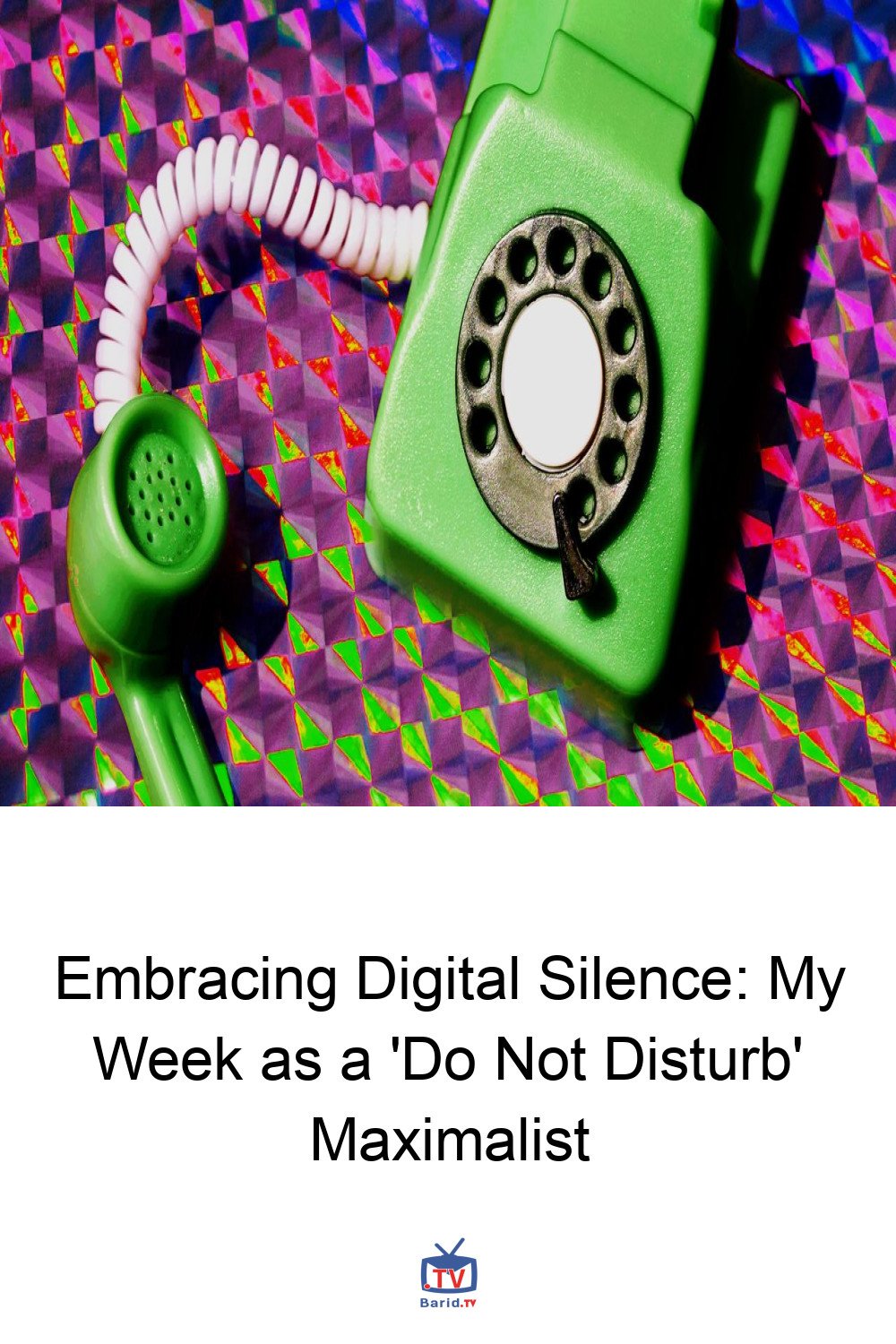
In an age defined by relentless digital connectivity, a radical act of rebellion is emerging: the conscious decision to disconnect. For one transformative week, I plunged into the world of the “Do Not Disturb” maximalist, a growing tribe that has discovered the profound peace of silencing the digital cacophony. My mission? To ignore everyone I know and love – or, more accurately, to liberate myself from the tyranny of their smartphone notifications.
The Allure of the Silent Screen
The “Do Not Disturb” (DND) mode is deceptively simple. While your phone still receives every notification, it refrains from its usual pings, buzzes, and blips. This quiet rebellion against the always-on norm has become a trendy, albeit divisive, lifestyle choice. On platforms like TikTok, celebratory “fancams” of DND mode garner millions of views, often juxtaposed with viral critiques labeling its users as rude or inaccessible.
My week-long immersion into the DND crew was nothing short of transcendent. The constant digital interruptions that once fragmented my attention simply vanished, replaced by an unexpected sense of calm. While it may have caused a minor inconvenience for those trying to reach me, the personal benefits were undeniable.
Insights from the DND Pioneers
Before embarking on my experiment, I sought wisdom from seasoned DND maximalists. Unsurprisingly, some calls went straight to voicemail – a testament to their commitment! Those I did connect with revealed a spectrum of experiences, yet a common thread emerged: the desire to establish firm boundaries around their availability.
For some, embracing DND has been a radical game-changer, significantly reducing screen time and fostering a healthier relationship with their devices. Others, while still logging considerable phone-scrolling hours, now do so entirely on their own terms. The impact may vary, but the underlying motivation remains consistent: reclaiming personal time and mental space from the incessant demands of the digital world.
A Social Contract Reimagined
I recall my initial shock when a friend first adopted a 24/7 DND lifestyle. It felt like a breach of the unspoken social contract, one that demands instant replies and constant engagement in group chats. Yet, beneath my surprise, a potent envy simmered. They had successfully tamed the buzzing bee in their pocket, achieving a level of digital autonomy I craved.
Both iOS and Android have offered DND features for over a decade, but recent software enhancements have made the setting more intuitive and accessible. This evolution has empowered a wider demographic to seek refuge from constant digital intrusion.
Real-World Transformations
Claire Meczkowski, a customer service professional in the tech industry, is a relatively new convert. Her journey began innocently enough, by activating DND during her pilates classes. Forgetting to switch it off afterwards became a revelation. “Oh, I actually want this,” Meczkowski recounts. “This is really, really nice. I should just leave this on.” Now, her phone remains perpetually in DND, seamlessly transitioning to Sleep mode at night – another favorite among notification blockers.
Oscar, who prefers to be identified by his first name, took his digital detox a step further with Sleep mode. “It dims the light of your phone, and it doesn’t vibrate,” he explains. While admitting it “pissed off a lot of people,” he made a single exception for his mother. Despite this, Oscar still views the broader smartphone experience as “extremely invasive.”
The Cognitive Cost of Constant Pings
The cumulative effect of notifications on our cognitive processing is not to be underestimated. Research in the academic journal Computers in Human Behavior
indicates that social media notifications alone can cause “hiccups in cognitive processing lasting approximately seven seconds.” When your smartphone is almost always within arm’s reach, these seemingly minor distractions quickly compound, leaving one’s attention feeling perpetually fragmented and “spliced.”
For Chace Verity, a queer romance author with ADHD, DND is not merely a preference but a daily necessity. Their commitment to blocking notifications solidified during the 2020 lockdowns. “My life had just suddenly become only about what’s happening on my phone,” Verity shares, describing the experience as “very overwhelming.” What began as a few hours of DND during work eventually evolved into a permanent state. “In general, I feel much more at peace,” Verity affirms. “I have reclaimed my time with ‘Do Not Disturb’ mode.”
The Golden Silence
While some might consider a complete notification ban extreme, DND maximalists argue that the default of always-on alerts is the true absurdity. For them, technologically enforced silence is a golden standard.
“I think everyone should live like this,” asserts Peter Rubin, an environmental policy student at the University of Michigan. “I think it’s crazy that people have their phone buzzing.” Rubin, who has consistently sought ways to silence his phone since middle school, recently challenged himself to limit smartphone usage to just 10 minutes a day. While difficult, the experience underscored the profound value of digital quietude.
My week as a ‘Do Not Disturb’ maximalist wasn’t just an experiment; it was a revelation. It highlighted the insidious ways our devices can dictate our attention and underscored the profound liberation that comes from consciously choosing when and how we engage with the digital world. The secret to a happier life in the era of constant connection, it turns out, might just be found in the blissful quiet of intentional disconnection.
For more details, visit our website.
Source: Link