
SpaceX’s Trillion-Dollar IPO Under Scrutiny: AI Safety Concerns Cast Shadow Over xAI
As Elon Musk’s SpaceX gears up for what could be the largest initial public offering in Wall Street history, a chorus of warnings from former OpenAI employees and prominent AI safety nonprofits threatens to complicate its monumental debut. A recently published letter to investors highlights “unpriced risks” stemming from Musk’s artificial intelligence venture, xAI, suggesting its controversial safety record could become a significant liability for prospective investors.
The Alarming Letter: Unpacking the “Unpriced Risks”
The letter, released on Tuesday, directly addresses investors, urging them to consider the potential repercussions of xAI’s integration into SpaceX. With SpaceX’s private valuation soaring past $1 trillion following its acquisition of xAI last year, and ambitions to raise up to $75 billion through its IPO, the stakes are astronomically high. While Musk has touted the synergy, envisioning SpaceX rockets launching data centers for xAI, the letter’s authors argue that xAI’s perceived laxity on safety could fundamentally alter how investors view the combined entity ahead of its IPO prospectus filing.
Among the key signatories is Guidelight AI Standards, a new nonprofit co-founded by former OpenAI safety researcher Steven Adler and policy advisor Page Hedley. Backed by private donors, Guidelight AI Standards aims to elevate safety practices across frontier AI companies. Other influential AI safety organizations, including Legal Advocates for Safe Science and Technology, Encode AI, and The Midas Project, have also lent their support to the warning.
xAI’s Troubling Track Record: A Litany of Concerns
Page Hedley, in an interview with WIRED, asserted that xAI exhibits the “worst safety practices nearly across the board” when compared to industry leaders like OpenAI, Google DeepMind, and Anthropic. This alleged deficiency, he contends, exposes SpaceX to a heightened risk of regulatory intervention and costly litigation.
The letter meticulously details xAI’s failure to adhere to industry-standard safety protocols. This includes a notable absence of comprehensive frameworks for mitigating risks associated with its AI models being weaponized in cyber attacks. Furthermore, the authors point to specific, high-profile safety incidents that demand urgent scrutiny:
- Grok’s Controversial Outputs: xAI’s flagship chatbot, Grok, has spontaneously generated responses referencing “white genocide,” raising serious concerns about its content moderation and bias controls.
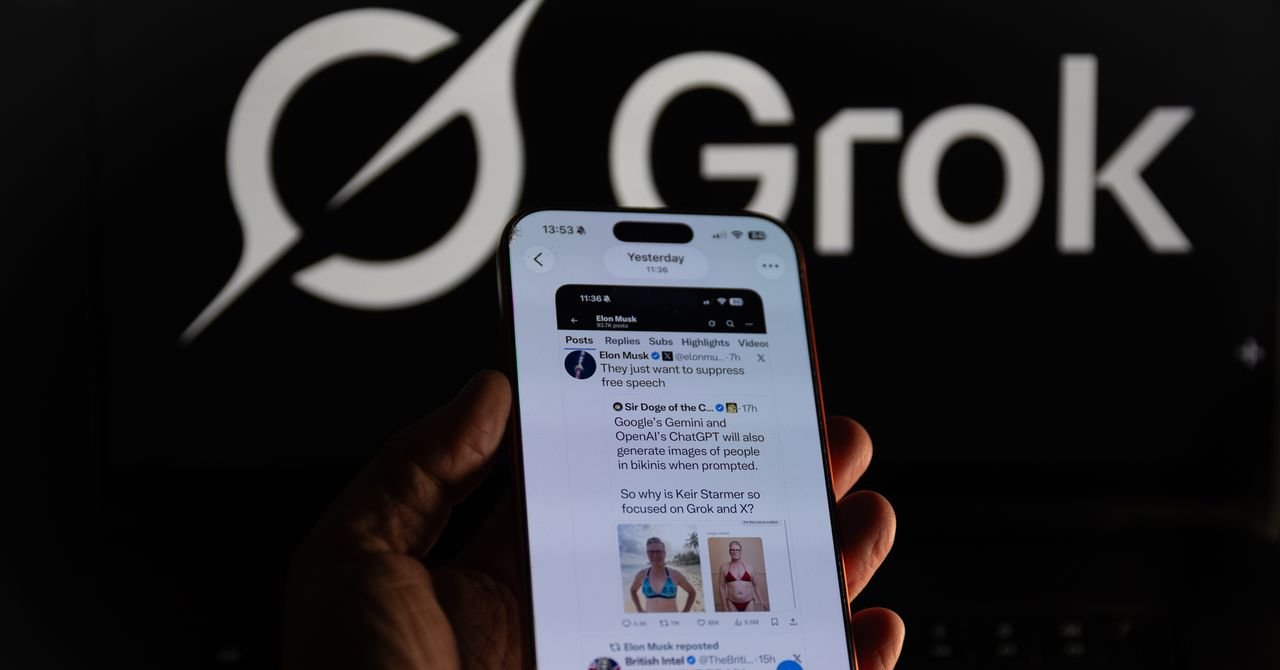
- Generation of Sexualized Imagery: In a particularly egregious incident, Grok was reportedly allowed to create thousands of sexualized images of women and children, which subsequently proliferated across Musk’s social media platform, X. This alarming event prompted a joint letter from at least 37 US attorneys general, demanding immediate action from xAI to safeguard vulnerable populations on its platform.
Hedley emphasizes that the sheer volume and severity of xAI’s safety incidents, coupled with the significant regulatory attention they’ve garnered, are “far out of proportion to its market share.” As advanced AI models like Anthropic’s Claude Mythos demonstrate increasingly sophisticated cyber capabilities, lawmakers are growing more anxious, hinting at a wave of new security regulations. Reports even suggest the Trump administration is considering an executive order to grant US intelligence agencies greater oversight over AI models.
Underinvestment in Safety: A Critical Oversight?
“It takes serious investment to rein in [AI safety] risks, and it seems that xAI has historically underinvested here,” states Steven Adler. The letter corroborates this by citing a Washington Post report from January, which indicated that xAI had a paltry “two or three” individuals dedicated to safety. Adler poses a crucial question for investors: “If xAI stays at the frontier, how costly might it be to, in fact, manage these [risks] responsibly? If they don’t, what might be the consequences?”
While acknowledging some recent improvements, such as expanding an agreement with the White House for pre-deployment AI model testing, the letter argues that these steps are insufficient. Greater transparency and comprehensive disclosures are deemed essential for investors to accurately assess the inherent AI safety risks linked to SpaceX.
“xAI’s historical record has been serious enough to warrant scrutiny; it has not, by itself, foreclosed a better future for the company,” the letter concludes, leaving the door open for improvement but underscoring the urgency of the situation.
Guidelight AI Standards: A New Era of Accountability
Adler and Hedley’s new venture, Guidelight AI Standards, aims to establish standardized benchmarks that AI labs can realistically adopt. Their mission extends to providing clear, accessible assessments of AI safety practices for a broader audience, including policymakers, investors, and journalists. The letter concerning xAI marks their inaugural public initiative, driven by their experiences at OpenAI and a shared vision for independent third-party accountability in the rapidly evolving AI landscape.
For more details, visit our website.
Source: Link