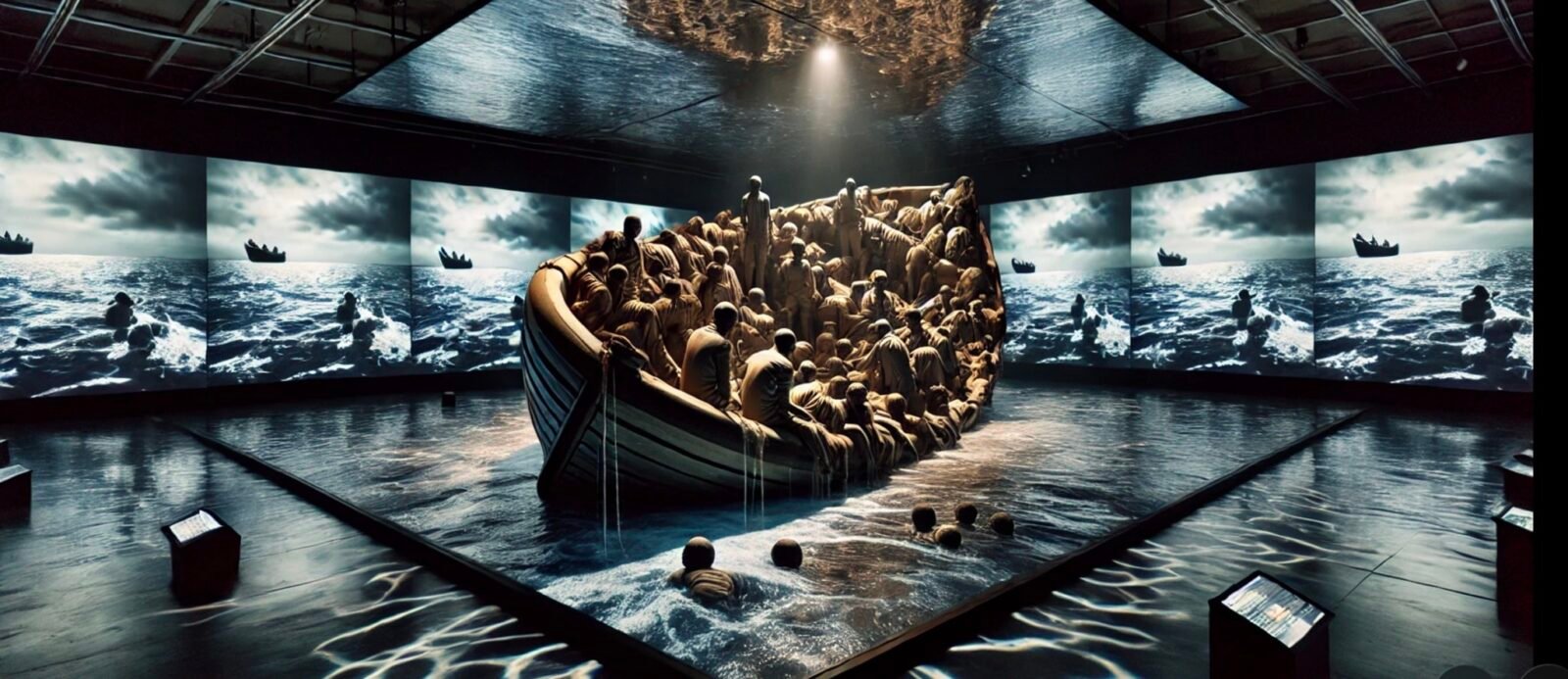

As artificial intelligence, spatial computing, and immersive technologies rapidly transition from experimental novelties to integral components of our daily lives, a profound question emerges for designers, architects, technologists, and cultural institutions: How do we truly design for humans within an increasingly immersive world?
This pivotal discussion will be a highlight of the Design Dialogues by Design Milk at Clerkenwell Design Week 2026. The session, aptly titled “Immersive Spaces: Technology, Empathy & the Human Experience,” will delve into a fundamental shift already underway: moving beyond creating spaces merely to be observed, towards designing environments that people emotionally inhabit.
The Human Equation in Immersive Design
The next generation of spatial design transcends mere aesthetics or efficiency. It is increasingly concerned with human behaviour, feeling, participation, and responsibility. From AI-responsive retail environments and adaptive workplaces to captivating cultural experiences and multisensory public installations, the focus is shifting.
From Passive Viewing to Emotional Inhabitation
As immersive technologies become deeply embedded within public spaces, professional environments, and cultural venues, the conversation naturally evolves from novelty to accountability. The central inquiry is no longer simply about how immersive a space can become, but rather, how intelligently, ethically, and humanly it responds to the individuals moving through it.
Designers are now actively exploring the synergy of AI, spatial computing, and multisensory storytelling to forge environments that are more adaptive, empathetic, and emotionally aware. These are spaces capable of responding to human behaviour, attention, mood, and need in real-time. Imagine workplaces that genuinely foster wellbeing and collaboration, or cultural spaces that deepen participation and reflection. Immersive design is poised to redefine not only how people interact with technology but also how they connect with one another.
Crafting Empathetic Environments with AI
This evolution presents a significant challenge to creators: to meticulously consider the systems they are building. Key questions arise:
- How do we engineer experiences that are genuinely inclusive and accessible to all?
- How can immersive environments cultivate reflection, connection, and presence, rather than succumbing to distraction and sensory overload?
- What does it truly mean to design spaces that don’t just capture fleeting attention, but actively support human experience in profoundly meaningful and responsible ways?
The discourse moves beyond treating immersion as a mere spectacle. Instead, it investigates how emerging technologies can facilitate responsive, participatory, and emotionally resonant spaces—environments crafted not just to impress audiences, but to deeply understand and support them.
Adipat Virdi’s Empathy Engine: A Blueprint for Connection
Central to this transformative conversation is the powerful notion that immersive design should be viewed not as a standalone spectacle, but as a sophisticated form of behavioural and emotional architecture. Drawing upon his innovative Empathy Engine Framework, Adipat Virdi posits that the most impactful immersive experiences are not those that overwhelm with technological prowess, but those that strategically reposition individuals as active participants within rich, meaningful systems of interaction.
Developed through extensive work spanning immersive theatre, XR (Extended Reality), AI-driven storytelling, and spatial experience design, Virdi’s framework illuminates how empathy can be operationalised within these environments. This methodology transforms audiences from passive observers into emotionally and ethically engaged protagonists. It reframes immersive space not as an additional layer applied to architecture, but as a living, relational system with the capacity to shape attention, behaviour, memory, and social connection.
The Future: Beyond Engagement Optimisation
In an era where AI-generated environments, responsive interfaces, and intelligent spaces are rapidly achieving commercial viability, the critical question remains: Will the future of immersive design merely optimise engagement, or can it genuinely cultivate understanding, reflection, and a sense of belonging?
Ultimately, “Immersive Spaces: Technology, Empathy & the Human Experience” is far more than a technical discussion. It is a profound exploration into the very nature of human experiences we aspire to build into the spaces of tomorrow, and the immense responsibilities that accompany designing environments that increasingly think, respond, and feel alongside us.
(Image courtesy Adipat Virdi)
For more details, visit our website.
Source: Link