





France on the Brink: Political Paralysis, Soaring Debt, and the Looming Threat of Civil Crisis
While France narrowly sidestepped a credit downgrade from Moody’s, the reprieve offers little comfort. The ratings agency has painted a stark portrait of the eurozone’s second-largest economy, highlighting profound risks stemming from its deeply entrenched political divisions and escalating social unrest. The nation, a cornerstone of European stability, appears to be grappling with a governance breakdown, where even minimal, belated action seems increasingly out of reach.
Averted Downgrade, Bleak Outlook
In a late Friday announcement, Moody’s affirmed France’s Aa3 rating, placing it two grades below the U.S. and three below Germany, but maintained a negative outlook. This contrasts with Fitch and S&P Global, which rate France a notch lower. Despite acknowledging France’s robust economy and competent public institutions, Moody’s underscored a critical vulnerability: a fractured political landscape threatening to immobilize the government and obstruct essential, albeit painful, deficit-reduction measures.
The Paralysis of Politics and the Roar of the Streets
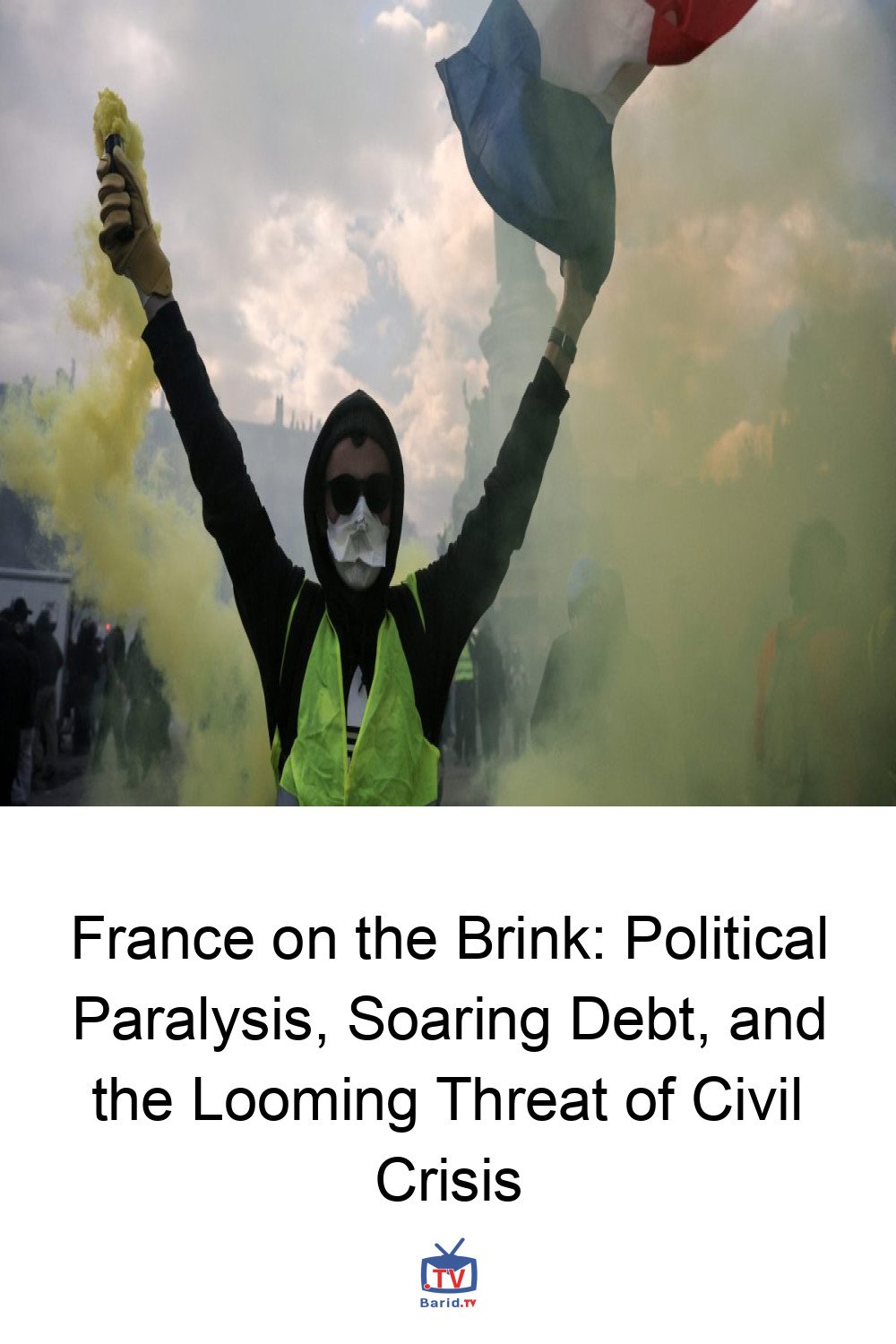
The report specifically flagged France’s deeply divided parliament, frequently at loggerheads with the executive, as a primary driver of political and social instability. For over a month, the nation has been convulsed by protests that escalated into widespread riots. Initially sparked by concerns over public education investment, the demonstrations quickly broadened to encompass grievances against the soaring cost of living, exacerbated by rising fuel prices. These events echo similar movements across Europe, collectively dubbed the “Oct. 17 Movement,” underscoring a continent-wide undercurrent of discontent.
A Debt Mountain and Soaring Yields
Simultaneously, France’s burgeoning national debt has pushed bond yields to a 24-year high, flashing warning signs reminiscent of the 2011 eurozone debt crisis. The public debt now stands at a staggering $4 trillion, or 119% of GDP—a ratio not seen since the immediate aftermath of World War II. With upcoming presidential elections potentially elevating far-right or far-left candidates, market confidence in the government’s capacity to restore fiscal order is rapidly eroding.
The Budgetary Battle and a Future of Uncertainty
A proposed 2027 budget, aiming to modestly reduce the deficit from 5.4% to 5% of GDP, faces an uphill battle amid political gridlock. Moody’s cautioned that recent unrest could further impede fiscal consolidation. “The 2027 budget process coincides with some of the most extensive social protests France has experienced in many years,” the agency noted. While Moody’s anticipates eventual adoption, possibly by decree, the budget is expected to fall short of its goals, likely reducing the deficit only to 5.2% of GDP due to weaker-than-projected growth and the political hurdles of implementing genuine spending cuts.
This “too-little, too-late” approach is unlikely to resolve France’s debt crisis. Moody’s insists that a “significant and sustained fiscal effort” extending beyond the presidential elections is crucial to stabilize the debt burden, which is projected to reach 122% next year. The ratings agency expressed skepticism about France’s leaders meeting this challenge, predicting that despite efforts to narrow the deficit, rapid fiscal consolidation is improbable given social tensions, a fragmented political environment, and muted GDP growth. Consequently, the debt burden is expected to continue its ascent throughout the decade.
The Specter of Civil Crisis and Event Risk
While the average maturity of France’s debt (around 8.5 years) offers a buffer against immediate collapse from rising borrowing costs, the nation remains acutely vulnerable to “event risk.” This risk, driven by both geopolitical shifts and domestic political instability, suggests a scenario where lawmakers struggle to address critical issues. Moody’s explicitly stated, “The negative outlook reflects the increased risk that the fragmentation of France’s political landscape will continue to impair the functioning of the country’s legislative institutions.” This instability, it warned, risks undermining the government’s ability to tackle the elevated fiscal deficit, rising debt, and increasing borrowing costs, potentially leading to a swifter deterioration of sovereign credit metrics.
Global strategists Thierry Wizman and Gareth Berry of Macquarie further underscored this perilous connection, warning that prolonged protests could compel the government to approve more spending, exacerbating the debt crisis. This would, in turn, drive up French bond yields, making future borrowing even more expensive and intensifying the very grievances fueling the unrest. They concluded, “France is veering toward a full-blown civil crisis because of its political polarization… And rather than being isolated events, we think a direct and self-reinforcing causal connection can be drawn between the rise in [France’s debt and protests].” The warning is clear: France stands at a critical juncture, where political dysfunction and social unrest are not merely symptoms, but actively accelerating a deeper economic and societal crisis.
For more details, visit our website.
Source: Link








Leave a comment