



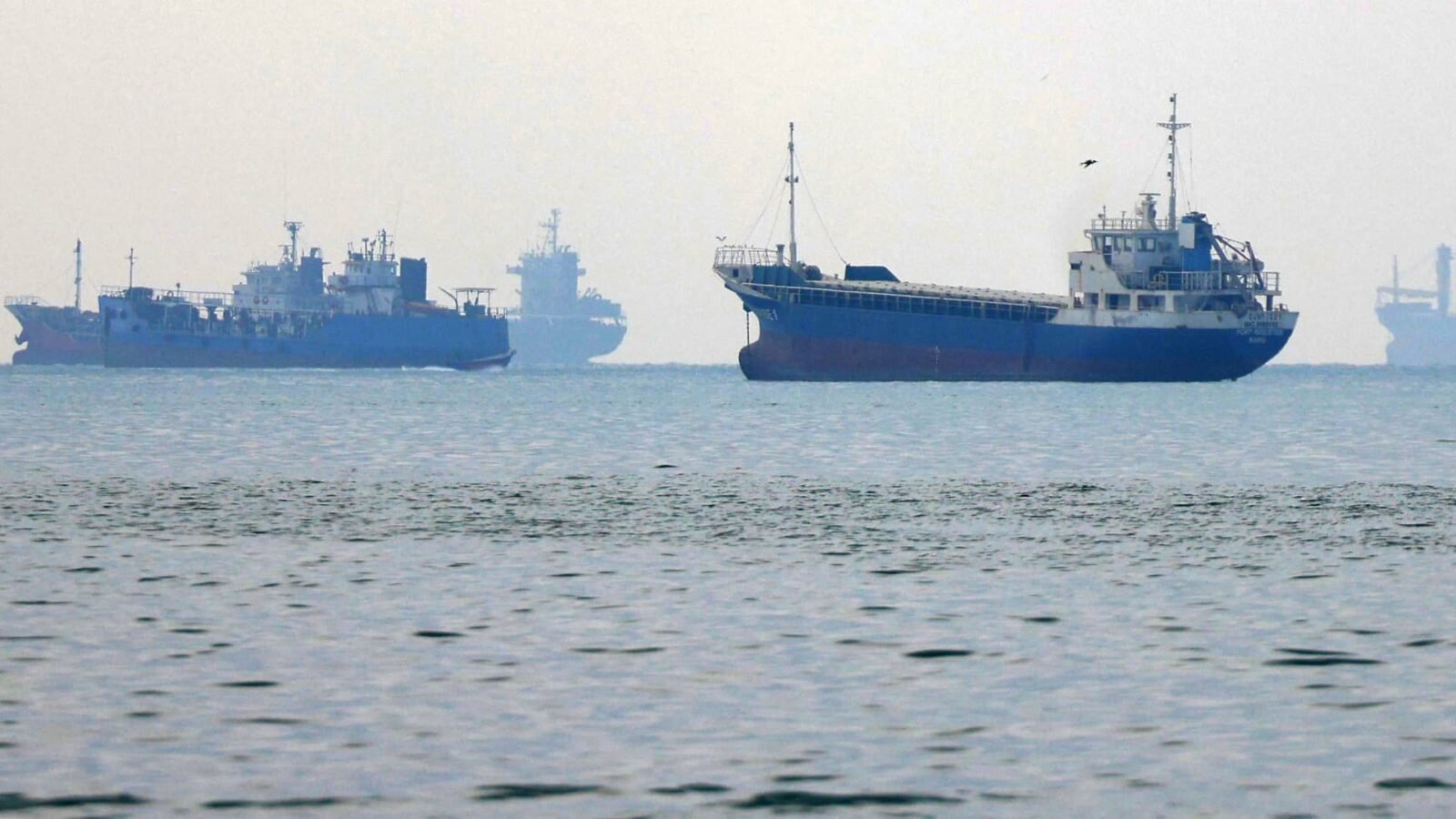

Strait of Hormuz in Crisis: Container Ship Sinks Amid Escalating Iranian Aggression
The strategic Strait of Hormuz has once again become a flashpoint for global maritime security, as a container ship, the GFS Pride, sank following an attack. This incident marks a significant escalation in what appears to be a concerted campaign by Iran against commercial shipping in the vital waterway, raising serious concerns for international trade and energy markets.
The GFS Pride: A Casualty in the Strait
On Wednesday, the Singapore-registered container vessel, GFS Pride, succumbed to an unidentified projectile strike, catching fire before eventually sinking into the treacherous waters of the Strait of Hormuz. Fortunately, all 21 crew members aboard were safely evacuated, with no injuries reported, confirmed the Maritime and Port Authority of Singapore (MPA).
Singapore Condemns “Unprovoked” Attack
The MPA swiftly condemned the assault, stating, “Such attacks are unprovoked, unjustifiable and a breach of international law.” The aftermath saw containers adrift, prompting navigational warnings from Pakistani maritime authorities. This incident tragically marks the third commercial vessel lost during the ongoing Iran conflict, according to the International Maritime Organization (IMO).
Adding to the day’s maritime woes, another Singapore-flagged vessel, the GFS Giselle, also sustained hull damage from an unidentified projectile. While its crew remained unharmed and the ship reached safe anchorage, these twin incidents underscore the heightened risks faced by vessels traversing the region.
Iran’s Shadowy Claims and Psychological Warfare
Early reports from Iran’s state news agency Tasnim, citing the Revolutionary Guard, claimed the GFS Pride exploded after striking a naval mine. However, maritime security firm Marisks quickly cast doubt on this assertion, finding no independent evidence to corroborate a mine as the cause. Marisks characterized Iran’s claims as “consistent with an ongoing psychological operations campaign aimed at generating fear, increasing uncertainty and discouraging commercial shipping” in Hormuz.
This latest sinking is part of a broader pattern. In recent weeks, Iran has demonstrably intensified its strikes on commercial ships in the Strait of Hormuz, the Persian Gulf, and the Gulf of Oman. Over 20 vessels, predominantly oil tankers, have come under attack this month alone, according to reports from the United Kingdom Maritime Trade Operations Centre. These aggressions have already resulted in two missing sailors and over a dozen injuries, as reported by the IMO.
Global Oil Markets on Edge: The Economic Fallout
The escalating instability in the Strait of Hormuz, a choke point for roughly a fifth of the world’s oil supply, is having a tangible impact on global energy markets. While crude oil exports through Hormuz briefly rebounded to pre-war levels in September, aided by U.S. military escorts, the recent surge in attacks has caused a significant pullback in shipments.
Volatile Flows and Price Fluctuations
Oil prices saw a slight uptick on Wednesday, reflecting market anxieties. Data from Kpler reveals that crude exports through Hormuz averaged 8.5 million barrels per day (bpd) in the week ending October 12th, a stark 40% decrease from pre-Iran war levels. Broader Middle Eastern shipments, including those via pipelines to the Gulf of Oman and Red Sea, also fell by nearly 20% to 14 million bpd. Daily crude flows remain highly volatile, with figures fluctuating wildly from 3 million barrels on one day to 6 million on another, highlighting the unpredictable nature of transit through the strait under current conditions.
The sinking of the GFS Pride serves as a stark reminder of the precarious balance in the Strait of Hormuz, where geopolitical tensions directly translate into real-world risks for global commerce and energy security.
For more details, visit our website.
Source: Link




Leave a comment