A dangerous new chapter in the escalating tensions between the United States and Iran unfolded this week, as both nations launched fresh strikes and counter-strikes, dramatically increasing the risk of a broader regional conflict. The tit-for-tat actions, centered around the strategically vital Strait of Hormuz, have put the international community on high alert.
A Dangerous Escalation in the Gulf
The latest round of hostilities commenced with the U.S. military initiating new strikes on Iranian targets in the vicinity of the Strait of Hormuz. These actions were a direct response to recent attacks on commercial shipping and American personnel in the region. Shortly after, Tehran announced its own retaliatory operation, deploying missiles and drones against what it described as U.S. interests across the Middle East. Reports emerged of explosions over Aqaba, Jordan, though the precise nature and targets of these incidents remained unconfirmed.
The U.S. Central Command (CENTCOM) confirmed that its forces began targeting Islamic Revolutionary Guard Corps (IRGC) sites in Iran at noon ET, citing attempted attacks on commercial vessels in the Strait of Hormuz and threats to U.S. personnel. Details regarding the specific targets or military assets involved were not immediately disclosed.
Trump’s Warning: A ‘Much Harder’ Response Looms
Reacting to the developments, former President Donald Trump described the U.S. strikes as “large and powerful” in a post on Truth Social. He explicitly linked them to Iran’s alleged attempts to deploy sea mines in the Strait of Hormuz and a prior missile attack on a U.S. base in Jordan. Crucially, Trump issued a stark warning: any further retaliation from Tehran would be met with a significantly larger response, threatening to hit Iran “at a much harder and higher level” and indicating an even bigger attack was “waiting in the wings.”
These strikes follow earlier reports that Trump had been considering a CENTCOM proposal for targeted, periodic attacks aimed at dismantling Iran’s capacity to rebuild radar and missile systems that could threaten maritime traffic in the Strait.
The Strait of Hormuz: A Volatile Chokepoint
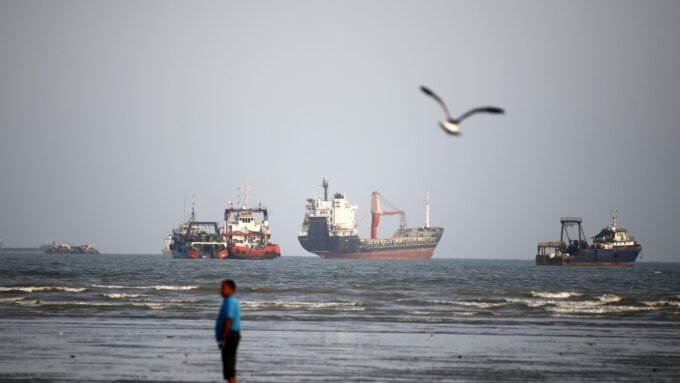
The Strait of Hormuz remains at the heart of this conflict. As one of the world’s most critical energy chokepoints, approximately one-fifth of global oil supplies typically transit through this narrow waterway. The ongoing skirmishes underscore the extreme volatility of the region and the potential for disruptions that could have far-reaching economic consequences.
A Pattern of Retaliation: The Weekend’s Precedent
This week’s escalation builds upon a series of exchanges over the preceding weekend, marking the first significant direct confrontation between the U.S. and Iran in roughly a month. On Sunday, U.S. forces struck rocket launchers on Iran’s Larak Island, after intelligence suggested Iranian forces were preparing to launch rockets carrying sea mines into the strait. Tehran responded by firing missiles at U.S. sites in Jordan, which were reportedly intercepted. The United Arab Emirates also reported intercepting an Iranian drone over its territorial waters, further illustrating the widespread nature of the threat.
Following these initial exchanges, Trump had already signaled a firm response, telling Fox News, “We’re going to hit them hard. There will be a response.”
Political Ramifications and Regional Instability
The deepening conflict poses significant challenges, particularly for Trump’s political ambitions. Having once predicted a swift end to the war, the ongoing escalation complicates his campaign pledge to disengage from foreign conflicts as the November midterm elections draw nearer. Public approval for the Iran war remains low, with recent polls indicating only 36% of Americans support it.
The immediate impact on regional stability is also profound. The U.S. Embassy in Qatar issued a security alert, warning of “unforeseen escalation” and advising American citizens in the region to exercise extreme vigilance, anticipating potential travel disruptions, including flight cancellations and airspace closures.
As Washington and Tehran continue their dangerous dance of strikes and counter-strikes, the specter of a wider, more devastating war looms large over the Middle East, demanding urgent international attention and de-escalation efforts.
For more details, visit our website.
Source: Link