



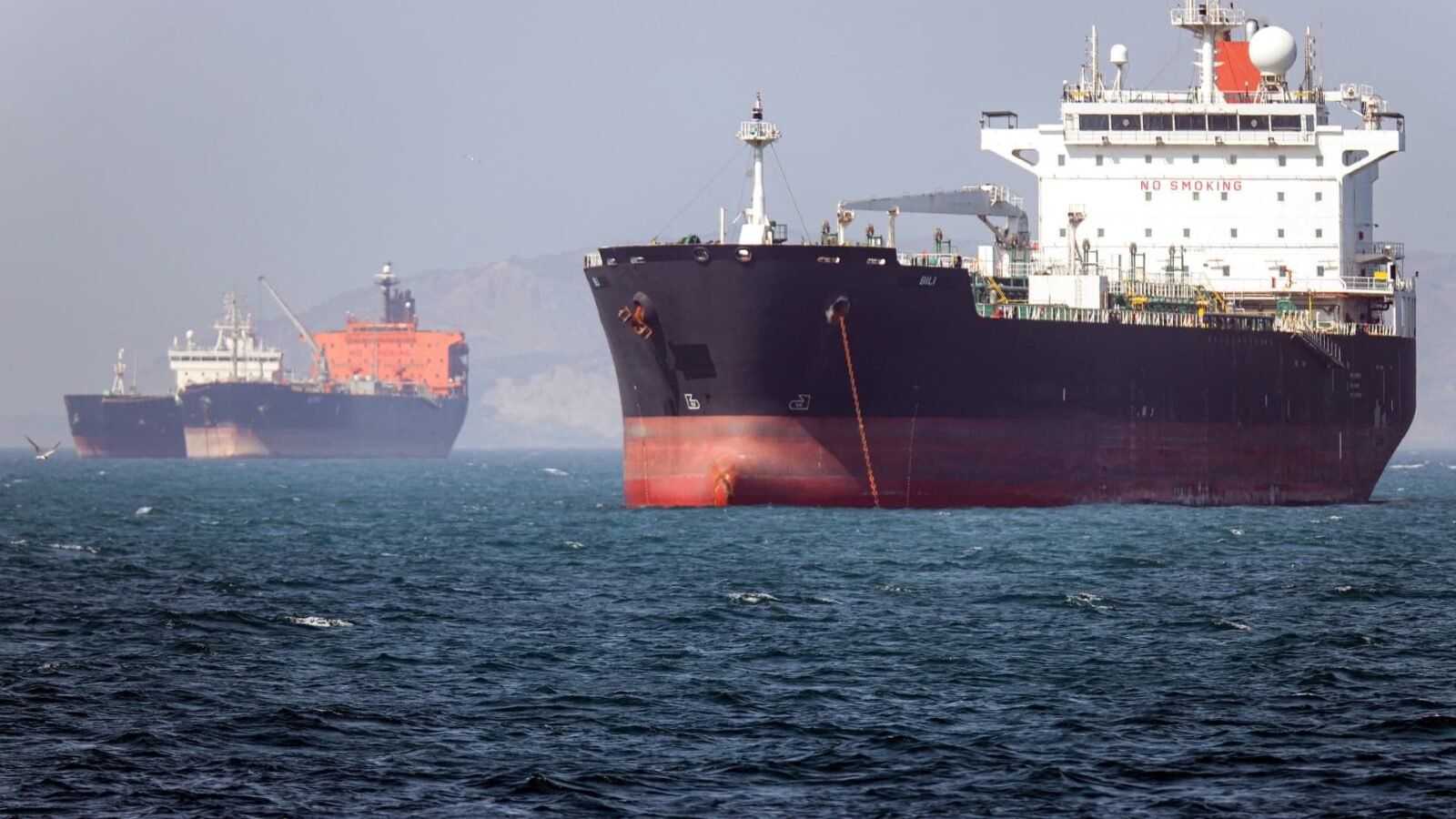

The Strait of Hormuz, a narrow choke point at the mouth of the Persian Gulf, remains one of the world’s most critical and volatile arteries for global oil trade. While recent data suggests a rebound in crude exports through this vital waterway, this fragile recovery comes at a significant cost – both financial and human – and is underpinned by a substantial U.S. military commitment. Meanwhile, Iran’s escalating aggression against commercial shipping threatens to unravel this precarious stability, leaving the sustainability of these flows in serious doubt.
A Fragile Rebound Under Threat
In recent months, crude oil exports transiting the Strait of Hormuz have seen an uptick. However, this increase is not a sign of restored normalcy but rather a testament to the intensified efforts by U.S.-allied militaries to safeguard merchant vessels. According to the Joint Maritime Information Center, nearly 20 commercial ships, predominantly tankers, have been targeted over the past month in or near Hormuz and the Gulf of Oman. Michelle Wiese Bockmann, a senior maritime intelligence analyst at Windward, notes that Iran attacked approximately two ships for every 100 vessels that traversed the strait in the third quarter alone.
This rebound is largely dependent on a robust U.S. military presence, which has carved out a protected southern shipping route along the Omani coast. Yet, experts question the long-term viability of this arrangement without a diplomatic resolution or a significant shift in Tehran’s posture.
The Costly ‘Shuttle System’ and U.S. Commitment
To mitigate direct exposure to Iranian attacks, a “shuttle system” has emerged. Tankers transport crude through Hormuz to the Gulf of Oman, where the oil is then transferred to other vessels for onward journeys to Asia. While this system reduces risk, it inherently demands more ships and introduces significant inefficiencies.
“Nobody in Washington thinks this is sustainable financially,” asserts Bob McNally, president of Rapidan Energy and a former energy advisor to President George W. Bush. He highlights the immense financial burden of the U.S. military presence, the ship-to-ship transfers, and the soaring tanker rates. “It’s an inefficient way to move commodities, not just oil, out of Hormuz,” McNally adds.
Volatile Flows, Skyrocketing Expenses, and Human Toll
Crude oil shipments through Hormuz are characterized by extreme volatility. Data from Kpler, a firm tracking global trade flows, shows daily fluctuations, with some days matching or even exceeding pre-conflict levels, while others fall significantly short. For the week ending Saturday, shipments averaged 10.3 million barrels per day, still 23% below a pre-war baseline of 13.5 million bpd. Windward’s estimates place current averages at 9-10 million bpd, compared to a pre-war 14.5 million bpd.
Despite the U.S. military’s success in securing a shipping corridor, the costs are staggering. Michelle Wiese Bockmann reveals the grim human toll: since July, at least nine sailors have died, 18 injured, and three are missing, according to the International Maritime Organization. “Volumes are getting through but they’re getting through at a time of extremely high maritime risk,” she states.
The financial burden is equally severe. The cost of shipping crude from the Persian Gulf to China has reportedly skyrocketed to $1 million per day per tanker. Richard Meade, editor-in-chief of Lloyd’s List, explains, “Oil flows have recovered because the market participants have accepted greater operational complexity and higher costs.” However, he cautions that the fundamental threat to tankers remains unchanged.
Market Insecurity and Tehran’s Assertions
The persistent high price of Brent crude, hovering near $100 per barrel, further underscores the market’s underlying apprehension. McNally argues that if the current situation were truly sustainable, prices would be significantly lower. “Prices remain high because it’s still costly to deliver and insure and land crude in consuming regions where benchmark prices are set,” he explains.
Crucially, the concept of “freedom of navigation” in Hormuz has not been restored. Tehran continues to assert its control over the strait, a claim dramatically illustrated by a recent incident where Iran’s Revolutionary Guard hailed down a tanker, ordering it to turn around or face attack. The vessel complied.
As Richard Meade aptly summarizes, “The oil market is not becoming more secure. It is becoming more efficient at operating under sustained insecurity.” This statement encapsulates the grim reality facing global energy markets: a fragile equilibrium maintained at immense cost, constantly teetering on the brink of further escalation.
For more details, visit our website.
Source: Link






Leave a comment