




Tesla’s Autonomous Ambitions Face Reality Check in Austin
A month into its highly anticipated Austin debut, Tesla’s futuristic Cybercab has quadrupled its fleet size in Texas, yet the journey from a local pilot to a global autonomous ride-hailing powerhouse appears fraught with challenges. With only 169 driverless two-seaters authorized for commercial use, Elon Musk’s grand vision for Robotaxi dominance is under intense scrutiny, particularly as Tesla’s core automotive business grapples with fierce competition and investor skepticism.
A Promising Start, Plagued by Early Glitches
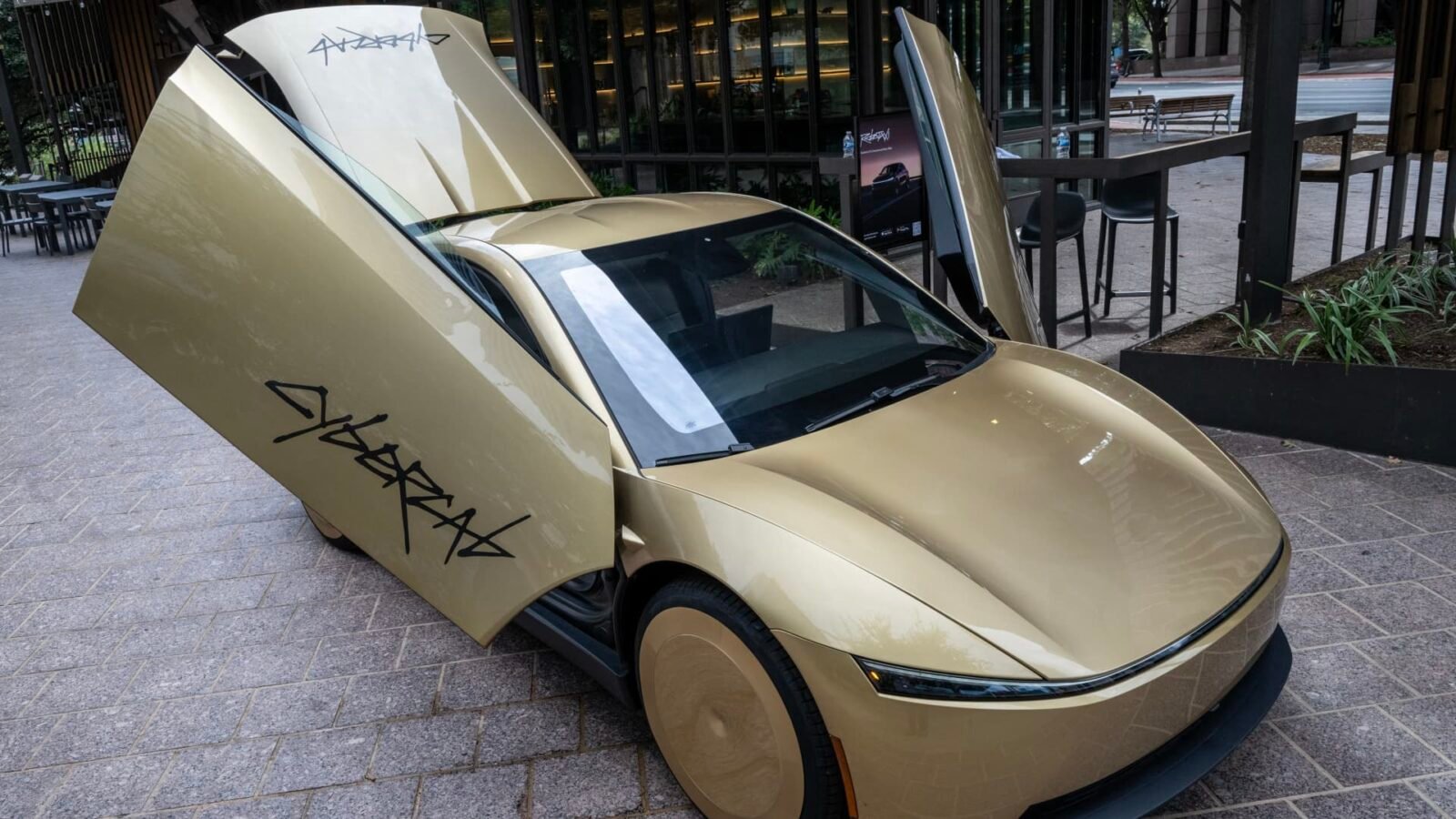
Launched with much fanfare on September 3rd, the Cybercab — a distinctive bronze vehicle devoid of steering wheel, pedals, or traditional mirrors — has elicited a spectrum of reactions from early paying passengers. Online forums and social media have been awash with mixed reviews, detailing frustratingly long wait times, inconvenient drop-off locations, and even technical snags with the vehicle’s unique butterfly doors and trunk mechanisms. While the concept promises a revolutionary urban transport experience, the initial rollout suggests a significant refinement period lies ahead.
The Stakes Are High: Reigniting Investor Confidence
The success of the Cybercab and the broader Robotaxi service is not merely about convenience; it’s a critical pillar in Tesla’s strategy to reinvigorate investor enthusiasm. The company’s shares have underperformed this year, dipping 18% and making it the sole megacap tech stock to post negative returns. Despite a recent uptick following better-than-expected Q3 deliveries, Tesla’s automotive revenue has seen consecutive annual declines. This slump is exacerbated by the rise of agile Chinese EV manufacturers like BYD and Xiaomi, who are capturing market share with more affordable and innovative models, forcing Tesla to increasingly rely on exports to Europe and Asia.
The Road Ahead: Navigating Competition and Regulation
Expanding beyond its Austin proving ground presents a multi-faceted challenge for Tesla, pitting it against established autonomous driving giants and a cautious regulatory landscape.
Waymo’s Head Start: A Formidable Rival
While Tesla navigates its early steps, Alphabet’s Waymo has already established a commanding lead in the autonomous ride-hailing sector. Operating in 15 U.S. markets with plans for 15 more, and eyeing international expansion in London, Tokyo, and Munich, Waymo boasts a robust fleet of 1,154 authorized autonomous vehicles in Texas alone, including 359 of its new user-friendly Ojai models. With over 4,000 driverless vehicles commercially active across the U.S., Waymo facilitates more than 500,000 paid rides weekly and has accumulated an impressive 270 million fully autonomous commercial driving miles domestically. This stark contrast underscores the monumental task facing Tesla.
Beyond Austin: Technical and Regulatory Hurdles
Austin has proven to be an attractive initial market for robotaxis, thanks to its relatively relaxed state regulations and a thriving tech community, also drawing in Amazon’s Zoox for testing. However, scaling beyond this environment means confronting a more complex regulatory landscape. The National Highway Traffic Safety Administration (NHTSA) has already initiated an “audit query” into the Cybercab’s compliance with federal safety standards, demanding responses from Tesla by an extended deadline. Beyond regulatory scrutiny, the technical issues highlighted by early users—from navigation precision to the functionality of its unique doors—must be ironed out for broader acceptance.
A Passenger’s Perspective: The Cybercab Experience
Ethan McKanna, an Austin resident and former Tesla intern, offers a nuanced view, having experienced all autonomous vehicle services in the city. McKanna, who tracks robotaxi performance via RobotaxiTracker.com, appreciates the Cybercab’s “own space” with its large screen and smooth drive quality. However, he notes that the “pick up, drop-off experience” still requires refinement, and the butterfly doors, while distinctive, are “less convenient” than conventional or sliding alternatives. His takeaway: patience is key for early adopters.
Conclusion: A Pivotal Moment for Tesla’s Robotaxi Dream
Tesla’s Cybercab represents a bold leap into the future of mobility, but its initial month in Austin serves as a stark reminder of the complexities inherent in deploying cutting-edge autonomous technology. As the company strives to overcome technical hurdles, navigate stringent regulations, and contend with formidable competitors like Waymo, the coming months will be pivotal in determining whether the Cybercab can evolve from an ambitious experiment into the cornerstone of Tesla’s next growth chapter, or if it will remain a niche offering struggling to find its footing on the global stage.
For more details, visit our website.
Source: Link







Leave a comment