



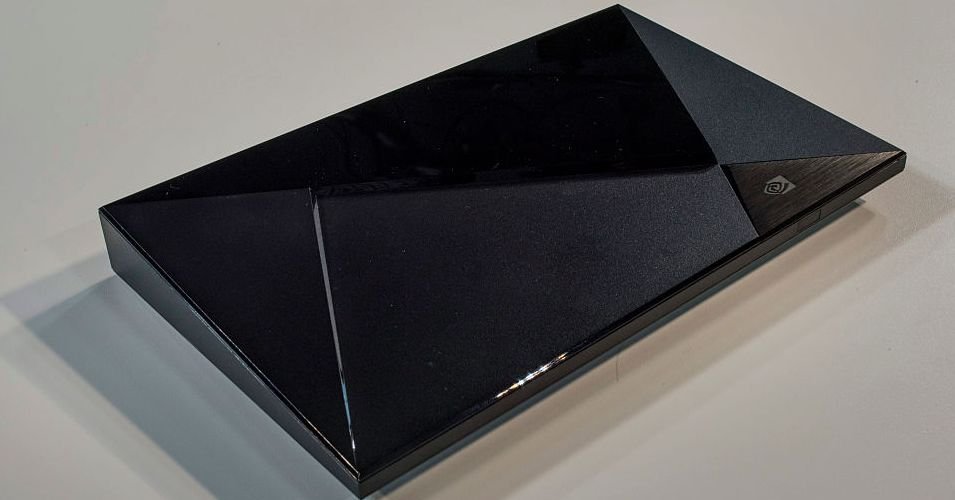

In an unexpected turn for a device considered a veteran in the streaming landscape, Nvidia has announced a significant price hike for its Shield TV Pro. Despite its most recent iteration debuting in 2019, making it a seven-year-old design, the acclaimed streaming box will now command an additional $100, effective immediately. This move elevates its price from $199.99 to a hefty $299.99, a decision Nvidia attributes directly to the seismic shifts in technology supply chains driven by the generative AI boom.
The Shield TV Pro: An Enduring Legacy Faces New Costs
The Nvidia Shield TV Pro has long been a favorite among media enthusiasts, lauded for its robust performance and extensive capabilities. Launched in 2019, it quickly established itself as a premium Android TV streamer, boasting advanced features like AI upscaling and comprehensive hardware decoding for a vast array of media formats. Even with its aging Tegra X1+ processor, the device’s speed and versatility remained unmatched for many, justifying its original $199.99 price tag (the non-Pro variant, once $149.99, has since been discontinued).
AI’s Unseen Hand in Component Pricing
Nvidia’s justification for the price adjustment is clear: the burgeoning demand for AI-related components. A company spokesperson confirmed to Ars Technica, “Starting October 2, SHIELD Pro will be priced at $299. The cost of components, including memory, has increased substantially across the industry.” This statement underscores a broader trend where the insatiable appetite for memory and storage, crucial for AI operations, is driving up prices across the entire tech sector, impacting even devices with established, older hardware.
Andrew Bell of Nvidia previously characterized the Shield as a “passion project,” a labor of love for the company. However, even passion projects must contend with economic realities. Bell revealed that Nvidia continues active manufacturing of the Shield, selling every unit produced. This continuous production cycle means new Shield TV units are not insulated by stockpiles of pre-AI hardware and are thus directly exposed to the same supply chain pressures affecting modern smartphones and computers.
Nvidia’s Dual Role: Innovator and Price Driver
It’s crucial to note that Nvidia isn’t merely a passive victim of these market forces. As a dominant force in AI hyperscaling, the company itself plays a significant role in the escalating cost of components. Nvidia’s market-leading AI accelerators and GPUs have propelled it to become one of the world’s most valuable firms. This position, while financially beneficial, also means the company is a primary driver of the very demand that inflates component prices.
Broader Market Impact: Gaming Consoles and Beyond
The ripple effect of these supply chain constraints and component price hikes is evident across the technology landscape. New products are launching at higher prices, and existing hardware, particularly in the gaming console sector, is seeing mid-lifecycle price adjustments. Nintendo, Microsoft, and Sony have all increased the prices of their current-generation consoles. A stark example is the PS5 Pro, which reportedly jumped from $699.99 at its 2024 launch to $899.99 today.
The Future of the Niche Shield TV Pro
For months, the Shield TV Pro has been difficult to find in stock, likely due to the unprofitability of manufacturing new units at the old price point amidst rising component costs. The new $300 price tag, while steep, will likely incentivize Nvidia to ramp up production. However, this increased cost is poised to make an already niche device even less attractive to the average consumer simply looking for a streaming solution for services like Netflix.
For most users, more affordable streaming sticks and boxes offer sufficient functionality. The Shield TV Pro’s premium price is now justifiable primarily for those who specifically require its extensive codec support for local media playback or its robust Plex server capabilities. While still out of stock on Nvidia’s official store, the device is now available at its new, higher price from retailers like Best Buy.
This evolving market dynamic highlights a critical shift: the cost of cutting-edge AI technology is permeating even the most established consumer electronics, forcing difficult decisions for manufacturers and consumers alike.
For more details, visit our website.
Source: Link





Leave a comment