




The Enduring Console vs. PC Debate: Value in a High-Stakes Era
In an age where cutting-edge gaming hardware demands a significant financial commitment, the perennial debate between console and PC gaming has never been more pertinent. With both new consoles and PC components reaching unprecedented price points, gamers are faced with a challenging choice: invest in a streamlined console experience or build a customizable, powerful PC rig. As Sony and AMD hint at the next generation of PlayStation GPU technology, understanding where current console power stands against its PC counterparts is crucial for making an informed decision.
The Elusive Equivalent: Matching PS5’s Power to NVIDIA GPUs
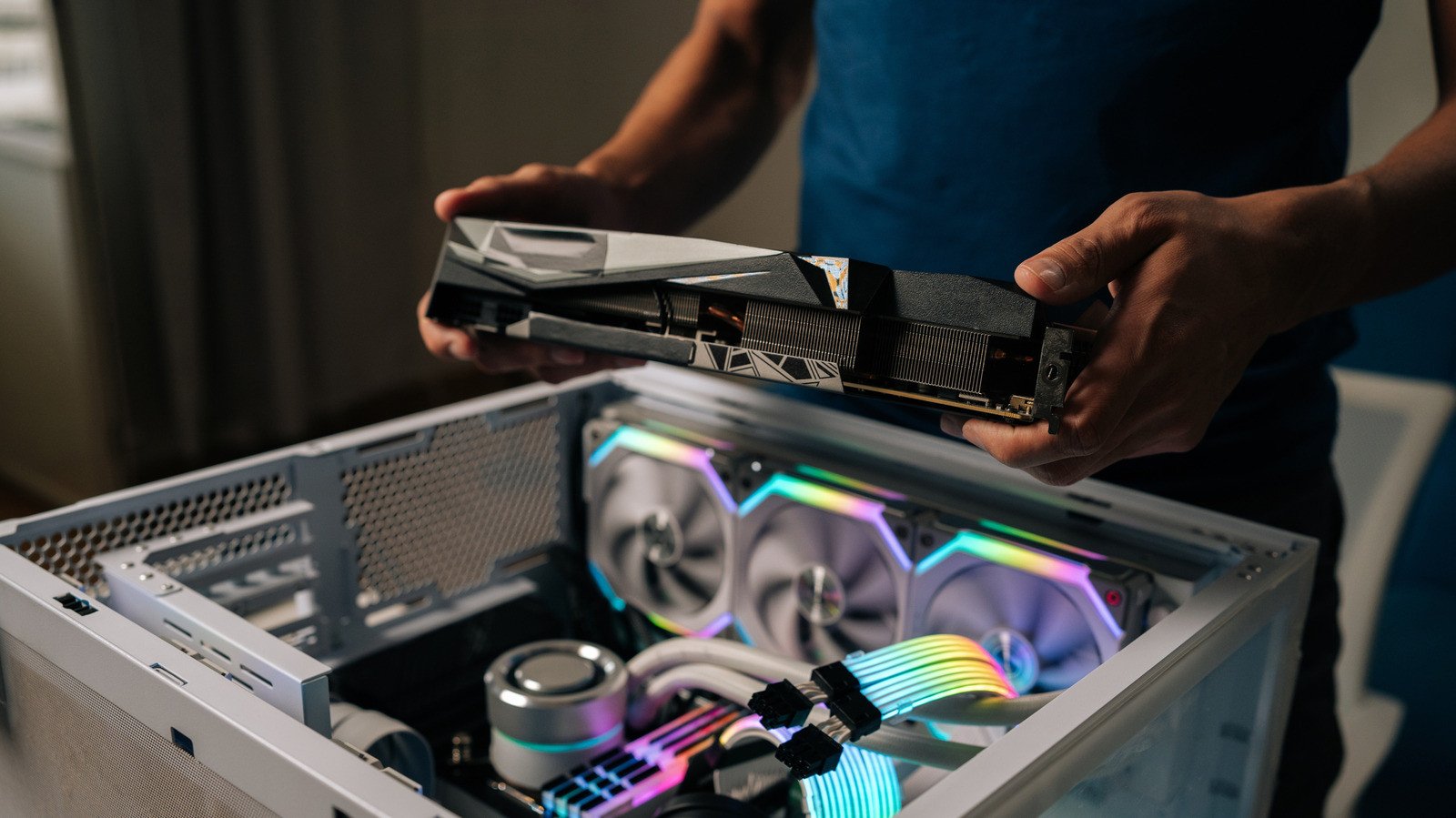
Pinpointing a direct NVIDIA GPU equivalent for the PlayStation 5 is akin to comparing apples and oranges. The PS5, much like the Xbox Series X, utilizes an Accelerated Processing Unit (APU) — a single chip that seamlessly integrates both GPU and CPU tasks. This unified architecture allows for highly optimized performance, making a direct, one-to-one comparison with discrete PC graphics cards inherently complex.
The NVIDIA RTX 2070 Super: A Baseline for the Base PS5
According to the meticulous analysis by Digital Foundry, the NVIDIA RTX 2070 Super stands out as the closest match to the base PS5’s graphical capabilities. Launched in 2019, this card is now three generations old, yet its performance profile aligns remarkably well with the PS5 under optimal conditions. However, the market dynamics of 2026 present a peculiar situation: despite its age, the 2070 Super can still command around $280 on the second-hand market, representing roughly 53% of a $600 PS5 Digital Edition.
It’s important to note the memory disparity: while the 2070 Super features 8GB of GDDR6 memory, the PS5 boasts 16GB of system-wide GDDR6 unified memory. This difference in memory architecture and accessibility further complicates direct performance comparisons, as console developers can leverage unified memory more efficiently for specific tasks.
Stepping Up to the PS5 Pro: What PC Hardware Competes?
The arrival of the PS5 Pro, with its custom AMD Zen 2 8-core/16-thread “Trinity” APU, elevates the discussion. While offering a significant boost in GPU performance over the standard PS5, its CPU improvement is a more modest 10 percent. This means that even with Sony’s PSSR (PlayStation Spectral Super Resolution) technology, some Pro titles might still fall short of the mid-range PC performance expectations one might have for a system that launched at $700 and now commands an inflated $1,250 amidst shortages.
The RTX 5060 and Beyond: Pro-Level PC Performance
For those seeking PC hardware that rivals the raw horsepower of the PS5 Pro, the 16GB NVIDIA RTX 5060 Ti model and AMD’s Radeon RX 9060 XT emerge as strong contenders. The fifth-generation NVIDIA GeForce RTX 5060, a lower-end Blackwell GPU supporting the controversial DLSS 5, was a popular choice in September 2026, though finding it for under $500 can be a challenge. With the right settings and a capable gaming CPU, these PC cards can indeed outgun Sony’s prosumer console.
However, the PS5 Pro’s undeniable appeal lies in its simplicity. For many, the user-friendly nature of a $900 machine (its current market value, despite the inflated $1,250 price tag due to shortages) that promises to deliver titles like GTA VI in the best possible fashion, without the complexities of PC building and tweaking, remains a compelling advantage.
The Console Advantage: Optimization and Ecosystem
Ultimately, comparing open-ended PC setups to closed-source console hardware is an inherently unfair proposition. The PS5’s custom AMD RDNA 2 GPU, working in tandem with its CPU on a single chip, represents a highly optimized, fixed platform. This allows developers to achieve remarkable results — routinely hitting 60 FPS, supersampling, and near-4K visuals on both the base PS5 and PS5 Pro — through incredibly canny optimization tailored specifically for that hardware. This level of dedicated optimization is a key differentiator, often allowing consoles to punch above their perceived weight when compared purely on raw specifications.
While the PC offers unparalleled flexibility and the potential for bleeding-edge performance, the console provides a curated, plug-and-play experience that continues to hold immense value for a vast segment of the gaming community. The choice, as ever, depends on individual priorities: raw power and customization, or optimized simplicity and value.
For more details, visit our website.
Source: Link







Leave a comment