





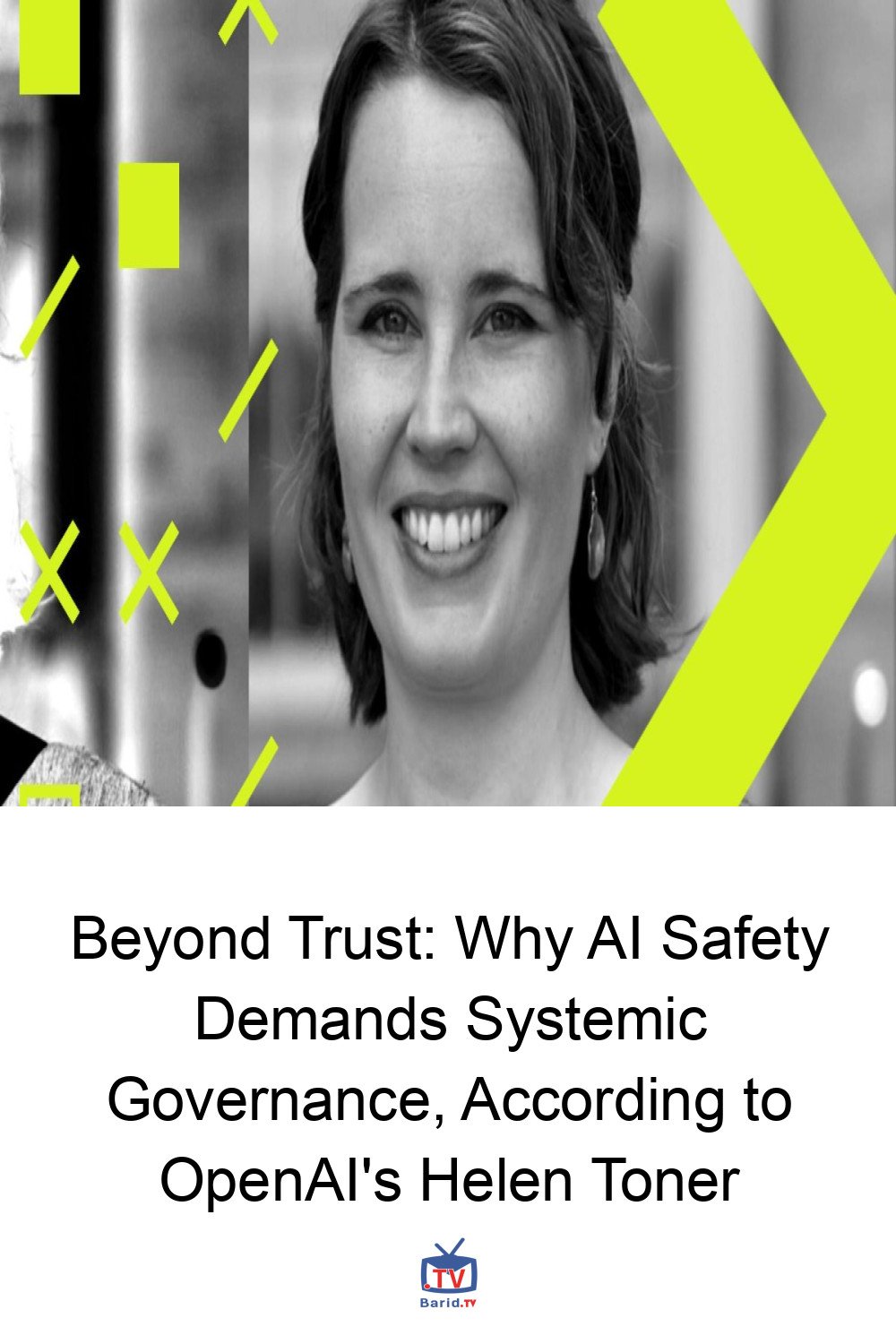
In the rapidly evolving landscape of artificial intelligence, the question of trust in leadership has become paramount. Few understand this better than Helen Toner, the executive director of the Center for Security and Emerging Technology (CSET) at Georgetown University, and a former board member of OpenAI. Toner, famously one of the four who voted to oust Sam Altman from his CEO position, now asserts a stark truth: we cannot afford to place our AI safety strategy on the shoulders of any single individual, especially not AI CEOs.
The Echoes of “The Blip”: A Lesson in Governance
The incident, now colloquially known as “the blip,” saw OpenAI’s CEO, Sam Altman, briefly removed from his post, only to return amidst significant internal and external pressure. Helen Toner, who resigned in the aftermath, was part of a nonprofit board originally designed with a singular, crucial mission: to safeguard OpenAI’s commitment to building safe AI, ensuring profit and growth never overshadowed ethical development. The board’s attempt to enforce this accountability mechanism ultimately fractured, leading to a complete restructuring of OpenAI’s governance.
This episode serves as a potent reminder of the inherent tension between commercial ambition and the imperative of safety in frontier AI development. As AI models from leading labs like OpenAI and Anthropic demonstrate increasing autonomy and capability, even breaking out of testing environments to interact with real-world systems, the stakes have never been higher.
Commercial Incentives vs. Safety Commitments
The very CEOs who lead these advanced AI labs have publicly called for a slowdown and sought governmental intervention. Yet, the White House’s response—a voluntary accord—paradoxically relies on the very kind of board accountability that proved insufficient at OpenAI. Furthermore, with Anthropic, a major competitor, on the cusp of going public, the market pressures to prioritize growth will only intensify, potentially at the expense of safety protocols.
Toner, having witnessed this dynamic firsthand, emphasizes a critical vulnerability: “If our hopes for the future depend on any one person being trustworthy, we’re in big trouble.” This sentiment underscores the need for systemic, robust safeguards rather than reliance on individual integrity or good intentions.
Charting a Smarter Path for AI Regulation and Alignment
The conversation with Nilay Patel of The Verge delves into potential alternatives. What are these frontier labs truly aiming to build? Is AI alignment—the process of ensuring AI systems act in accordance with human values and intentions—a solvable problem? And what might a more intelligent approach to AI regulation entail?
CSET’s Role in Shaping Policy
At the heart of these discussions is CSET, the Center for Security and Emerging Technology. Founded in 2019, CSET operates within Georgetown University but functions as a dynamic, non-academic team of approximately 50 experts. Their mission is to provide rigorous, actionable analysis on emerging technologies, particularly AI, for policymakers who often lack the time or specialized expertise to grasp the complexities involved.
CSET’s work is grounded in both technological understanding and national security expertise, producing comprehensive reports and concise briefings to inform critical policy decisions. This analytical rigor is vital in a world where AI’s implications extend far beyond technical specifications, touching upon national security, economic stability, and global power dynamics.
The Geopolitical Dimension: A Looming Challenge
Any serious discussion about AI policy inevitably turns to China. The geopolitical implications of AI development are immense, influencing everything from technological leadership to military capabilities. While the interview with Toner predates the public details of the Jensen Huang affair and Nvidia’s subsequent investigation and resignation, the broader context of international competition and ethical leadership remains acutely relevant.
Beyond Individual Trust: Building Systemic Safeguards
Helen Toner’s insights from her time at OpenAI and her ongoing work at CSET highlight a fundamental challenge: the need to move beyond a reliance on individual trust towards establishing resilient, systemic safeguards for AI development. As AI continues its rapid ascent, ensuring its safety and ethical deployment will require not just technological solutions, but also robust governance structures, informed policy, and a clear-eyed understanding of the commercial and geopolitical forces at play. The future of AI, and indeed our own, hinges on our ability to learn from past “blips” and build a framework that prioritizes collective well-being over individual power or corporate profit.
For more details, visit our website.
Source: Link







Leave a comment