




The desert holds an undeniable mystique, a vast canvas where the ordinary fades, replaced by an expansive sky and a profound silence. In the American Southwest, home to four distinct desert ecosystems spanning California, Utah, New Mexico, and beyond, a new breed of hospitality has emerged. These aren’t just hotels; they are meticulously crafted experiences that don’t compete with the dramatic landscapes outside their windows, but rather, frame them, inviting guests to become part of the desert’s timeless narrative.
Choosing your desert sanctuary is paramount. A truly exceptional property transforms a mere stay into an immersive journey, offering vistas of majestic slot canyons, towering rock formations, fragrant lavender fields, and night skies so dark the Milky Way becomes a guiding beacon. The most celebrated desert accommodations collaborate with their environment, designing amenities, sightlines, and programming that celebrate the existing natural grandeur. Imagine a drive-in cinema under a canopy of stars, an Airstream nestled beside a canyon-carving river, or a saltwater pool reflecting a 10,000-foot mountain range – these are the moments that define a desert escape.
Michelin-Approved Desert Retreats
The hotels featured in this exclusive selection, recognized by the prestigious Michelin Guide, represent the pinnacle of desert hospitality across California, New Mexico, and Utah. They are lauded for their innovative design, breathtaking settings, and unparalleled access to the Southwest’s most spectacular natural wonders.
Pioneertown Motel: Where Hollywood History Meets High Desert Charm
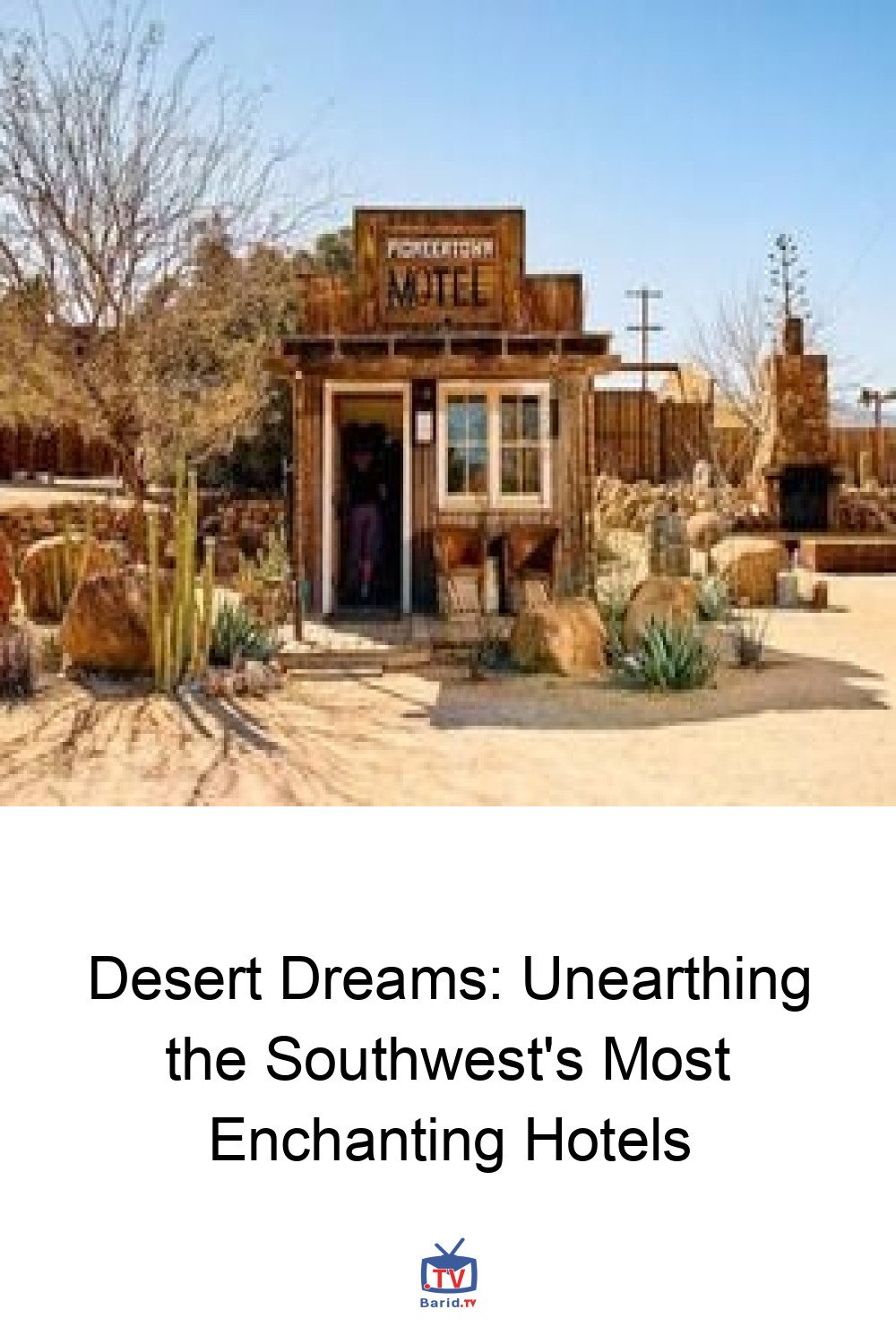
Step back in time at the Pioneertown Motel in Pioneertown, California, a destination born from the golden age of Hollywood Westerns. Established in the 1940s, this unique town was purpose-built as a permanent film set, a visionary project by an actor eager to bring the Wild West to life without the logistical nightmares of remote filming. Over 50 Westerns were shot on its dusty streets, and legends like Gene Autry once played poker in Room Nine. The town’s main thoroughfare, aptly named Mane Street, hints at the playful mythology woven into its very fabric.
While the Western genre eventually rode off into the sunset, Pioneertown’s spirit endured. A thoughtful renovation breathed new life into the motel and its surroundings, transforming it into a coveted destination in its own right. Today, it retains its authentic film-set aesthetic – weathered wooden buildings, a creaking signpost, and the profound silence of the high desert – yet offers modern comforts. The atmosphere that once drew filmmakers remains, now enhanced for discerning travelers seeking an escape from the ordinary.
Beyond the motel’s historic walls, adventure beckons. Just 30 minutes away lies Joshua Tree National Park, offering unparalleled hiking amidst California’s most distinctive desert landscapes. As evening descends, the Red Dog Saloon and Pappy and Harriet’s, once film interiors, now pulse with live music, attracting international acts en route to the Coachella music festival. Pioneertown offers a rich tapestry of film history, desert exploration, and vibrant nightlife, making it a destination that truly rewards an extended stay.
Los Poblanos Historic Inn: A Verdant Oasis in the High Desert
In the heart of Albuquerque, New Mexico, along the fertile Rio Grande River Valley, lies Los Poblanos Historic Inn and Organic Farm. Spanning 25 acres, this remarkable property is a vibrant testament to agricultural abundance, set against the stark beauty of the high desert. Fields of fragrant purple lavender, majestic cottonwood trees, and flourishing kitchen gardens create a lush, irrigated haven, a striking contrast to the arid landscape beyond its borders. The experience of strolling through these vibrant lavender fields, with the majestic Sandia Mountains gracing the horizon, is truly unforgettable.
Los Poblanos also boasts significant architectural heritage. Its buildings are the work of John Gaw Meem, widely regarded as New Mexico’s most influential architect, whose designs were instrumental in defining the regional Pueblo Revival style.
For more details, visit our website.
Source: Link







Leave a comment