



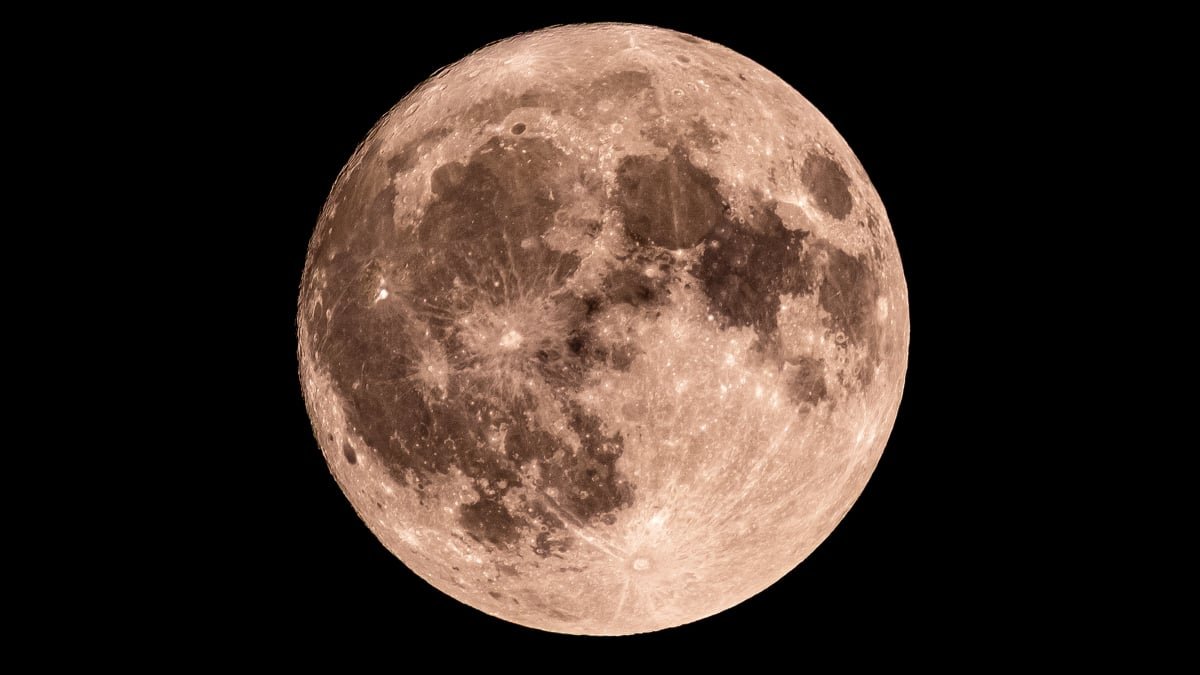

The night sky holds a timeless fascination, and perhaps no celestial body captures our imagination quite like the Moon. Constantly shifting its appearance, our nearest cosmic neighbour offers a dynamic spectacle for observers worldwide. On September 18, 2026, sky-gazers will be treated to a classic lunar display as the Moon enters its First Quarter phase, a perfect opportunity to explore its rugged beauty.
The Lunar Gaze on September 18, 2026
As we look towards September 18, 2026, the Moon will be precisely in its First Quarter phase. At this point, approximately 45% of its surface, as seen from Earth, will be bathed in sunlight. This particular phase is ideal for observation, as the terminator line (the boundary between light and shadow) casts dramatic relief across lunar features, making them stand out.
What to Spot in the Night Sky
Even without specialized equipment, the First Quarter Moon offers a stunning view. With the naked eye, you should be able to clearly distinguish prominent features such as Mare Crisium, the ‘Sea of Crises’, a large basin on the eastern limb; Mare Serenitatis, the ‘Sea of Serenity’, a vast lunar mare; and Mare Fecunditatis, the ‘Sea of Fecundity’.
For those with a pair of binoculars, the lunar landscape reveals even more detail. You’ll be able to discern craters like Endymion and Posidonius, along with the expansive Mare Nectaris, the ‘Sea of Nectar’. The increased magnification brings these ancient scars and plains into sharper focus, enhancing the viewing experience.
Amateur astronomers with access to a telescope will unlock an extraordinary level of detail. Beyond the craters and maria, a telescope can bring into view the historic Apollo 11 and 17 landing sites, allowing you to trace humanity’s footsteps on another world. Additionally, features like the impressive escarpment of Rupes Altai will become visible, showcasing the Moon’s complex geological history.
Understanding the Moon’s Ever-Changing Face
The Moon’s appearance doesn’t remain constant; it cycles through a series of phases over roughly 29.5 days. This celestial ballet occurs as the Moon orbits Earth, and we observe varying portions of its sunlit surface. The specific phase we see is a direct result of the Moon’s position relative to both Earth and the Sun, creating a gradual progression from a slender crescent to a full, luminous disk, before the cycle begins anew.
The Eight Distinct Phases of the Moon
- New Moon: Positioned between Earth and the Sun, the side facing us is unlit, rendering the Moon invisible to the naked eye.
- Waxing Crescent: A delicate sliver of light emerges on the right side (for observers in the Northern Hemisphere), gradually growing larger.
- First Quarter: Half of the Moon’s face is illuminated on the right side, appearing as a perfect half-circle. This is the phase we anticipate on September 18, 2026.
- Waxing Gibbous: More than half of the Moon is lit, but it hasn’t yet reached full illumination, continuing to grow.
- Full Moon: The entire lunar disk is fully illuminated and visible, a spectacular sight.
- Waning Gibbous: The Moon begins to lose light from its right side (Northern Hemisphere), gradually shrinking from its full state.
- Third Quarter (or Last Quarter): Another half-Moon, but this time the left side is illuminated.
- Waning Crescent: A thin, diminishing sliver of light remains on the left side before the Moon once again becomes a New Moon.
Looking Ahead: The Next Full Moon
For those eagerly awaiting the Moon’s full glory, mark your calendars: the next Full Moon will grace our skies shortly after the First Quarter, on September 26. This will offer another prime opportunity for lunar observation, albeit with different features highlighted by the direct sunlight.
Whether you’re a seasoned astronomer or a casual observer, the Moon’s phases offer a continuous source of wonder and a tangible connection to the cosmos. Take a moment on September 18, 2026, to look up and appreciate the intricate dance of our celestial companion.
For more details, visit our website.
Source: Link








Leave a comment