




Microsoft CEO Satya Nadella: AGI-Pilled, But Wary of Monopoly
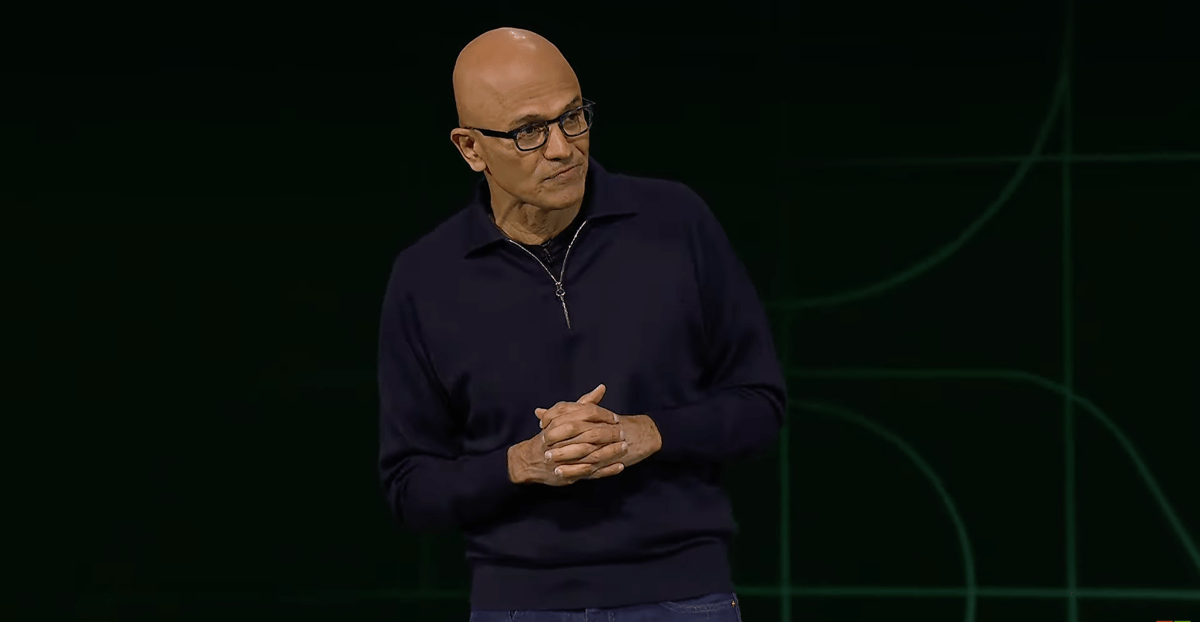
In a candid and thought-provoking discussion following his Microsoft Ignite keynote, CEO Satya Nadella revealed he is now "AGI-pilled." This isn’t a declaration of belief in sentient machines, but rather a profound conviction about Artificial General Intelligence’s potential to fundamentally reshape global economies and political landscapes. While embracing the transformative power of AI, Nadella also issued stark warnings about the existential threats posed by unchecked centralization and monopolization of this nascent technology.
The Economic and Political Implications of AGI
Nadella articulated his "AGI-pilled" stance by questioning the very organization of the "political economy’s organization around AGI." His concerns extend far beyond typical tech industry competition, delving into the potential for societal collapse. "If the Marxist sort of view is that there’s only one firm, then it’s over, right? For all of us," he declared, painting a grim picture where a single dominant AI entity could dismantle democratic structures and economic diversity.
He emphasized that AI models are not bound by traditional industry silos. "The model has no limits. It’ll be a healthcare company. It can be a financial services company. It can be anything if it wants to be. It can take over the government," Nadella warned. He criticized the "strangest, narrowest ways to think about it" that reduce AI development to a race for market capitalization among tech giants, arguing that the stakes are far higher.
Consciousness vs. Capability: A Pragmatic Stance
Despite his "AGI-pilled" outlook on societal impact, Nadella remains grounded on the question of AI consciousness. He explicitly stated he does not believe frontier models like Claude are conscious, aligning with Microsoft AI CEO Mustafa Suleyman’s view. Suleyman advocates against granting moral status or rights to AI models, a principle that contrasts with approaches taken by companies like Anthropic. Nadella, while open to debate, stressed that the immediate priority is ensuring broad diffusion of the technology, not philosophical discussions about AI rights.
The Future of the Firm and Human Capital
Nadella pondered the very essence of corporate structures in an AGI-driven world. "If intelligence has network effects, what is the future of a firm?" he asked. He raised the provocative idea that if AI models can learn anything and "all of human capital collapses into token capital," the traditional roles of firms and human labor could become obsolete. This scenario, he argued, would lead to an economy devoid of labor, making democratic governance impossible. "No one — at least in a democracy — can even win an election if this just goes that way, if there’s only capital and there’s no labor," he asserted.
Microsoft’s Vision: Decentralization and Diverse Models
Amidst these profound warnings, Nadella also presented Microsoft’s strategy to mitigate the risks of AI centralization. At Ignite, Microsoft promoted tools that allow enterprise clients to select cost-effective models, run their own AI, and maintain control over their data. This approach champions a decentralized ecosystem, where "the market will demand many different kinds of models and sovereign data in order to keep control from centralizing." Nadella concluded, "If you believe that the world, the economy needs more than one firm or two firms, then by definition there need to be as many models as firms of some sort."
Nadella’s discourse marks a significant departure from typical tech CEO rhetoric, shifting the conversation from product launches to the fundamental societal questions posed by advanced AI. His vision underscores a future where the organization of AI will dictate the future of our economies, politics, and perhaps, democracy itself.
For more details, visit our website.
Source: Link








Leave a comment