



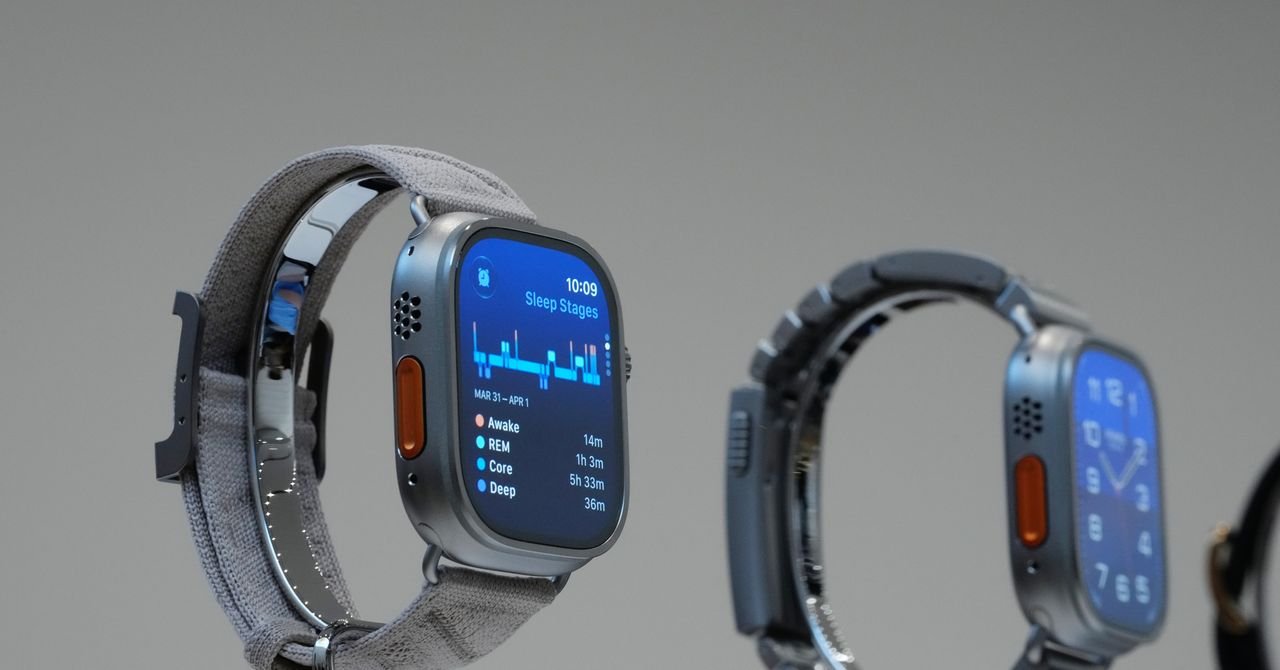

Since its grand debut in 2022, the Apple Watch Ultra has carved out a niche as Apple’s formidable, heavy-duty smartwatch. Clad in robust titanium and packed with an array of emergency features, it offers a sense of preparedness that standard smartwatches simply can’t match. Yet, as each generation rolls out, the Ultra largely adheres to its established formula, and the latest Ultra 4 is no exception. While incremental improvements are always welcome, a recent hands-on comparison with the new Apple Watch Series 12 reveals a surprising truth: the divide between Apple’s premium rugged watch and its mainstream counterpart is narrowing.
The Shrinking Divide: Ultra 4 vs. Series 12
After extensive testing of both the Ultra 4 and the Series 12, it’s evident how little truly separates these two impressive devices. The once-distinct gap appears to shrink with each annual release, making the Ultra 4’s $799 price tag a harder justification for many. The Series 12 now boasts many of the Ultra 4’s advanced health and safety capabilities, leaving the Ultra’s primary differentiators—its multi-day battery, dedicated Action button, and satellite messaging—as features primarily appealing to those who genuinely venture off the grid.
This evolution positions the Ultra 4 as an increasingly specialized device. Its benefits are undeniable for dedicated trail runners, professional divers, or anyone frequently operating beyond cellular reach. However, for users whose primary needs revolve around daily health tracking, workout monitoring, and managing everyday tasks, the Series 12 delivers a remarkably similar core experience for a significant $400 less. For existing Ultra owners, the Ultra 4 offers little compelling reason to upgrade, instead serving as a testament to the enduring value of their current generation. While the price remains consistent, new finishes are notably absent.
Enhanced Health Sensing: A Deeper Look
The Ultra 4 inherits the same cutting-edge Health Sensing System as the Series 12, powered by Apple’s swift S11 chip and enhanced optical and electrical heart rate sensors. This sophisticated system now captures heart rate data every five seconds throughout the day and measures heart rate variability (HRV) as frequently as every five minutes—a staggering 24-fold increase over its predecessor. It further refines HRV tracking by logging two distinct variants: Recovery HRV, designed to pinpoint daily stressors, and overall HRV, offering a broader cardiovascular context.
While both new Apple Watches benefit from this high-frequency tracking, it holds particular significance for those considering the Ultra as a dedicated fitness companion. The Ultra 4 now provides an exceptionally comprehensive overview of your body’s recovery processes and its responses to daily stressors. The ‘Overnight Vitals’ feature intelligently compares your Recovery HRV against your personalized baseline, while a new daytime view allows for insightful comparisons between your day and overnight metrics.
Introducing Readiness: Your Daily Performance Compass
Perhaps the most compelling new wellness feature is ‘Readiness.’ This innovative metric synthesizes recent activity, sleep patterns, and vital signs to generate a daily score ranging from 0 to 10. Accompanying this score is one of four actionable recommendations: Recover, Pace Yourself, Ready, or Go For It. The score dynamically updates throughout the day, reacting to new information such as a workout or changes in daytime vitals. To establish a reliable baseline, users must wear the watch to bed for at least seven consecutive nights. As a reviewer, I’ve only had a Readiness score for two days, and I look forward to reporting on its long-term utility after a month of consistent use.
For outdoor adventurers and endurance athletes, the Readiness score can serve as an invaluable “gut check,” helping to determine whether to push boundaries or opt for a lighter day. Its appeal lies in its attempt to transform complex health data into clear, actionable guidance. However, it’s crucial to remember that Readiness is a wellness metric with inherent limitations; it doesn’t account for every physiological factor and should not be the sole determinant for exercise safety. Personally, I find Readiness scores most effective for identifying long-term patterns rather than as a strict daily directive for my workouts.
It’s also worth noting that some of the Ultra 4’s most intriguing software enhancements, such as Audio Intelligence features (Live Rewind and Siri Recap) and a redesigned Health app with longevity insights, are slated for release later this year, not at launch.
Unmatched Endurance: Battery Life That Goes the Distance
Where the Ultra 4 truly distinguishes itself from both its predecessor and the Series 12 is in its exceptional battery life. Apple has significantly boosted the Ultra 4’s endurance, offering up to 50 hours of normal use—a notable increase from the Ultra 3’s 42 hours. Engaging Low Power Mode extends this even further, reaching an impressive 84 hours, up from 72 hours. This robust battery is also optimized for extended athletic pursuits, providing up to 18 hours of standard workout tracking, 25 hours in Extended mode, and a remarkable 45 hours in Max Extended mode.
Charging speed has also seen an improvement; a mere fifteen minutes on the charger can now replenish up to 18 hours of battery life. These enhancements collectively position the Ultra 4 as the superior choice for multi-day hikes, remote camping expeditions, and demanding endurance sports, solidifying its role as the ultimate companion for the truly adventurous.
For more details, visit our website.
Source: Link







Leave a comment