




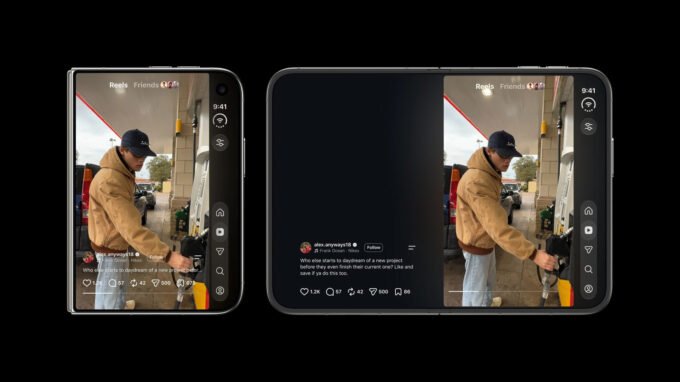
The Apple iPhone Duo, a device pushing the boundaries of foldable technology, is set to become significantly more intuitive with the introduction of a new face unlock feature. While not the full-fledged Face ID found on other iPhones, this streamlined biometric authentication promises a quicker, more comfortable user experience, addressing a key pain point for early adopters.
A Glimpse into the Future: Face Unlock Arrives for iPhone Duo
For years, Apple’s Face ID has set the gold standard for secure and seamless facial recognition. However, the innovative, foldable architecture of the iPhone Duo presented a unique challenge, preventing the integration of the complete Face ID sensor array. This left users relying solely on Touch ID, a method many found cumbersome for a device designed for cutting-edge convenience.
Dominic Preston, a seasoned news editor with over a decade in journalism, highlights how this new development, currently in testing, dramatically improves the Duo’s usability. “Even with a few Apple-imposed security limitations, it makes the Duo quicker and more comfortable to use than relying on Touch ID every time,” Preston notes, marking a significant step forward for the device.
Simplified Setup, Enhanced Convenience
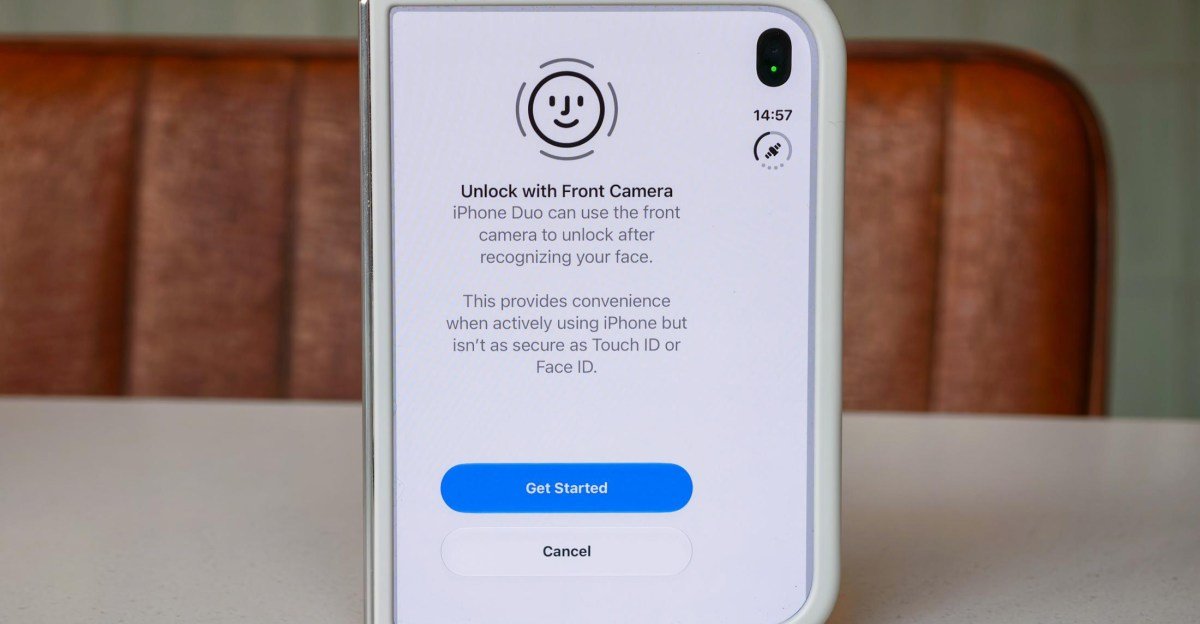
The latest developer beta of iOS 27.3 unveils the “Unlock with Front Camera” option, a feature Apple carefully distinguishes from its more robust Face ID. Setting it up is remarkably straightforward: instead of the circular head rotations required for Face ID, users simply turn their head left, right, up, and down. This quick, five-second process, which Preston even managed on a moving London bus, immediately underscores its user-friendly design.
Once configured, the new face unlock delivers on its promise of convenience, granting access to the device in a mere half-second. This swift authentication eliminates the need to fumble for the fingerprint sensor, making daily interactions with the iPhone Duo noticeably smoother.
Navigating the Security Landscape: A Pragmatic Approach
Apple is transparent about the security implications of this new system. During setup, users are informed that it “isn’t as secure as Touch ID or Face ID” due to the absence of the infrared depth mapping provided by TrueDepth cameras. This means the system could potentially be spoofed with a high-quality photograph or video clip.
However, Apple has implemented intelligent safeguards. Preston’s tests revealed that while a spoof was possible, it was difficult to achieve consistently. Crucially, after each failed attempt to trick the system with a photo, the phone mandated Touch ID for the subsequent login. This design choice ensures that any would-be intruder would need to successfully spoof the system on their very first attempt, significantly raising the bar for unauthorized access.
Performance in low-light conditions, often a weakness for camera-based face unlock systems, also exceeded expectations. While extreme darkness eventually caused failures, the system proved surprisingly resilient, requiring truly obscure environments for it to falter.
Understanding the Restrictions: Where It Falls Short
To balance convenience with security, Apple has imposed several limitations on the new face unlock. Its utility is primarily confined to unlocking the phone from the lockscreen. For more sensitive actions, such as authorizing Apple Pay transactions, installing new applications, or logging into apps requiring security credentials, users will still need to revert to Touch ID or a passcode. This mirrors the functionality of most Android phones offering camera-based face unlock, with Google’s Pixel phones being a notable exception due to proprietary software enhancements that bolster their system’s security for purchases and app logins.
Perhaps the most “annoying” limitations, as Preston describes them, pertain to its operational window and inner screen compatibility. The face unlock feature remains active for only 45 minutes at a time, after which a Touch ID or passcode verification is required for the next unlock. Furthermore, it completely bypasses the inner screen’s under-display selfie camera. While Apple hasn’t provided an official reason, it’s presumed that the lower resolution and quality of this particular camera rendered it unsuitable for reliable facial recognition.
A Step Forward: Apple’s Responsiveness to User Feedback
Despite these caveats, the overall sentiment is overwhelmingly positive. The iPhone Duo, with its new face unlock, already feels “more comfortable to use,” allowing for direct access without the previous fumbling for the fingerprint sensor. This seemingly minor addition represents a significant improvement in the daily user experience and signals Apple’s willingness to adapt its vision based on feedback from its early adopters.
Currently, the feature is exclusive to the developer beta, but a public beta release is anticipated within days, with a full launch expected alongside iOS 27.3 in December. The success of this implementation on the iPhone Duo inevitably sparks a broader question: could similar, albeit perhaps limited, face unlock options eventually make their way to other Apple devices like MacBooks and iPads, further enhancing the seamless Apple ecosystem?
For more details, visit our website.
Source: Link




Leave a comment