
“Uncertainty is the only certainty there is, and knowing how to live with insecurity is the only security.” —John Allen Paulos
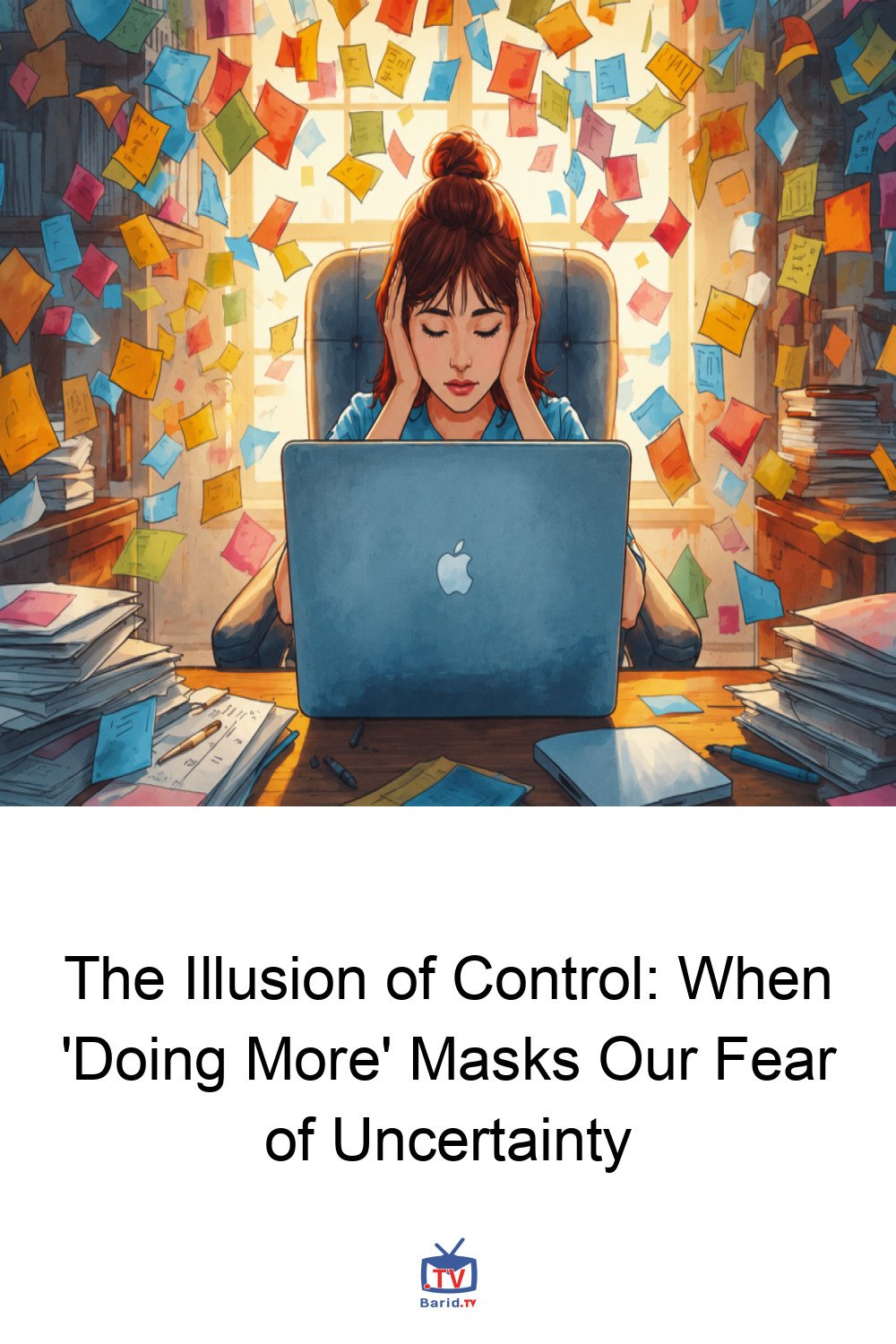
In our relentless pursuit of perfection and predictable outcomes, many of us fall into a subtle trap: the belief that by simply doing more, we can somehow wrestle control from the unpredictable hands of fate. This often manifests as an endless cycle of checking, re-checking, and over-analyzing, long after the actual work is done. I recently found myself caught in this very loop, refreshing analytics pages, re-reading project briefs, and testing buttons, all within minutes of having done the same. My body was tense, my eyes dry, yet I continued this frantic dance between screens, as if one might miraculously reveal the next crucial step.
The Compulsion to Control
The evening’s work was complete. All critical functions were operational, and no immediate decisions loomed. Yet, the thought of closing my laptop felt akin to an act of negligence. I rationalized it as ‘thoroughness’ – a diligent effort to catch minor errors, gather early feedback, or preempt future problems. These justifications sounded perfectly sensible until I confronted the uncomfortable truth: my checking had lost its purpose. I was circling the work not to improve it, but because I couldn’t control what happened after I let it go.
The Brief Respite of Activity
Each visit to the dashboard offered a fleeting sense of involvement, a momentary reprieve from the gnawing uncertainty. But the feeling was ephemeral, quickly replaced by the familiar unease. My response? To find yet another detail to scrutinize. This pattern emerged whenever I deeply cared about an outcome that required the passage of time. I’d scour for advice, second-guess decisions already made, and compare my progress to others whose circumstances I barely understood. By the tenth open tab, it still felt like the first, holding the elusive answer I sought. These sessions rarely yielded genuine insight; I merely scanned for evidence of oversight or the promise of a magical, minor tweak.
Beyond Self-Awareness: Interrupting the Pattern
I’ve always considered myself quite self-aware, capable of identifying my own perfectionism, impatience, and need for reassurance. Years of introspection had equipped me with a rich vocabulary to describe my behavioral patterns. But that evening, my vocabulary hit its limit. I could articulate precisely why I was checking, yet my hand still gravitated towards the refresh button. Understanding the habit had become a comfortable substitute for actually interrupting it.
The Reckless Act of Waiting
With my hand poised on the trackpad, a profound question surfaced: what would I do if I simply accepted that certainty was unattainable? The answer was immediate and clear: I would close the laptop and wait. My body recoiled, interpreting waiting as a reckless gamble. My mind swiftly constructed a counter-argument: there were still details to review, other people were probably working harder, and the outcome mattered to me. Each thought held enough truth to mask the underlying reality: my effort had ceased to improve the work; it was now solely a mechanism for managing my anxiety. Activity provided a conduit for uncertainty, transforming it into reading, checking, adjusting, and measuring.
Embracing the Dark Screen
I closed the laptop. No immediate wave of relief washed over me; my mind continued its relentless review of potential flaws. A few minutes later, heading to the kitchen for water, I almost reopened the computer upon my return. It was in that moment I grasped the profound necessity of the checking: it gave me something to do when I felt utterly powerless. Leaving the screen dark meant confronting and accepting the limit of my evening’s effort.
I sat beside the closed laptop, my mind still offering compelling reasons to resume. Nothing dramatic unfolded. The discomfort didn’t vanish on command. The evening simply progressed, devoid of another dashboard visit. The next morning, the project remained. No disaster had struck, the numbers were modest but stable, and the work had survived hours without my direct supervision. This experience wasn’t a sudden transformation, but it made the pattern undeniably harder to ignore.
The Question That Changes Everything
Days later, I found myself slipping back. One analytics tool led to another, and I was on the verge of seeking an explanation for a change too minuscule to hold any real significance. My chest tightened, and I realized I was reading without truly absorbing the words. I stopped, and instead of seeking more information, I asked myself: “What new information do I actually expect to find?” A clear answer never materialized, so I closed the browser. This simple question proved far more potent than any elaborate explanation of my behavior.
Productivity vs. Anxious Activity
A genuinely productive task typically has a describable outcome. Anxious work, however, perpetually expands because its true purpose is relief, not progress. Every ‘answer’ merely begets another uncertainty, keeping completion forever just out of reach. My body often recognized this distinction before my conscious mind did. Useful work, even if tiring, usually left me feeling settled upon completion. Nervous activity, conversely, scattered my attention and made the idea of stopping feel dangerous. Some evenings, I pushed through until exhaustion. Other times, I closed the laptop while the urge to check remained strong, opting instead to make tea, read something unrelated, or simply sit quietly while my mind tried to pull me back. These deliberate pauses, though often challenging, were the true acts of reclaiming control – not over the outcome, but over my own anxious response to uncertainty.
For more details, visit our website.
Source: Link