

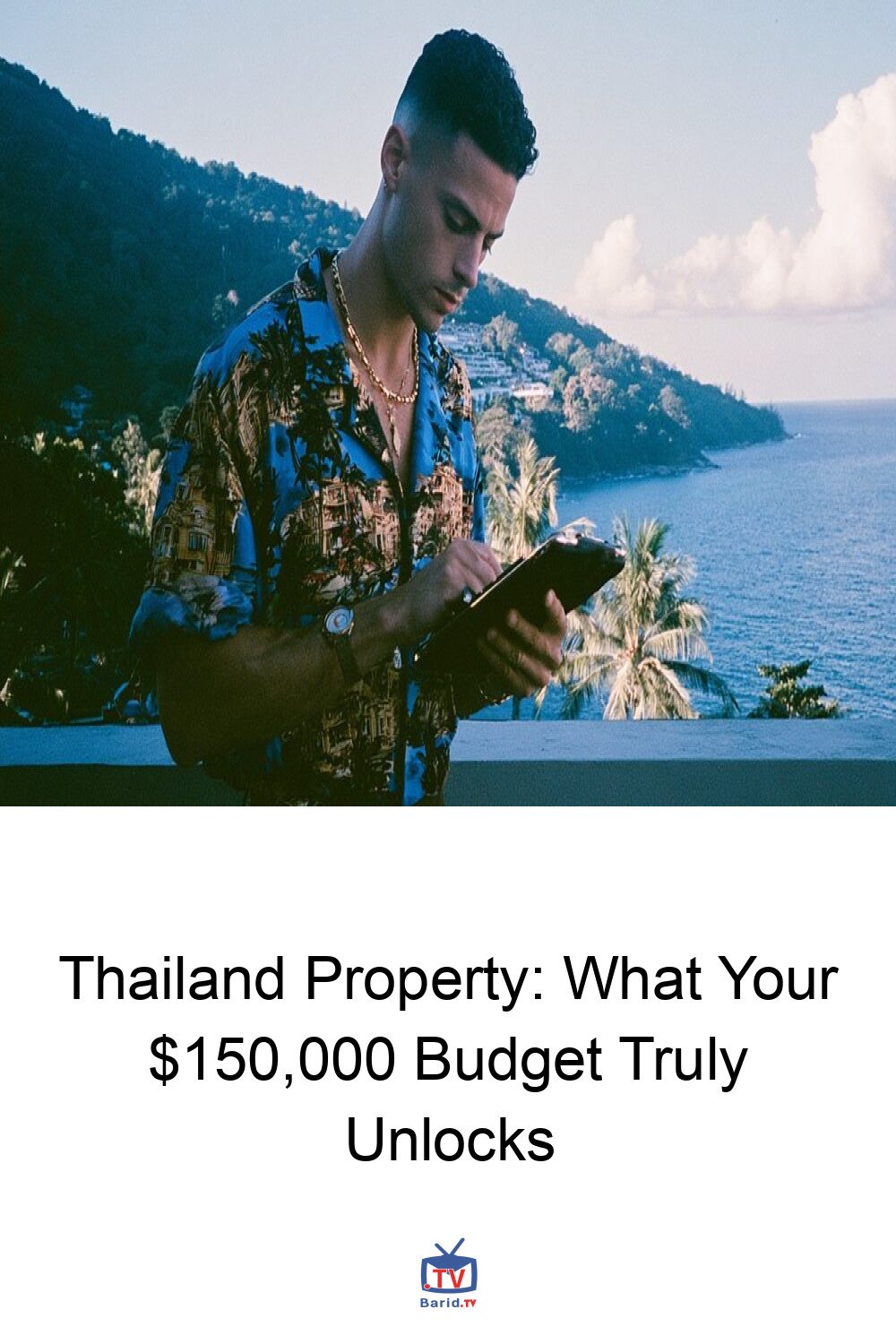
For the savvy entrepreneur or digital nomad eyeing a slice of paradise, a $150,000 property budget in Thailand isn’t just ‘starter money’ – it’s a significant investment. While it opens doors across every major market, understanding its true buying power requires a nuanced perspective. This isn’t about owning the same dream property twice; it’s about making informed choices in a diverse and dynamic real estate landscape.
Navigating Thailand’s Diverse Property Markets
Thailand currently boasts over 3,200 property listings starting around $117,000, placing your $150,000 budget comfortably above the entry point. However, the notion that this sum buys the same product across Phuket, Pattaya, Samui, and Bangkok is a common misconception. Price disparities are less about construction quality and more about land value, supply dynamics, and the unique development trajectory of each region. Smart investors prioritize asset value, while lifestyle buyers often get the sequence reversed. Understanding these trade-offs before falling for a glossy brochure is paramount.
Pattaya: Depth of Stock, Softer Prices
Pattaya stands out with the deepest inventory and the most accessible prices. Of the nearly 2,000 apartments listed nationwide, a staggering 1,237 are found here. This concentration offers buyers significant leverage, numerous alternatives, and a clear reference for pricing. With $150,000, you can secure a one or even two-bedroom unit, often close to the beach. For instance, a high-rise near Jomtien Beach might start at $121,000, while a green-belt project with co-working spaces could be as low as $96,000. A seafront tower can be yours for $150,000.
Phuket: Premium Island Living
At the other end of the spectrum lies Phuket, a market characterized by higher prices and strong demand. The island lists 888 properties across all types, with condominiums averaging over 85,000 baht per square meter (approximately $2,400) by Q1 2026, reflecting a 14%+ increase in just two years. Your $150,000 budget typically secures a one-bedroom unit in most new, off-plan projects. Examples include a unit 500m from Porto de Phuket in Bang Tao starting at $88,000, a Kamala project from $126,000, or a Surin scheme with a co-working floor from $131,000. Two-bedroom units in these same developments, however, generally start well above $199,000, placing them out of this budget’s reach.
Bangkok: The Capital City Calculation
Bangkok operates on an entirely different pricing model, reflecting its status as a bustling working capital rather than a resort destination. While branded residences in the city center can soar past $1.2 million, your $150,000 can still find you a one-bedroom project in the outer districts, with some starting from $85,000. This budget aligns with a city rhythm, offering urban convenience rather than beachfront serenity.
Samui: Beyond the Budget for Villas
Samui’s property market, particularly for villas, presents a different challenge. Houses on the island typically start around $300,000, meaning a $150,000 budget won’t secure a standalone home. With only 35 apartments listed, the thin stock offers little room for comparison or negotiation, making it a less ideal market for this specific budget.
Beyond the Listing Price: Understanding the True Cost
The sticker price is just the beginning. Several crucial factors influence the final cost and long-term viability of your Thai property investment.
Transfer Fees and Foreign Quotas
A transfer fee of 2% of the assessed value applies to property purchases. While typically split between buyer and seller, this is negotiable and should be clearly documented. It’s vital to note that the temporary reduced rate of 0.01% (until June 30, 2026) applies exclusively to Thai nationals; foreign buyers consistently pay the standard 2%.
Foreign ownership of condominiums is permitted freehold, but only up to 49% of a building’s total floor area. This quota is measured by area, not unit count. Diligent buyers must confirm the remaining foreign quota in the specific building they are interested in, as allocation can vary even within the same project.
Navigating Land and Villa Ownership
Direct foreign ownership of land and the houses built upon it is not allowed under Thai law. This is why villas are typically structured through long-term leases or via a Thai company. The leasehold route, however, saw a significant shift in March 2025. A Supreme Court ruling removed the automatic enforceability of the previously common “30+30+30” year renewals. A 30-year term is now, legally, just that – a 30-year term. Any extension beyond this is a commercial expectation, not a legal guarantee, fundamentally altering the long-term security for villa leaseholders.
The Off-Plan Landscape
Off-plan purchases dominate the entry-level segment, particularly in markets like Phuket, where new condominium supply is projected to slow significantly after a boom. While this might ease price competition, it introduces risks for buyers committed to projects completing years down the line (e.g., 2029). Always scrutinize the completion date on the contract, not just the brochure, and understand the developer’s liabilities for delays.
Essential Due Diligence for a Smooth Purchase
To avoid costly lessons, ask these critical questions:
- Foreign Quota: Confirm the remaining foreign quota for your specific unit within the building, not just the overall project.
- Completion Date:
Refer to the contract’s completion date, not marketing materials, and understand the developer’s obligations for any delays.
- Legal Advice: Engage independent legal counsel specializing in Thai property law for all contracts and ownership structures.
In essence, a $150,000 budget in Thailand offers a one-bedroom unit in strong, high-demand markets like Phuket and Bangkok, or a more spacious two-bedroom option in markets with deeper stock like Pattaya. You generally won’t get both the prime resort location and the extra bedroom within this budget. Informed decisions, thorough due diligence, and a clear understanding of legal nuances are your best assets in securing your piece of Thai paradise.
For more details, visit our website.
Source: Link