



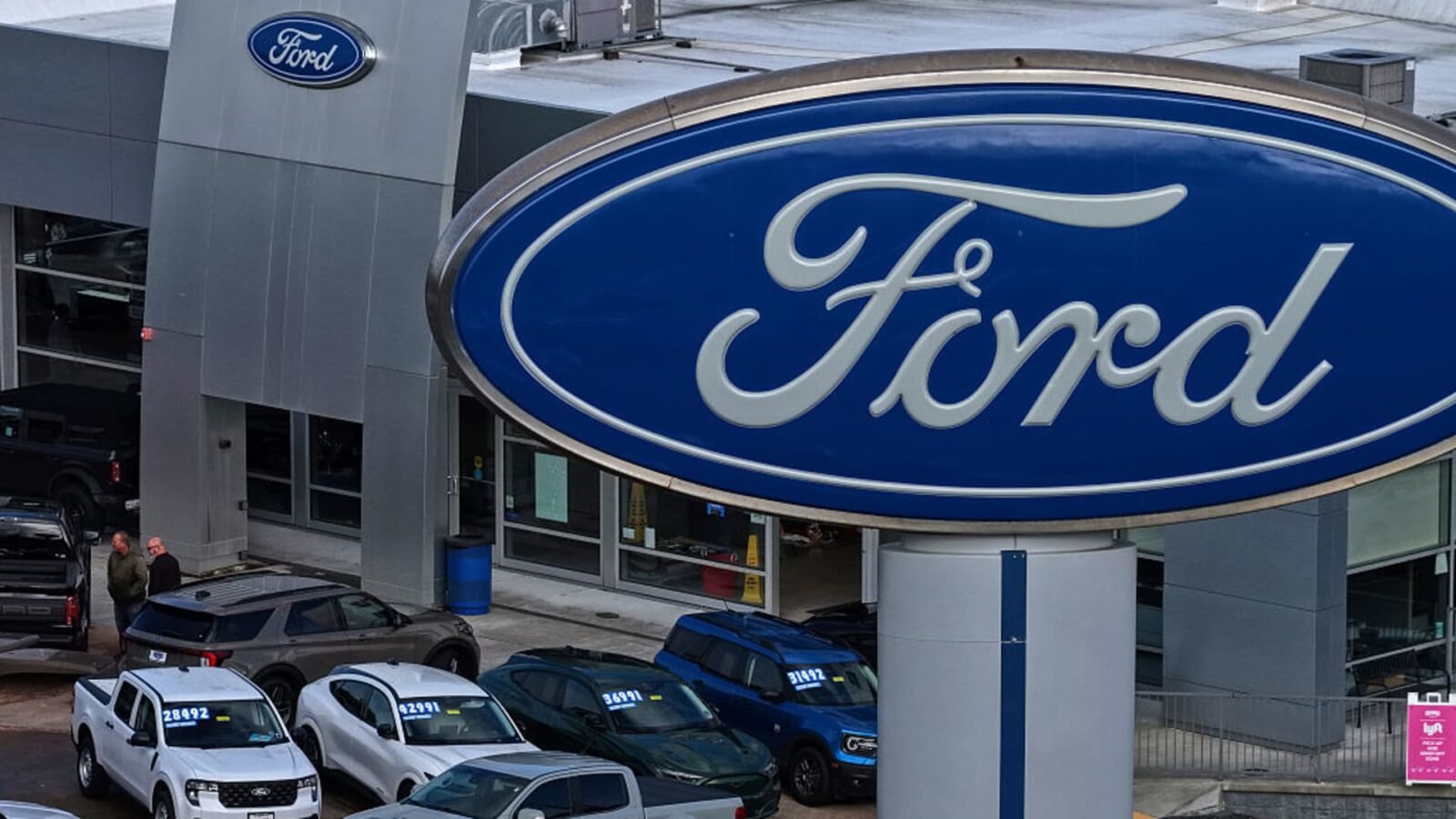

The third quarter of the year proved to be a nail-biter for Ford Motor Company, as the American automotive giant narrowly clung to its coveted No. 3 U.S. sales position. Despite a year-over-year sales decline, Ford managed to fend off a surging Hyundai Motor, defying analyst predictions that had forecast a changing of the guard. This close contest highlights the dynamic shifts occurring within the competitive U.S. auto market, where legacy automakers face relentless pressure from agile rivals and evolving consumer preferences.
A Tight Race: Ford vs. Hyundai
Ford reported a 6.6% year-over-year sales decline in the third quarter, moving 507,395 light-duty vehicles. This figure notably excludes its heavy-duty truck segment, which is categorized separately. In stark contrast, the South Korean conglomerate, encompassing the Hyundai, Kia, and Genesis brands, posted a 5.4% increase, reaching 506,200 vehicles sold during the same period. The margin between the two automotive titans was razor-thin, with Ford maintaining its lead by just 1,195 units for the quarter.
Both companies, however, outperformed earlier expectations. A forecast from Cox Automotive had projected Hyundai to surpass Ford in quarterly sales for the first time, underscoring the intensity of the competition and Hyundai’s significant inroads into the U.S. market throughout the year.
Navigating Headwinds: Ford’s Production Struggles and EV Dip
Ford’s journey through the past year has been marked by significant challenges, particularly concerning the production of its highly crucial F-Series pickup trucks. Two supplier fires last year severely disrupted manufacturing and sales, creating a persistent headwind for the automaker. Despite these setbacks, Ford retains a substantial lead of approximately 89,700 units over Hyundai for the year through the third quarter, a testament to its enduring market presence.
Rob Kaffl, Ford’s head of U.S. sales, expressed optimism, noting that F-Series pickup sales and inventories, including the iconic F-150, showed continued improvement during the quarter. “Some of the headwinds we had early in the year are kind of behind us, and it’s really setting us up for a really strong Q4 as we move in,” Kaffl stated during a media call. F-Series sales were down a modest 1.9% in Q3, though this figure includes a steep 97.1% decline for the discontinued F-150 Lightning electric pickup.
Brand Performance and the EV Landscape
While the F-Series showed signs of recovery, the broader Ford brand experienced a roughly 6% dip in sales during the quarter, with its luxury Lincoln brand seeing an even steeper 18% decline. A more pronounced challenge emerged in the electric vehicle (EV) segment, where Ford’s year-over-year sales plummeted by 67.5% through September, including an approximate 80% drop in the third quarter alone.
This dramatic decrease is partly attributed to tough comparisons with the previous year, when Ford reported record EV sales as demand surged ahead of the Trump administration’s discontinuation of federal incentives worth up to $7,500 for EV purchases. The current market reflects a more normalized, albeit competitive, environment for electric vehicles.
The Broader Automotive Picture
Looking at the wider U.S. automotive landscape for the current year, General Motors currently holds the top sales position, followed by Toyota Motor. Toyota has been steadily gaining ground against GM this year, indicating a dynamic top tier. Ford, for its part, downplayed the direct comparison with Hyundai, emphasizing that Kia and Hyundai brands operate separately in the U.S. despite sharing a corporate parent.
Outlook for Q4 and Beyond
As Ford moves into the final quarter of the year, the improving F-Series production and a strategic focus on its core strengths will be critical. The battle for market share remains fierce, with Hyundai’s aggressive growth and the broader industry’s shift towards electrification posing ongoing challenges. Ford’s ability to adapt, innovate, and leverage its iconic brands will determine its trajectory in the evolving automotive future.
For more details, visit our website.
Source: Link







Leave a comment