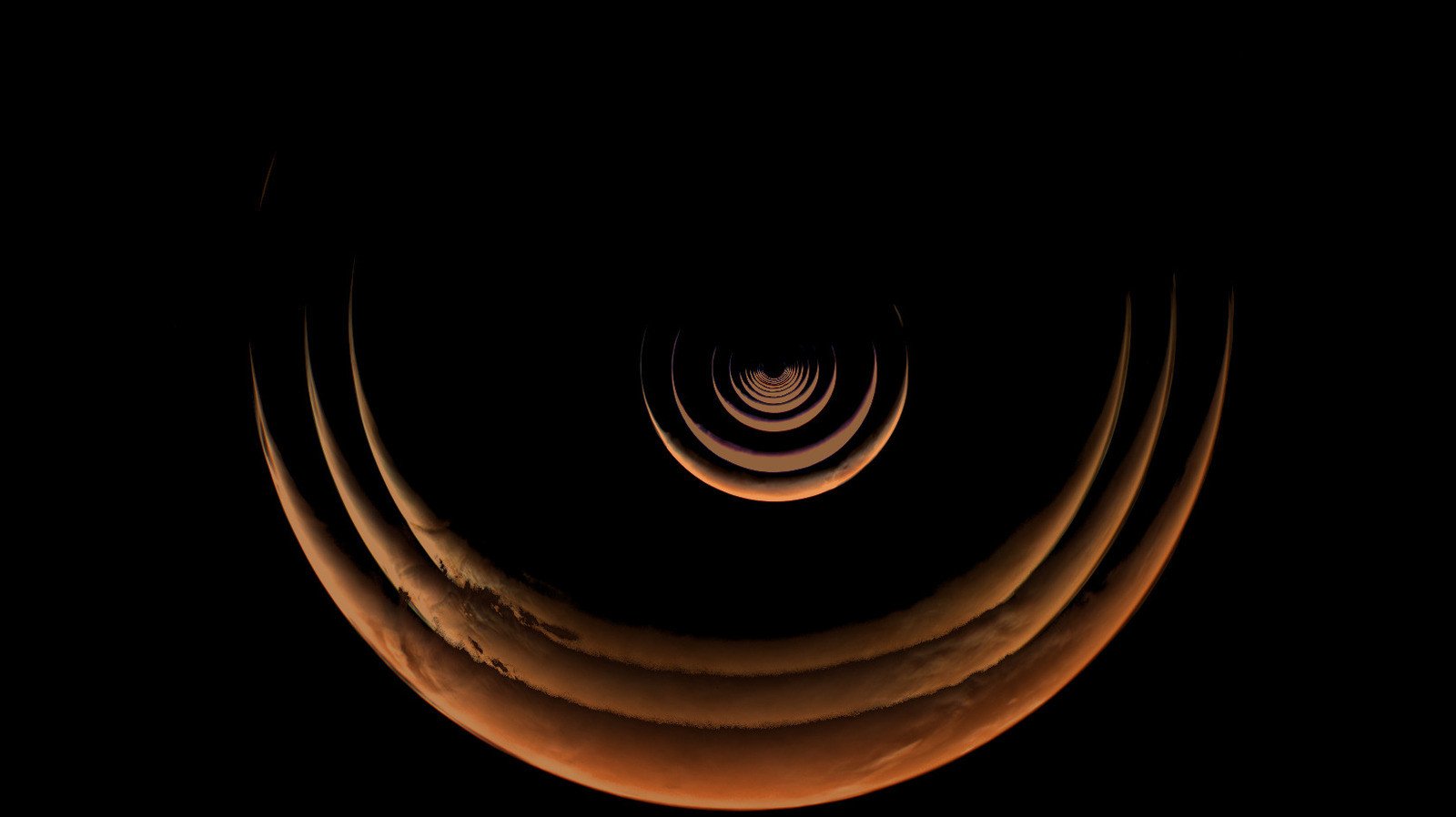

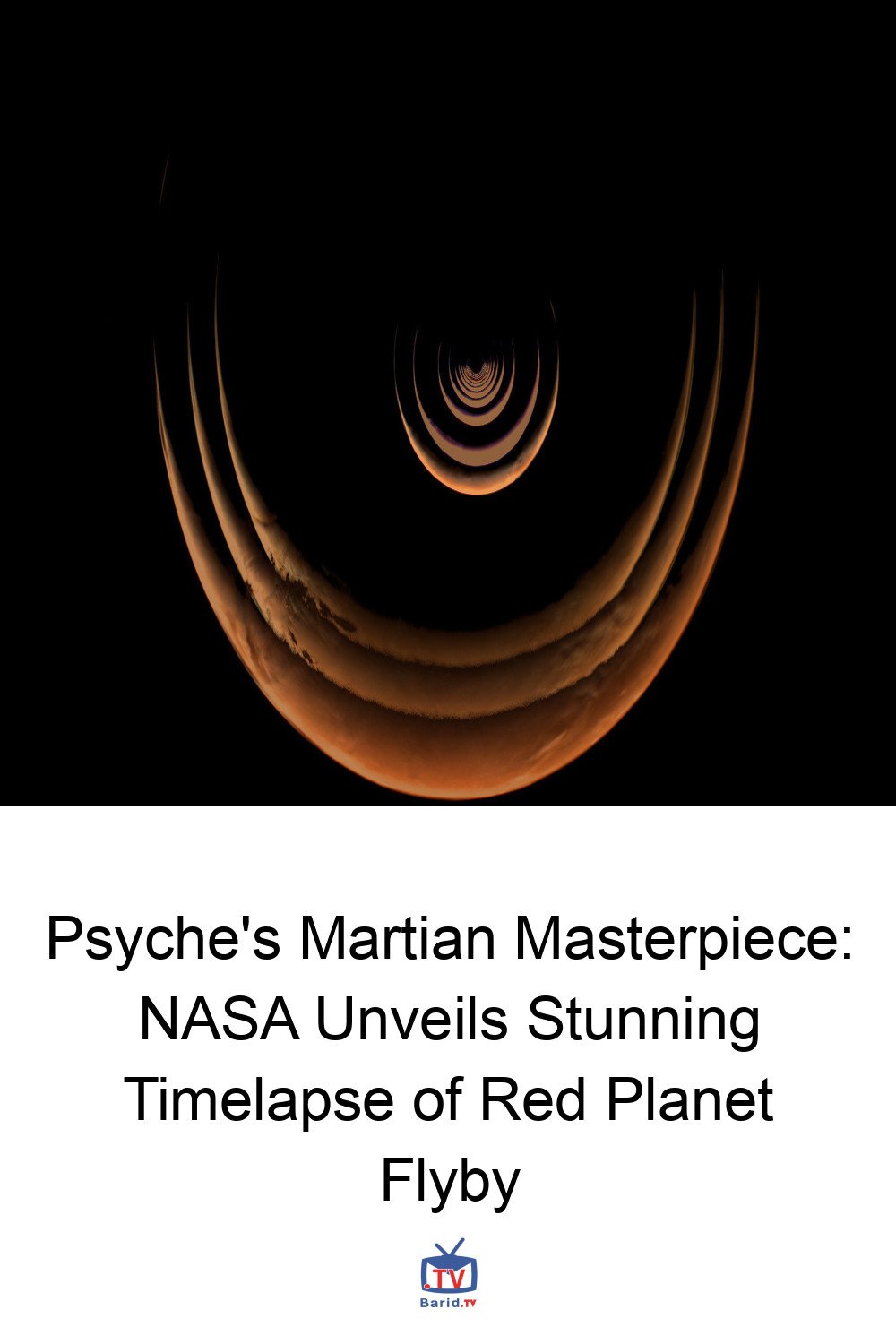
In a breathtaking display of cosmic ballet and technological prowess, NASA has released a stunning timelapse video showcasing the Psyche spacecraft’s recent close encounter with Mars. This captivating visual journey offers humanity a rare and intimate perspective of the Red Planet, captured during a crucial gravity assist maneuver in May.
A Martian Rendezvous: Psyche’s Pivotal Flyby
The Psyche spacecraft, currently en route to its namesake metallic asteroid in the main belt, executed a flawless flyby of Mars, leveraging the planet’s gravitational pull to slingshot itself towards its distant target. This critical maneuver, which began its approach on May 2 and reached its closest point on May 15, not only provided a vital speed boost but also fine-tuned Psyche’s trajectory, conserving precious propellant for the arduous journey ahead. The spacecraft is anticipated to reach the asteroid Psyche in 2029.
Unveiling Mars: A Visual Spectacle
During its brief but impactful visit, Psyche’s multispectral imager was hard at work, capturing thousands of high-resolution images. These individual snapshots have been meticulously stitched together by NASA to form an awe-inspiring timelapse. The video begins with a delicate crescent Mars, gradually revealing intricate surface details as the spacecraft draws nearer, before offering a majestic farewell view of the planet’s icy south pole as Psyche departed.
“The imager performed brilliantly, delivering some rarely seen views of the red planet,” remarked Jim Bell, the Psyche imager instrument lead at Arizona State University. His enthusiasm underscores the success of this imaging feat, providing both scientific data and public wonder.
Beyond Beauty: Scientific Calibration and Future Prospects
While the aesthetic appeal of the Martian imagery is undeniable, the flyby served a deeper scientific purpose. Bell further explained, “Besides the obvious beauty of the photos, we were also able to fully test its calibration and sensitivity to scattered light, including picking out the Martian moons Phobos and Deimos from very far away as a part of a practice for the satellite search that we’ll use at the asteroid Psyche to look for any moonlets there.”
This rigorous testing ensures that the imager will be optimally prepared for its primary mission: to explore the unique, metal-rich asteroid Psyche. By practicing the detection of small celestial bodies like Phobos and Deimos, the team is honing the spacecraft’s ability to search for any potential moonlets orbiting the asteroid, a key objective of the mission.
As Psyche continues its solitary voyage across the vast expanse of space, these initial images from Mars serve as a thrilling prelude to the discoveries that await. The mission promises to unlock secrets about planetary core formation and the early solar system, making every captured image and every calibrated instrument a step closer to profound scientific understanding.
For more details, visit our website.
Source: Link