





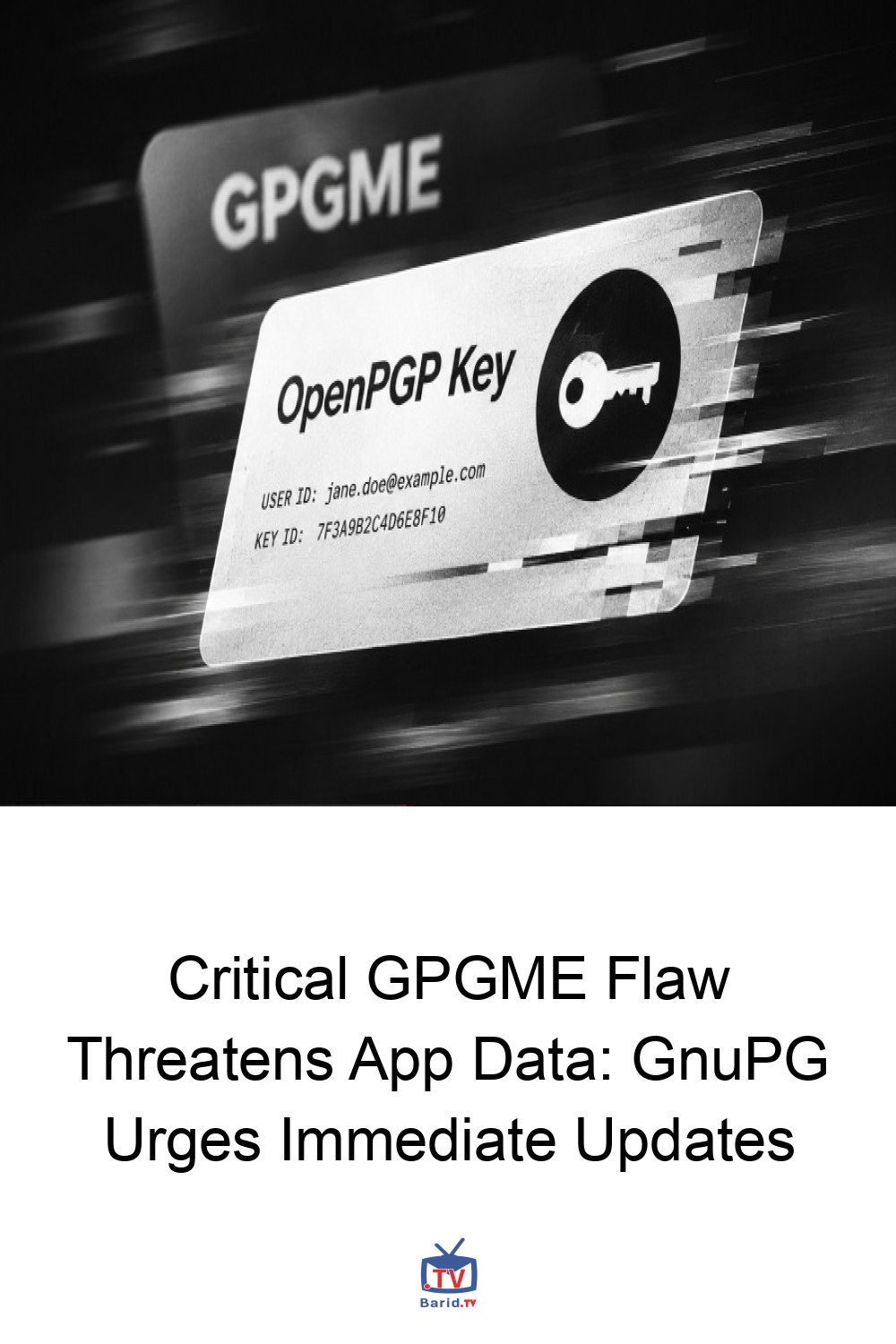
A severe vulnerability has been uncovered in GPGME, the crucial library underpinning GnuPG, which could allow malicious OpenPGP keys to compromise application data. The GnuPG project issued a stark warning yesterday, detailing how a specially crafted OpenPGP key, featuring an unusually long user ID, can trigger a critical memory bug, potentially leading to data theft from affected applications.
A Critical Vulnerability Unveiled
Tracked as CVE-2026-129975, this flaw is a ‘double free’ bug, a dangerous memory error where the same memory block is released twice. This can lead to system instability, crashes, or, more critically, arbitrary code execution and data exposure. The vulnerability resides within GPGME’s read_status() and read_colon_line() routines, which process status lines and key listings from GnuPG. When these routines encounter an excessively long input, they attempt to move data to a larger buffer. However, an error during this process can leave a pointer to memory that has already been freed, causing it to be freed a second time during cleanup.
The flaw was discovered by Johan Carlsson and reported to the project via GitLab last week. While no attacks exploiting this vulnerability have been reported yet, the GnuPG project emphasizes that remote code execution cannot be ruled out, making immediate action paramount. The advisory suggests that signed data sent to an application could be a potential vector for exploitation, though it does not specify which programs might pass such material to the library without manual key import.
Who is Affected?
The CVE-2026-129975 bug impacts all software utilizing GPGME versions prior to 2.3.0. This includes applications where the library is loaded as a shared library, a Windows DLL, or statically linked. The scope of affected software is broad, encompassing:
- Most mail clients
- Many XMPP clients
- Samba
- GnuPG’s own Gpg4win, GnuPG Desktop, and GnuPG VS-Desktop packages
The potential for data exposure from these applications underscores the severity of the issue.
Urgent Action Required: How to Update
To mitigate the risk, users and administrators are urged to update their GPGME installations immediately. The fixed library version, GPGME 2.3.1, was released this week (version 2.3.0 was never publicly available).
GPGME 2.3.1: The Essential Fix
- Shared Library or DLL: Update to GPGME 2.3.1, available from the project’s official downloads and detailed in its security advisory.
- Windows Users: Gpg4win 5.1.2 bundles the corrected library. Its release notes classify the issue as severe and recommend updating as soon as possible.
Addressing Legacy Systems and Bundled Software
- Older Versions (Unable to Update to 2.3.1): The advisory provides a patch for these systems. Additionally, a fixed release, 1.24.4, is available for the legacy branch. However, the project notes that it cannot guarantee every security patch will be applied to this legacy branch.
- Bundled and Statically Linked Copies: These installations are also vulnerable. Crucially, updates to the system’s shared library will not reach them. Applications that incorporate GPGME in this manner require their own rebuilt releases from their respective developers.
Unaffected Components
Users of GPGMEPP and GPGMEQT do not need to take any action, as these components are not affected by the flaw. Unfortunately, the advisory does not offer any interim workarounds for software that cannot be updated immediately, emphasizing the critical need for prompt patching.
For more details, visit our website.
Source: Link







Leave a comment