

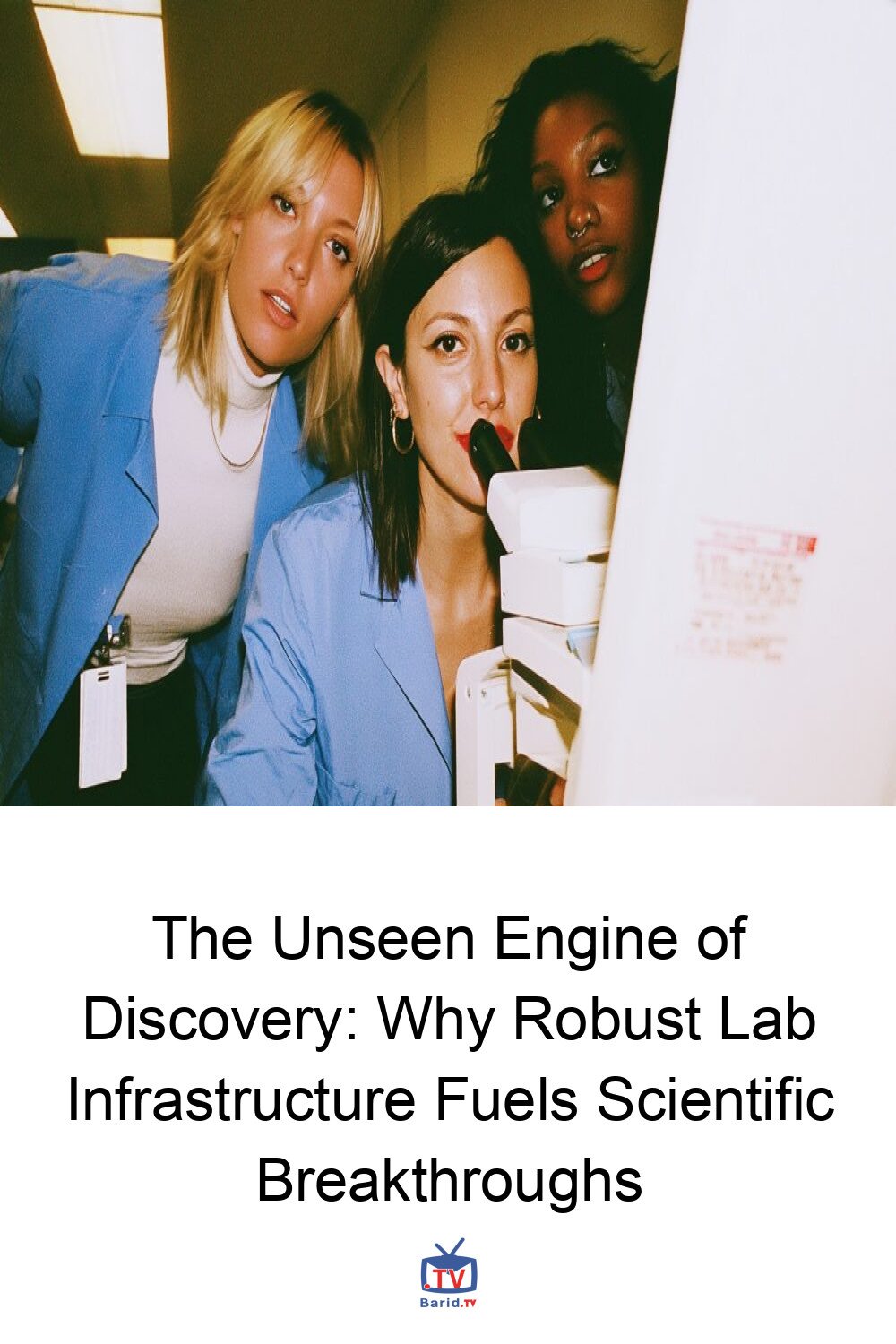
In an era defined by rapid technological advancement, the bedrock of scientific progress often remains out of the public eye: robust and sophisticated laboratory infrastructure. From revolutionary medical treatments to sustainable energy solutions, every significant leap forward begins within the meticulously designed confines of a modern lab. This isn’t merely about having a space; it’s about equipping researchers with the precision tools, efficient environments, and secure systems necessary to push the boundaries of human knowledge.
The Indispensable Foundation of Innovation
Laboratories are more than just buildings; they are dynamic ecosystems where hypotheses are forged, tested, and validated. They provide the critical environment for scientists to transform abstract ideas into tangible discoveries. Today’s state-of-the-art lab facilities extend far beyond basic instruments, encompassing a comprehensive suite of elements:
- Advanced
, high-precision scientific equipment
- Optimized, ergonomic laboratory layouts for seamless workflow
- Sophisticated environmental control systems to ensure experimental integrity
- Rigorous safety protocols and compliance mechanisms
Companies like IKA Laboratory Equipment are at the forefront of this revolution, designing and manufacturing cutting-edge tools that empower researchers across diverse scientific disciplines to conduct reliable and reproducible studies. Their commitment to innovation ensures that scientists have access to the best possible resources.
From Hypothesis to Breakthrough: The Lab’s Central Role
The journey of scientific discovery is intrinsically linked to the capabilities of the laboratory. It is here that researchers meticulously gather accurate data, rigorously test hypotheses, and meticulously reproduce experiments to confirm findings. Conversely, inadequate infrastructure can severely impede progress, leading to:
- Protracted research timelines
- Increased equipment downtime and maintenance issues
- Elevated risks of contamination, compromising results
- Limited experimental capabilities, stifling ambitious projects
Conversely, a thoughtfully designed and well-equipped laboratory environment significantly enhances the accuracy and repeatability of measurements, while simultaneously minimizing equipment failures and operational bottlenecks. This translates directly into more efficient research and more trustworthy outcomes.
Accelerating Discovery Through Modern Infrastructure
Contemporary laboratory infrastructure is engineered not just to support research, but to actively accelerate it. By integrating automation and smart systems, modern labs streamline workflows and eliminate tedious manual processes, leading to remarkable efficiencies:
- Reduced Processing Time: Automation dramatically cuts down sample processing time, allowing for higher throughput.
- Enhanced Data Integrity: Automated systems ensure greater data accuracy and uniformity, minimizing human error.
- Real-time Insights:
Advanced monitoring and data analysis tools enable real-time case studies and immediate feedback during experiments.
- Increased Productivity: By freeing scientists from repetitive tasks, automation allows them to focus on complex problem-solving and innovative thinking.
Moreover, high-performance laboratory equipment unlocks the potential for more complex and previously impossible experiments, pushing the boundaries of what can be investigated.
Societal Returns: Investing in Lab Infrastructure
The investment in advanced laboratory infrastructure yields profound benefits that ripple throughout society, far beyond the confines of research institutions. In 2023 alone, the US channeled approximately $940 billion into research and development, underscoring the strategic importance of this sector.
Advancing Healthcare and Public Safety
Modern laboratories are the crucibles where the next generation of medicines, diagnostic tools, vaccines, and medical technologies are born. These innovations directly contribute to improving global public health. Furthermore, robust lab infrastructure is critical for:
- Monitoring disease outbreaks and implementing effective prevention strategies
- Environmental monitoring to safeguard public health
- Ensuring the safety of food and water supplies through rigorous testing
- Driving pharmaceutical research and medical diagnostics
In times of public health crises, laboratories equipped with advanced diagnostic capabilities are indispensable, providing rapid response and crucial data to inform public health interventions.
Driving Economic Growth and Innovation
For businesses heavily invested in research and development, cutting-edge laboratory equipment is essential for developing novel products, optimizing processes, and enhancing manufacturing capabilities. Investment in scientific and technical facilities acts as a powerful catalyst for economic development by:
- Creating high-skilled, well-paying jobs
- Fostering dynamic partnerships between universities and industries
- Accelerating the pace of product development and market entry
- Attracting significant research funding and investment
- Supporting the successful commercialization of new technologies
In an age dominated by transformative fields like biotechnology, artificial intelligence, and advanced materials science, superior laboratory facilities provide businesses with a distinct competitive advantage.
Looking Ahead: Future-Proofing Laboratories
The scientific landscape is in constant flux, demanding that laboratories be flexible, resilient, and adaptable to emerging technologies and evolving research questions. Future labs will increasingly integrate:
- Artificial intelligence for sophisticated data analysis and predictive modeling
- Advanced robotics and comprehensive laboratory automation
- Cloud-based research platforms for collaborative and remote work
- Smart monitoring systems for real-time environmental and experimental control
- Sustainable laboratory designs that minimize environmental impact
Flexible lab spaces will enable institutions to rapidly pivot to new research priorities, whether preparing for future pandemics, addressing climate change, developing sustainable energy solutions, or exploring entirely new technological frontiers. As research data volumes soar, robust cybersecurity, seamless digital connectivity, and impeccable data integrity will become paramount. Crucially, even the most advanced equipment is only as effective as the skilled individuals operating it. Investing in the education and continuous training of the scientific workforce remains an essential component of preparing laboratories for the challenges and discoveries of tomorrow.
For more details, visit our website.
Source: Link