
“Peace is not the absence of resistance. It is learning to stop judging yourself for being human.” ~Unknown
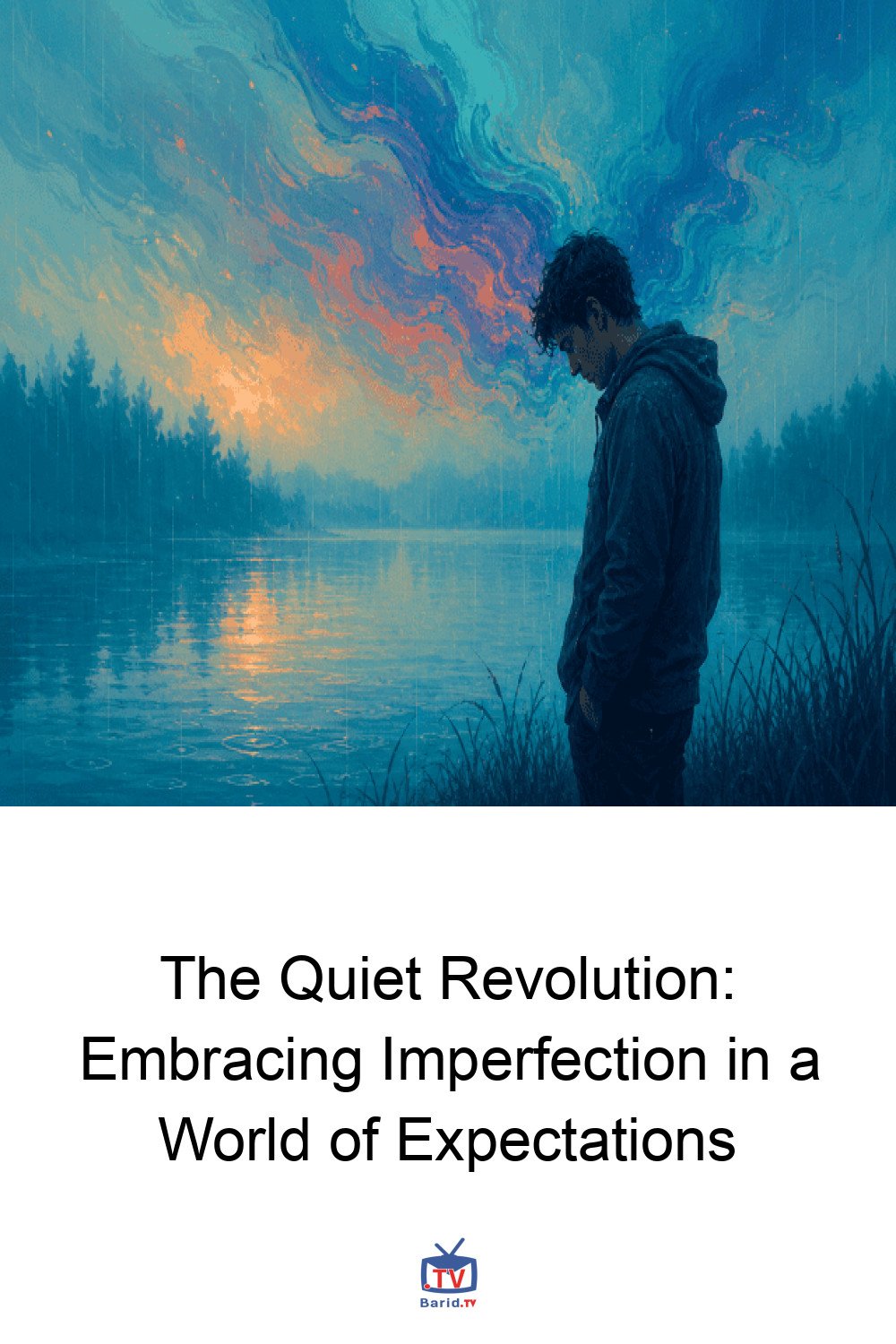
As I pen these words, a gentle rain taps against the windows of our RV, a cozy, mobile sanctuary parked beside a tranquil lake. My wife and I have always cherished this ritual: bringing our familiar comforts – our coffee mugs, our blankets, our cherished routines – to unfamiliar landscapes, transforming them into a temporary home. This morning, the lake mirrors the heavy, grey sky, promising more rain and perhaps storms, a stark contrast to the perfect, sunny forecast that had painted our ideal weekend getaway.
Yesterday brought relentless winds, demanding constant vigilance over our awning and chairs, turning even relaxation into a subtle exercise in management. Today, the early rain and looming storms felt like a direct challenge to the idyllic picture we’d held. There’s a part of me, a persistent echo from a former self, that would have met this deviation from expectation with quiet, internal resistance. Not a dramatic outburst, but a subtle tension, an invisible argument with the present moment: “This isn’t how it was supposed to go.”
The Illusion of Control: When Reality Defies Our Script
So much of our suffering, I believe, stems not just from pain itself, but from our resistance to it – our struggle against change, against the simple fact that life rarely adheres to the script we’ve meticulously written. And, crucially, our resistance to our own authentic reactions. The disappointment we deem inappropriate, the frustration we believe we should have transcended, the anxiety we’re convinced should be long gone. This internal battle isn’t confined to weather forecasts; it permeates relationships, professional challenges, periods of grief, healing journeys, and the quiet corners of our own minds.
I’ve experienced it when a conversation with my wife veered off course, and instead of acknowledging my hurt or disagreement, I began constructing an elaborate mental defense. I’ve felt it at work when a cascade of interruptions dismantled a carefully planned day. And I’ve wrestled with it upon waking with inexplicable anxiety, immediately questioning its persistence: Still this? Still here? After all this practice, all this breathing?
Mindfulness Misunderstood: The Trap of Performative Acceptance
This last point is particularly challenging for someone who champions mindfulness and meditation. I understand the mechanics of pausing, breathing, and observing thoughts without becoming them. I speak the language of acceptance. Yet, for a long time, I was attempting to accept external reality while subtly rejecting my internal experience of it. There I was, annoyed by the rain, compulsively checking the forecast, trying to ‘breathe’ my way out of disappointment, as if disappointment itself were a flaw to be eradicated.
I once equated ‘letting go’ with becoming impervious to life’s slings and arrows. I believed that sufficient meditation, reflection, and healing would render me less susceptible to deep emotional impact. Awareness, I thought, was a pathway to perpetual calm, a more evolved, less reactive state. But somewhere along this path, even awareness began to feel performative. Every difficult emotion became an opportunity for optimization, every uncomfortable moment a lesson to be extracted, every reaction filtered through an invisible ‘spiritual’ sieve before being granted permission to exist. Was it attachment? Ego? Resistance? Misalignment? Another ‘thing to fix’? It became utterly exhausting.
This exhaustion wasn’t an indictment of mindfulness itself, but rather a consequence of my transforming awareness into yet another system of control. Sometimes, this manifested in almost imperceptible ways: a delayed text message would prompt me to ‘observe my attachment,’ when in truth, I was simply frustrated, perhaps even angry. A last-minute change of plans would be framed as ‘practicing flexibility,’ when irritation was the genuine underlying emotion. A crucial form of honesty is lost when every raw feeling is prematurely re-categorized as a ‘lesson.’
The Fear of Letting Go: Passive Acceptance or Profound Peace?
Underneath this elaborate system of self-management lay a deeper fear: if I truly let go, if I ceased managing every reaction, would I stop caring? Would acceptance morph into passivity, peace into detachment? Would I become one of those individuals who could shrug off everything with a detached air, labeling it wisdom? Yet, this never materialized. I still cared deeply – about the day, about my wife, about the precious time we shared.
What I began to grasp was that letting go was never about diminishing my capacity to care. Instead, it was about liberating myself from the relentless demand for personal perfection. It was about allowing a moment to be genuinely disappointing without simultaneously transforming that disappointment into another personal failure. This was the profound insight that finally dawned on me: I hadn’t just been resisting reality; I had been resisting the very fact that I still resisted reality. That second layer of resistance, the self-judgment for being human, was the true burden.
Embracing the Human Experience: A Path to True Peace
True peace, I’ve learned, isn’t found in the absence of resistance or the eradication of ‘negative’ emotions. It lies in the radical acceptance of our full, messy, human experience – including our disappointments, frustrations, and anxieties. It’s about giving ourselves permission to feel, without judgment, and understanding that our reactions, however imperfect, are simply part of being alive. By releasing the need to manage every internal ripple, we open ourselves to a more authentic, less exhausting, and ultimately, more peaceful existence.
For more details, visit our website.
Source: Link