

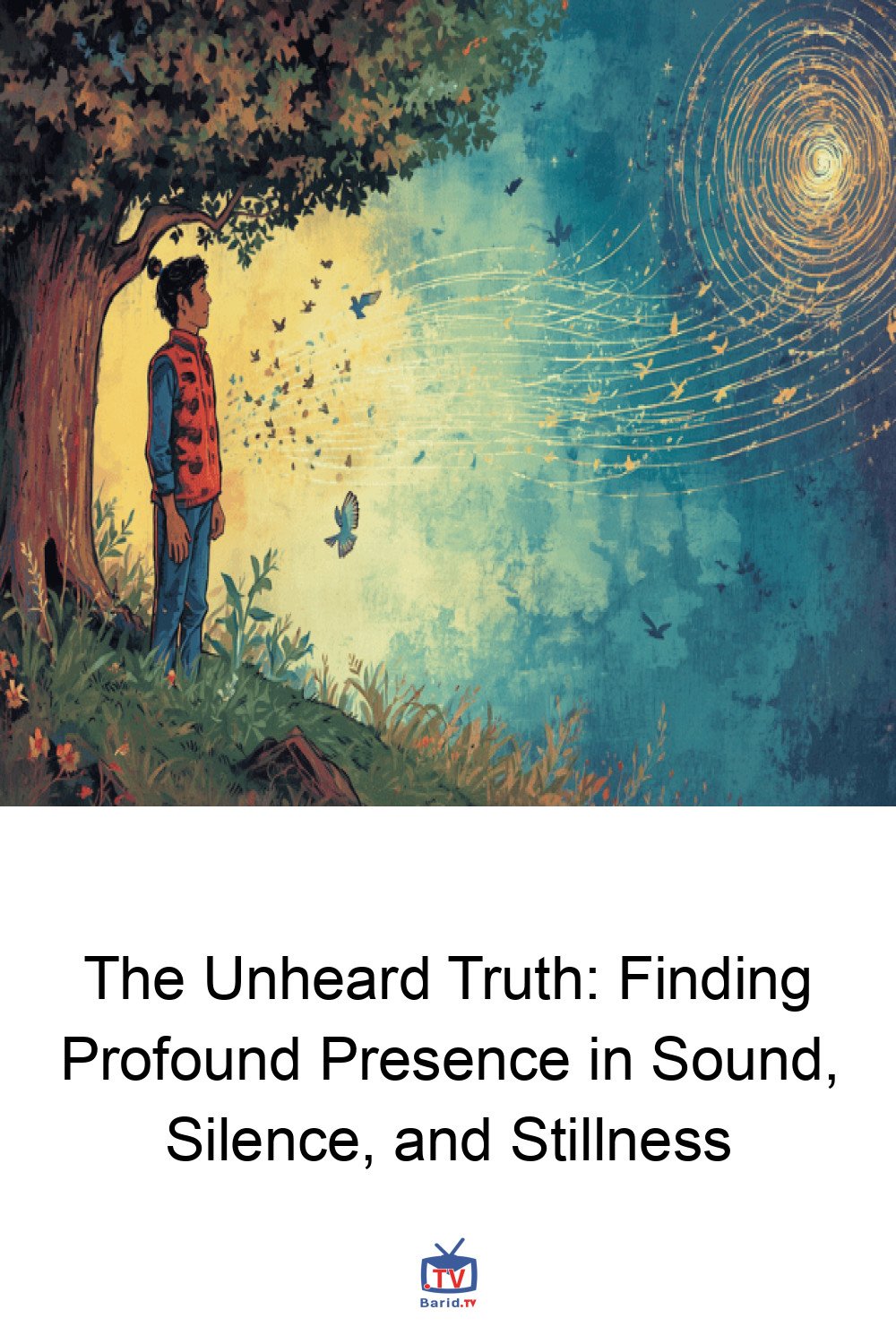
“Music gives color to the air of the moment.” ~Karl Lagerfeld
For years, I prided myself on being an attentive listener. I could maintain unwavering eye contact, offer timely nods, and pose insightful follow-up questions. Yet, a pivotal afternoon in a small Rishikesh yoga studio, cross-legged on a mat, unveiled a startling truth: I had never truly listened to anything, not even the whispers of my own being.
Our teacher’s simple instruction—close your eyes and observe the ambient sounds—opened a new world. The gentle whir of a ceiling fan, a distant dog’s bark, the shallow rhythm of my own breath. And beneath it all, a profound stillness, not an absence, but a vibrant, textured quiet I had been too preoccupied to perceive. This was my initiation into Nada Yoga, the ancient Indian practice of yoga through sound, and it subtly reshaped my understanding of presence.
The Deceptive Comfort of Constant Noise
Throughout much of my adult life, I cultivated a constant auditory backdrop. Music accompanied cooking, podcasts filled morning walks, and the television hummed me to sleep. I rationalized it as a love for sound, but deep down, I harbored a fear of what silence might unearth. We often generate noise not for pleasure, but as a shield, a buffer against uncomfortable introspection.
This manufactured cacophony keeps us from confronting life’s more challenging inquiries: Am I genuinely living the life I desire? Why does this relationship feel so hollow? What emotions truly lie beneath this relentless busyness? I had unknowingly used external sound as an escape from a deeper, internal sound – the resonant truth of my own inner life.
The quiet moments I most dreaded facing were laden with a sense of purposelessness and a gnawing uncertainty about my chosen path. Having dedicated my life to music, steeped in classical Indian traditions since childhood, discerning between a genuine calling and mere conditioning proved incredibly difficult. In silence, these questions amplified: Am I teaching out of passion, or simply because it’s all I know? Is my connection to this practice authentic, or have I merely constructed an identity around it?
There was also a quiet grief for relationships that had drifted, casualties of constant travel, teaching, and immersion in sound, ironically leaving me disconnected from the people right in front of me. The noise maintained a comfortable distance from these truths. It was only when I truly embraced silence that I ceased running from these questions, allowing them instead to sculpt me into a more authentic self.
Nada Yoga: A Path to Profound Presence
Nada Yoga is founded on the profound understanding that all existence is vibration. From the cosmic hum of the universe to the rhythmic beat of a human heart, sound isn’t merely something we perceive; it is intrinsically what we are. The practice itself is elegantly simple:
Embracing the Practice
- Sit: Find a comfortable posture.
- Listen: Direct your attention to the sounds around and within you.
- Resist:
Gently guide your mind away from the urge to fill the silence with thoughts, judgments, or anticipations.
- Receive: Allow sound to permeate your being, rather than deflecting off a distracted mind.
Initially, I struggled. My thoughts would race to mundane tasks, unread emails, or past conversations. My teacher, with gentle persistence, would remind me: “Come back to the sound.” Gradually, I learned to return.
Then came the music. We would focus on a single drone—a tambura, a singing bowl, or a sustained note on a harmonium. Within that singular sound, the mind discovered an extraordinary sanctuary, a place of profound rest. This wasn’t silence as we typically conceive it—an absence of noise—but rather silence as a palpable presence: vast, unhurried, and utterly real.
Cultivating Presence in Everyday Life
The unique power of sound as a gateway to presence lies in its inherent demand for ‘nowness.’ You cannot hear yesterday; you cannot hear tomorrow. Sound exists exclusively in the living moment, and to truly listen is to arrive fully in that moment with it.
This practice began to subtly alter the fabric of my daily existence. Washing dishes, I heard the water differently, not as mere background noise, but as something worthy of my full attention. Sitting with a friend, I genuinely heard the nuanced quality of their voice, the subtle hesitations between words, the unspoken sentiments. Nada Yoga had gifted me new ears.
With these new ears came a new dimension of presence—not the performative presence of eye contact and nodding, but a profound, authentic settling into the here and now. I also gained a deeper understanding of my relationship with music. While I had always loved it, I had often used it, as many do, to manipulate my emotional state—to amplify joy or suppress sorrow. Nada Yoga invited me to cease managing and instead, to simply meet.
To allow music to meet you precisely where you are, without needing it to transport you elsewhere, is a profound act of self-acceptance. It marks the crucial distinction between using sound as a tool and experiencing sound as an undeniable truth.
Simple Steps to Begin Your Journey
You don’t need years of dedicated study to begin exploring sound as a doorway to presence. Here are three simple practices to start integrating mindful listening into your life:
1. The Mindful Listening Moment
Choose one everyday sound—the hum of your refrigerator, birdsong outside your window, the distant traffic. For two to five minutes, simply listen without judgment. Notice its texture, its beginning, its end, its subtle variations. When your mind wanders, gently bring it back to the sound.
2. Embrace Intentional Silence
Set aside 5-10 minutes each day to sit in complete silence. Turn off all devices. Don’t try to clear your mind; simply observe what arises. Notice the internal sounds of your body, the thoughts that surface, and the spaces between them. This isn’t about achieving quiet, but about becoming aware of the existing quiet.
3. Sound as a Mirror
When listening to music, instead of letting it dictate your mood, try to simply observe your emotional response to it. Does it evoke joy, melancholy, calm? Acknowledge these feelings without trying to change them. Let the music reflect your inner state, rather than trying to alter it. This practice fosters self-acceptance and a deeper connection to your emotional landscape.
By consciously engaging with sound, silence, and stillness, you can unlock a profound sense of presence, transforming not just how you listen, but how you live.
For more details, visit our website.
Source: Link