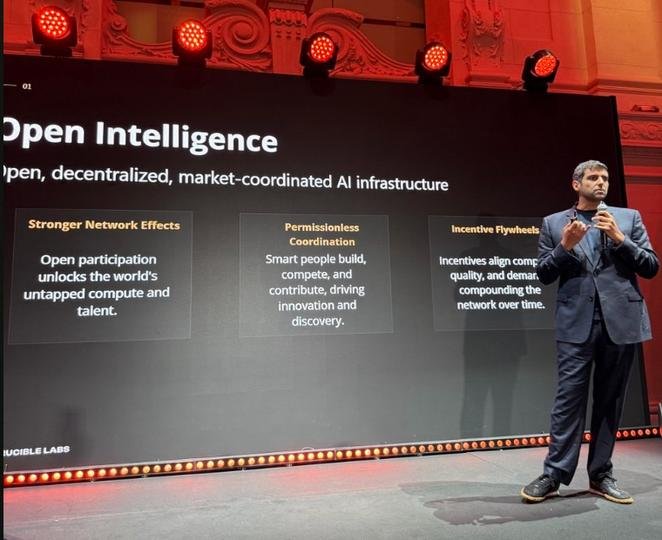

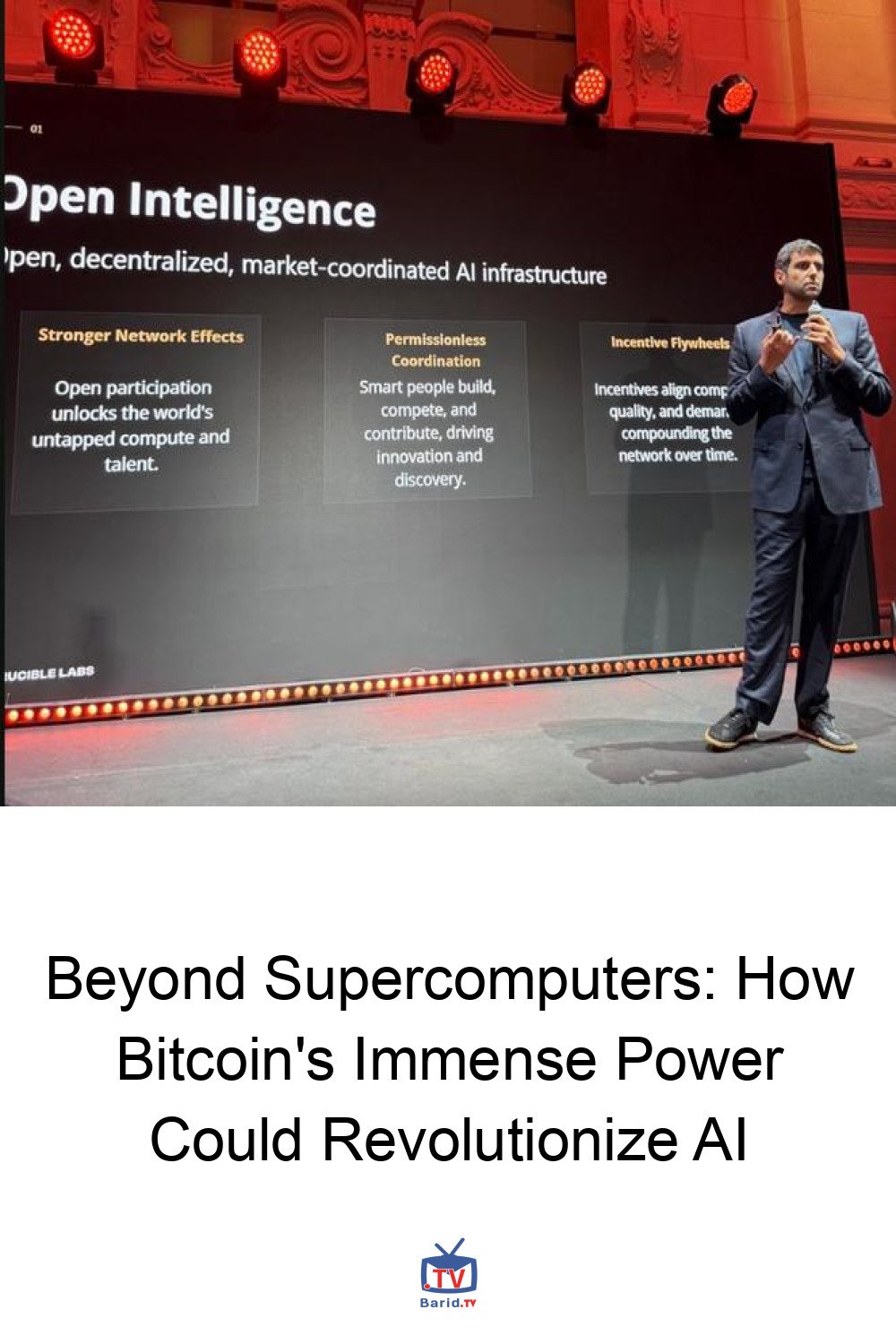
In a bold assertion that challenges the conventional understanding of global computing infrastructure, Bittensor co-founder Ala Shaabana has unveiled the staggering computational might of the Bitcoin network. Speaking at the Proof of Talk summit in Paris, Shaabana declared that Bitcoin’s processing power eclipses that of the world’s top 100 supercomputers by an astonishing 600,000 times, positioning decentralized networks as the true titans of modern computation.
The Unseen Giant: Bitcoin’s Computational Might
For decades, the pinnacle of computing power has been synonymous with colossal, centralized data centers and government-funded supercomputers. However, Shaabana’s insights paint a dramatically different picture. He highlighted that the sheer hash rate of the Bitcoin network—the collective computational effort expended by miners to secure the blockchain—far surpasses the combined capabilities of even the most advanced traditional supercomputing facilities.
“We all know that Bitcoin really dwarfs the top 100 supercomputers,” Shaabana stated, emphasizing the network’s unparalleled scale. This immense, distributed power, he argues, is not merely an abstract figure but a testament to the efficiency and resilience of a truly decentralized system.
Bittensor: Repurposing Decentralized Power for AI
The revelation of Bitcoin’s computational dominance serves as a foundational premise for Bittensor, a Layer 1 protocol designed to channel this distributed power into the burgeoning field of artificial intelligence. Bittensor mirrors Bitcoin’s core philosophy: a strict 21 million token supply, predetermined halvings, no pre-mine, and zero venture capital. However, instead of solving cryptographic puzzles for block rewards, Bittensor miners contribute to and validate AI models.
This innovative approach leverages the same incentive architecture that propelled Bitcoin into a computational powerhouse. Bittensor redirects this force towards AI, organizing it across 128 specialized problem-solving networks known as ‘subnets.’ Each subnet sets its own objectives, and miners compete for TAO token rewards by successfully meeting these goals, effectively shaping the network’s collective intelligence through a meritocratic, reward-driven system.
The Power of Incentives: Shaping AI’s Future
Shaabana’s core argument is elegantly simple: if a coordinated, code-driven system could forge the world’s most robust financial computing engine, the identical blueprint can be applied to AI. By segmenting a vast network into 128 distinct problem-solving subnets, Bittensor enables developers to tap into global hardware and intelligence without the constraints or monopolistic tendencies of centralized tech giants.
The efficacy of this distributed system hinges entirely on its incentive design. “Show me the subnet, and I’ll tell you what the miners are optimizing for,” Shaabana remarked, underscoring how programmatic goals naturally attract and align talent and computing resources. Whether optimizing for raw processing speed or data storage, the network adapts, driven by the rewards it offers.
Shaabana concluded that the “long-term bull case is no longer primarily technological,” but rather influenced by broader economic factors like debt, liquidity, and eroding trust in traditional systems. He envisions subnets as dynamic markets where intelligence is democratized, no longer confined by organizational hierarchies. In this new paradigm, “signals will define the truth, and performance is really rewarded,” paving the way for a more open, efficient, and powerful AI future.
For more details, visit our website.
Source: Link